
Key Facts
- Tropical to subtropical evergreen shrub or small tree.
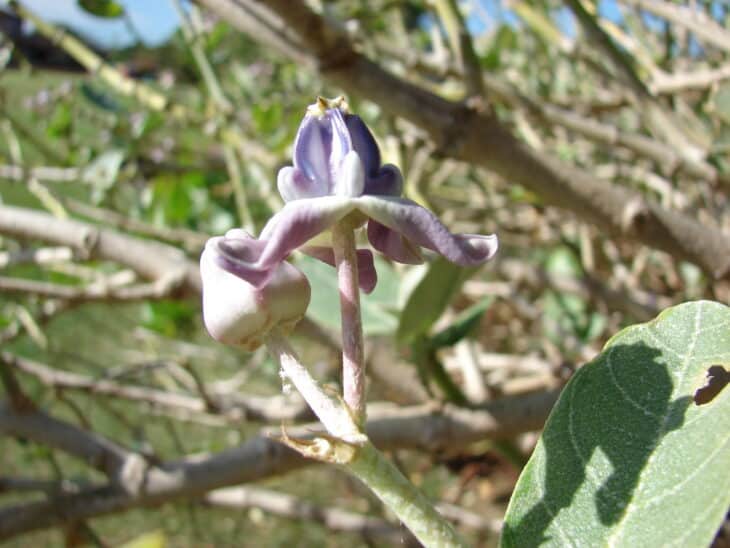
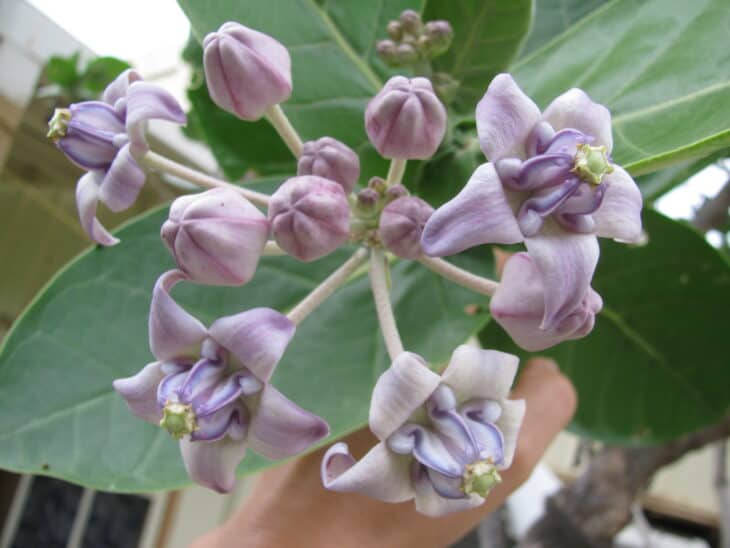
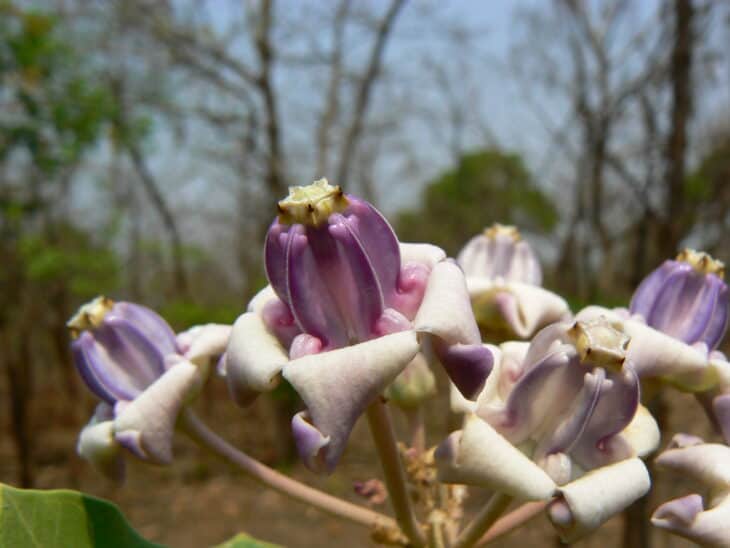
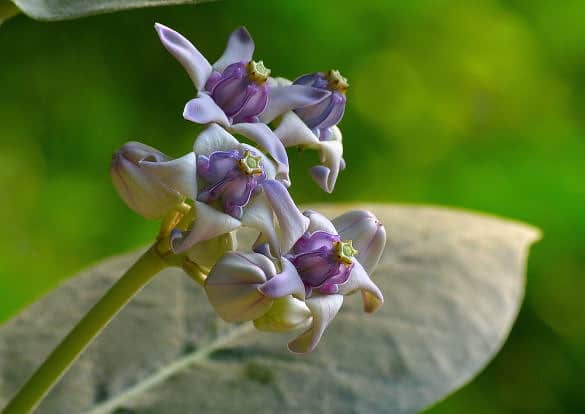
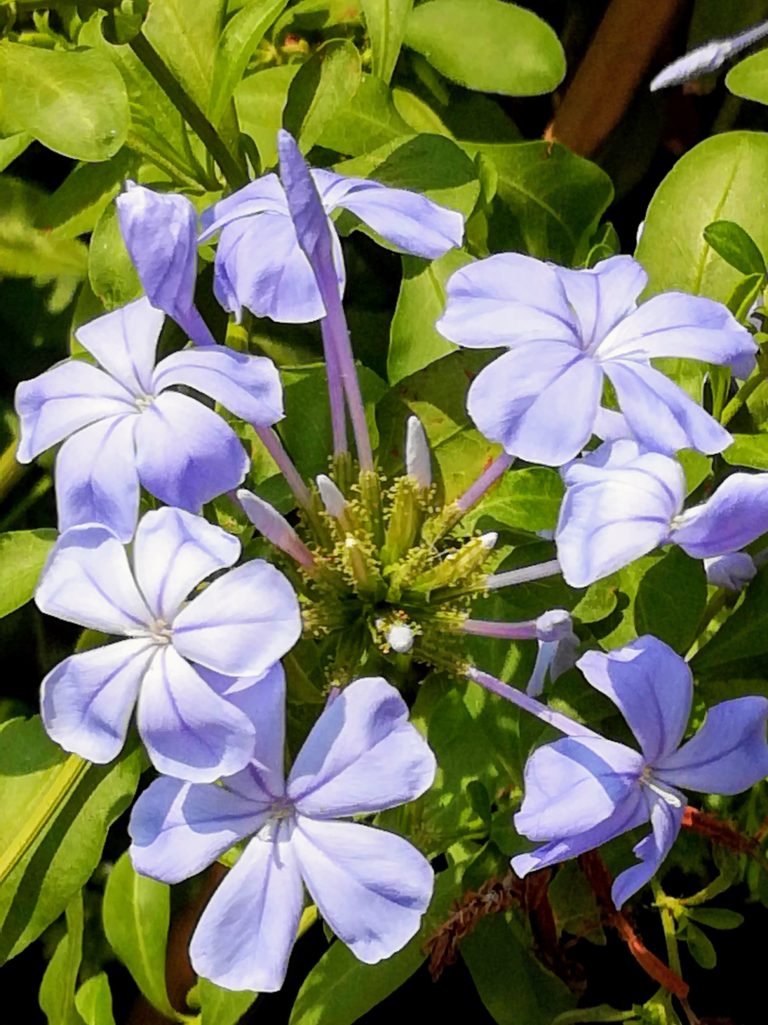
- Produces clusters of waxy, crown shaped flowers that attract pollinators.
- Contains milky latex that can irritate skin and is toxic if ingested.
- Tolerates poor and dry soils and establishes on sandy or alkaline ground.
- Often propagated by seed or stem cuttings.
- Native to South and Southeast Asia and naturalized in other warm regions.
- Can be fast growing and may behave invasively outside its native range.
- Prefers full sun and flowers best in warm conditions.
Crown Flower is a tropical to subtropical evergreen shrub valued for clusters of waxy, crown shaped blooms that attract pollinators, but it contains a milky latex that can irritate skin and is toxic if eaten. It grows quickly in warm sites and tolerates poor, dry soils where other ornamentals struggle.
Identification and key traits
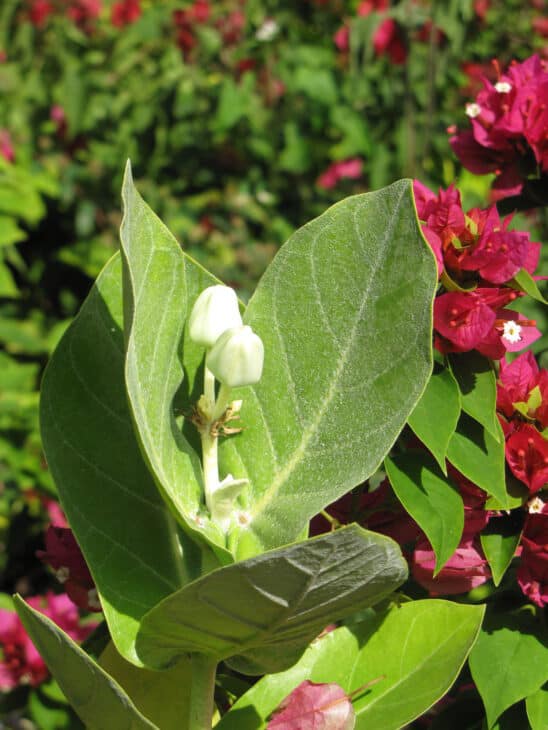
Calotropis gigantea is an evergreen shrub or small tree typically 6 to 15 feet tall with a similar spread of about 6 to 10 feet. Flowers are waxy, star shaped and produced in clusters. The plant exudes a milky latex that contains cardiac glycosides and can irritate skin and harm pets or livestock if ingested.
Best uses and where to grow
Use Crown Flower as a specimen shrub, a wildlife attracting screen, or informal hedge in warm coastal and subtropical landscapes. It prefers full sun for best flowering and establishes on sandy or alkaline soils where drainage is good. It is suited to USDA zone 9b through 11 and will suffer dieback in colder climates.
Planting and spacing
Plant after the last frost in marginal climates or any time in warm regions where soil is not waterlogged. Space plants according to their mature spread, roughly 6 to 10 feet apart for hedging or screens. Avoid low spots with poor drainage to reduce risk of root decline during wet periods.
Watering and soil
Grow Crown Flower in well drained soil. It tolerates poor, dry and sandy substrates once established but needs regular moisture while rooting in. Overwatering or waterlogged heavy soils leads to root decline and poor health, whereas drier conditions encourage sturdier growth and fewer disease problems.
Maintenance and after-flowering care
Prune to shape and to control height or spread, removing dead wood and thinning interior stems to improve air flow. Remove flowers and seedheads if you want to limit self-seeding and naturalizing. Wear gloves when pruning to avoid contact with the milky latex which can irritate skin.
Propagation
Propagate by seed for many plants quickly or by semi-ripe to hardwood stem cuttings to preserve parent traits. Cuttings typically root faster and give a true copy of the parent. Seed performs best when fresh and in warm conditions, so sow in warm seasons or use heated propagation where winters are cool.
Controlling spread and invasive risk
Calotropis gigantea can be fast growing and may naturalize or behave invasively outside its native range. Remove seedlings promptly, cut seedheads before they open, and check local invasive species listings before planting. Avoid planting where seeds can disperse into wildlands or pasture used by livestock.
Frequently asked questions
- How fast does Crown Flower grow?
- Growth is often rapid in warm, sunny conditions and plants commonly reach the typical mature height range of 6 to 15 feet depending on site and care.
- Is Crown Flower poisonous?
- Yes. The plant produces a milky latex containing toxic cardiac glycosides. The latex can irritate skin and ingestion can be poisonous to people and animals. Use gloves when handling and consult local poison control for exposures.
- Will Crown Flower survive winter?
- In warm climates it remains evergreen and fast growing. In cooler areas it is only reliable in USDA zones 9b through 11 and may suffer dieback or winter kill outside that range.
- How do I propagate Crown Flower?
- Propagate from seed or from semi-ripe and hardwood stem cuttings. Seeds produce many plants while cuttings root faster and preserve the parent plant’s traits.
- How can I limit naturalizing and spread?
- Remove seedlings, cut or remove seedheads before they open and avoid planting near wildlands or pastures. Check local regulations and invasive species lists before cultivating.
Gallery
Related Plants


Mentioned In (1)
Plants
25 Poisonous Plants in Hawaii
Plants that may appear to look lush and green in the Hawaiian flora could actually be toxic and poisonous. Even…