
Key Facts
- Lathyrus is a genus in the legume family with both annual and perennial species.
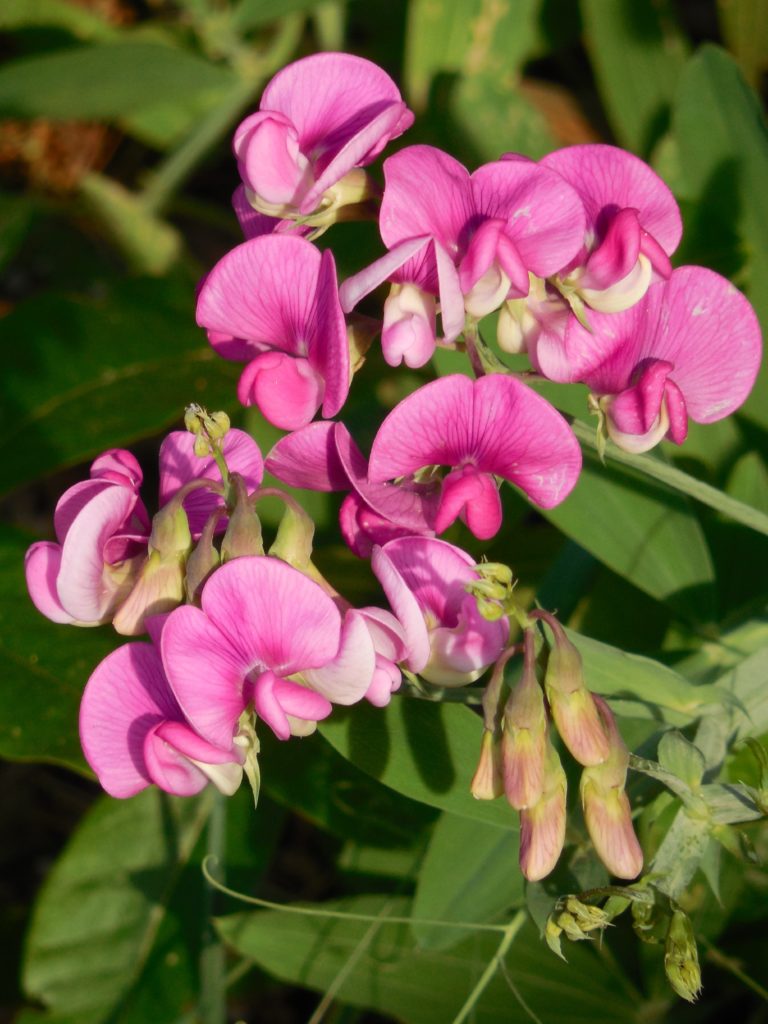
- Flowers are typical pea shaped and attract bees and other pollinators.
- Growth habit varies from low clumps to climbing vines with tendrils.
- Many species prefer well drained, fertile soil and regular moisture during growth.
- Propagation is commonly by seed and by division or cuttings for perennial types.
- Some species and seeds contain compounds that can be toxic if eaten in quantity.
- Blooming typically occurs in spring and summer depending on species and climate.
Wild Pea (Lathyrus spp.) includes annual and perennial peas with typical pea-shaped flowers and a vining or clumping habit. They are used for short trellises, mixed borders and naturalized edges where spring and summer blooms and pollinator visits are desired, but species vary in hardiness and some contain toxic compounds so confirm the species before planting.
Identification
Plants range from low clumps to twining vines with tendrils and display the familiar pea-shaped blossoms that attract bees and other pollinators. Height varies widely among species with common garden forms roughly 1 to 6 feet and spreads often about 1 to 3 feet, so check the specific species for exact dimensions and whether it needs support.
Best uses and where to grow
Use vining types on trellises, obelisks or fences and clumping types in borders or mixed perennial beds. They perform best in full sun to part shade and prefer fertile, well drained soil. In hotter climates a little afternoon shade reduces stress, and avoid waterlogged sites which cause root problems.
Planting and spacing
Propagate primarily by seed for both annual and perennial species; perennial types can also be divided or rooted from cuttings. Space plants according to their mature spread, commonly around 30 to 90 cm or 1 to 3 feet apart. Sowing depth and exact timing vary by species so follow species-specific recommendations for best results.
Water and soil
Wild peas prefer fertile, well drained soil and regular moisture during active growth. Poor drainage and standing water lead to root decline and reduced vigor while prolonged drought typically reduces flowering. Mulch to conserve moisture in dry spells but avoid soggy conditions to keep root systems healthy.
After flowering and propagation
Remove spent flowers to tidy the plant and reduce self-seeding if you want to limit spread. Perennial varieties can be propagated by division in appropriate seasons and some cultivars root from cuttings. Seed dormancy and sowing times differ between annual and perennial species so separate propagation steps by species.
Spread and control
Growth habit varies from clumping to freely twining and some species will naturalize where conditions suit them. Control volunteers by cutting back before seed set and pulling seedlings while small. Provide support for climbers to keep them off other plants and trim to prevent them overtopping nearby vegetation.
Frequently asked questions
- How fast does Wild Pea grow?
- Growth rate varies by species and conditions; annual climbers can reach mature height within a single season while perennial types may take longer to establish.
- Are Wild Peas hardy?
- Hardiness varies by species. Common garden species are often hardy roughly in USDA zones 4 to 8 but confirm the species for precise zone information.
- Are Wild Peas toxic to pets or people?
- Some species contain compounds that can be toxic if ingested. Certain species such as Lathyrus sativus have been linked to serious effects when eaten in quantity. Confirm toxicity for the specific species before allowing pets or people access.
- Can I grow Wild Pea from seed?
- Yes. Seed is the common propagation method for both annual and perennial species. Perennials may also be propagated by division or cuttings depending on the cultivar.
- How should I manage climbing types?
- Provide a trellis, netting or other support and train tendrils early. Trim as needed to prevent them from smothering nearby plants and deadhead to limit unwanted reseeding.
Related Plants


Mentioned In (1)
Plants
25 Poisonous Plants in Pennsylvania
Pennsylvania has a diverse landscape that grows many varieties of flora, including a large variety of vines, trees, and shrubs.…