
Key Facts
- Native to the western United States and adjacent dry regions.
- A small, resinous shrub with narrow leaves and a compact habit.
- Produces yellow asterlike flowers in spring to early summer.
- Prefers dry, well drained soils and open sunny sites.
- Tolerant of rocky, alkaline soils and low fertility.
- Can be toxic to livestock if heavily grazed.
- Low water requirements once established.
- Valued for drought tolerant native landscaping and habitat plantings.
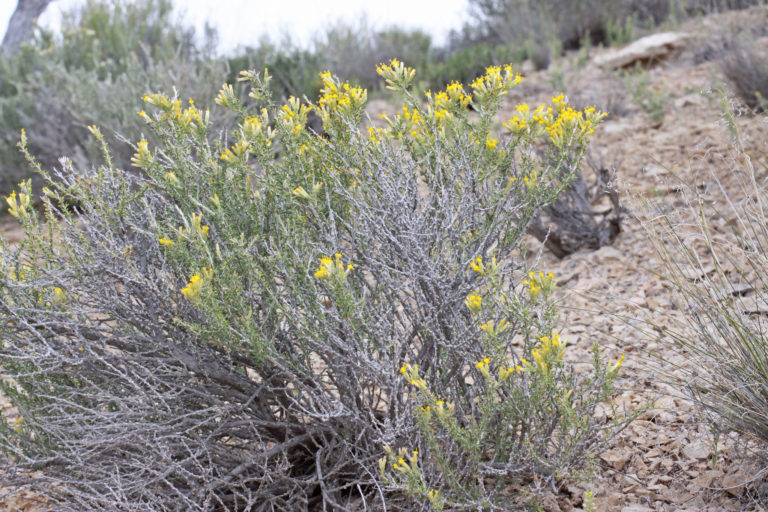
Horse Brushes (Tetradymia glabrata) is a low, resinous shrub from western North America that produces yellow asterlike flowers in spring. It is valued for dry, sunny landscapes but can be toxic to livestock when heavily grazed, so place it away from pasture.
Identification
Horse Brushes is a small, compact shrub with narrow, resinous leaves and yellow composite flowers produced in spring to early summer. Plants typically reach about 12 to 36 inches tall and about the same across, forming rounded mounds in open dry sites. Resinous foliage may be sticky to the touch.
Best uses and where to grow
Use Horse Brushes in drought tolerant native plantings, rock gardens and xeric borders where full sun and poor, well drained soils are common. It tolerates alkaline, rocky substrates and low fertility. Estimated USDA hardiness is zones 5 to 9, so expect reduced vigor or dieback in colder microsites.
Planting and spacing
Space plants to match their mature spread, roughly 12 to 36 inches apart depending on how dense a stand you want. Plant in an open, sunny spot with good drainage. In dryland settings plant where runoff will not collect because poorly drained soils cause decline and winter root damage.
Sunlight and soil
Horse Brushes prefers full sun and performs best in open, exposed sites. It thrives in dry sandy to rocky soils and tolerates alkaline, nutrient poor conditions. Shade reduces flowering and vigor so avoid planting in heavy shade or beneath dense canopies.
Watering and maintenance
Once established Horse Brushes has low water needs and suits waterwise landscapes. In cultivation avoid overwatering and standing moisture. Provide supplemental water sparingly during long droughts and expect better flowering and growth on lean, well drained sites than in rich, wet soils.
After flowering and control
Remove dead flowering stems to keep a tidy form and reduce accumulated debris. The shrub may show winter stress or dieback in colder locations. It forms compact clumps rather than aggressive thickets, so control is normally simple by removing seedlings and trimming to maintain size.
Frequently asked questions
- How fast does Horse Brushes grow?
- Growth is generally slow to moderate. Plants commonly reach 12 to 36 inches tall and across as they mature, with size depending on moisture and site quality.
- When does Horse Brushes bloom?
- Flowers are typically produced in spring to early summer, roughly April through June in the Northern Hemisphere. Timing shifts with elevation and local climate.
- Is Horse Brushes safe for livestock or pets?
- Tetradymia glabrata has been reported to be toxic to livestock if heavily grazed and can cause photosensitization in some animals. Avoid planting where grazing animals have access and check local extension resources for details.
- What soil does Horse Brushes prefer?
- It prefers dry, well drained sandy to rocky soils and tolerates alkaline and low fertility sites. Poorly drained soils are problematic and lead to decline.
- Can Horse Brushes naturalize in a landscape?
- It forms rounded clumps and can persist in dry native plantings. It does not typically form invasive thickets but manage seedlings and spacing to keep plantings tidy.
Related Plants


Mentioned In (1)
Plants
25 Poisonous Plants in Washington State
Native and imported plants are abundantly found in Washington State. Animals and humans should avoid eating these plants since they…