
Key Facts
- Native shrub of western North America adapted to arid alkaline and saline sites.
- Small resinous leaves often give plants a gray green appearance.
- Tolerant of poor dry soils and salinity but intolerant of prolonged waterlogging.
- Produces inconspicuous greenish flowers in spring to early summer.
- Can form dense stands and help stabilize saline soils.
- Reported toxic to grazing livestock when consumed in quantity.
Greasewood (Sarcobatus vermiculatus) is a salt tolerant shrub native to western North America. It thrives on dry alkaline soils and often forms dense stands that help stabilize saline ground, while heavy grazing can cause livestock poisoning.
Identification
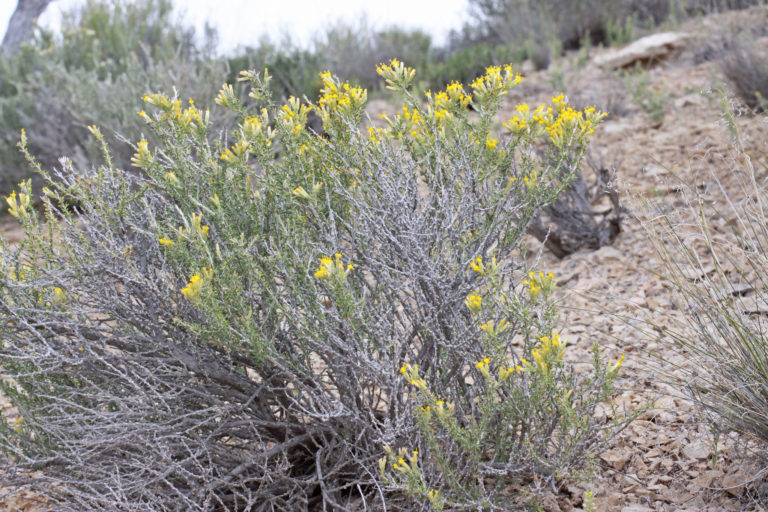
Greasewood has small resinous leaves that give the plant a gray green appearance and produces inconspicuous greenish flowers in late spring to early summer. Mature plants commonly reach about 3 to 8 feet tall and wide, though size varies with soil moisture and salinity.
Where to grow and best uses
Use Greasewood on dry, open sites with alkaline or saline soils where other shrubs struggle. It performs best in full sun and is useful for stabilizing saline flats, roadside cuttings, and low-maintenance native plantings. Avoid planting where prolonged soil saturation occurs or directly in pastures where animals graze freely.
Planting and spacing
Place plants in well drained soil and choose a location with full sun or light afternoon shade in hot climates. Space plants to match their mature spread of roughly 3 to 8 feet so stands do not crowd each other. Poor, rocky soils are acceptable but avoid spots that remain wet after rain.
Watering and care
Greasewood is drought tolerant once established and tolerates salinity, so water sparingly after the first season unless the site is unusually dry. Prolonged wet or saturated soils lead to decline and root problems. Minimal routine care is needed; inspect young plants for moisture stress until established.
After flowering and maintenance
After flowering, remove dead or damaged wood and monitor for winter dieback in colder climates. Plants are generally low maintenance; occasional pruning to shape or remove suckers will keep stands tidy. Leave intact clusters where you want erosion control or dense screening.
Spread, naturalizing and toxicity
Greasewood can spread by seed and by root suckers, forming dense stands in suitable habitats that stabilize soils but can crowd other vegetation. The species is reported toxic to grazing livestock when consumed in quantity. For livestock or pet risk and local control options consult your state extension or poison control resources.
Frequently asked questions
- How fast does Greasewood grow?
- Growth rate varies with site conditions but plants typically reach about 3 to 8 feet in height and spread over several years, growing more vigorously in warmer, less saline sites.
- Is Greasewood invasive?
- It can naturalize and form dense stands by seed and root suckers in suitable alkaline or saline habitats. Manage spread by removing suckers and preventing heavy seeding where it is unwanted.
- Is Greasewood toxic to livestock?
- Yes. It is reported toxic to grazing livestock when consumed in quantity. Check local extension or poison control for details on symptoms and risk in your area.
- Can Greasewood tolerate salt and alkaline soils?
- Yes. The plant tolerates saline and alkaline soils and is often used on sites where soil salinity limits other species.
- When does Greasewood bloom?
- Flowering is late spring to early summer with small, inconspicuous greenish flowers.
Related Plants


Mentioned In (1)
Plants
25 Poisonous Plants in Washington State
Native and imported plants are abundantly found in Washington State. Animals and humans should avoid eating these plants since they…