
Key Facts
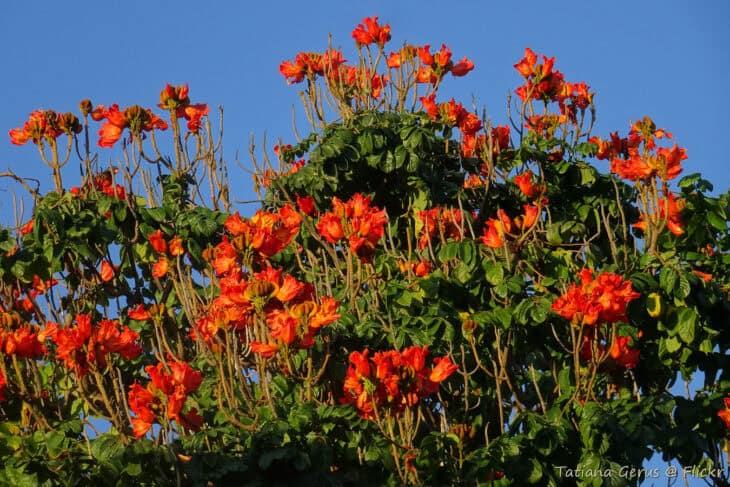
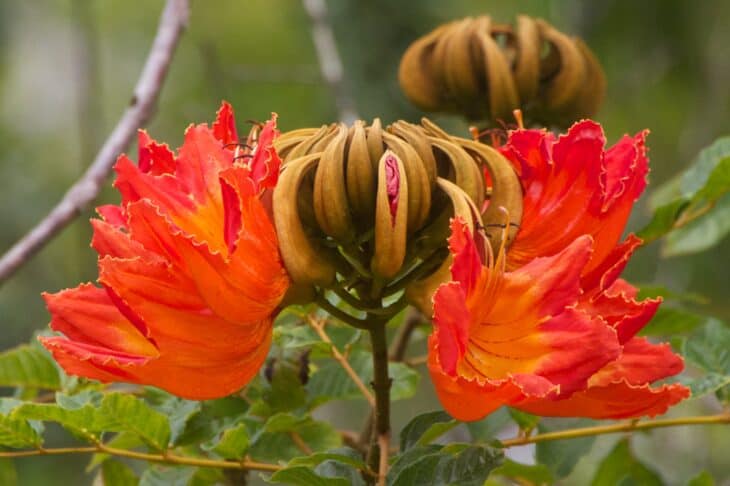
- Showy orange to red funnel shaped flowers in dense terminal clusters.
- Native to tropical West and Central Africa.
- Fast growing ornamental tree used for shade and street planting in warm climates.
- Typically produces long flat seed pods that split to release winged seeds.
- Attracts nectar feeders such as hummingbirds and sunbirds where present.
- Frost sensitive and can suffer dieback in colder climates.
- Considered invasive in several Pacific islands and other tropical regions.
African Tulip Flower is a fast growing tropical tree prized for dense clusters of orange to red funnel shaped flowers. It makes a dramatic street or shade tree in warm climates but is frost sensitive and can naturalize where frosts are rare.
Identification
Look for showy orange to red funnel shaped flowers grouped in dense terminal clusters and long flat seed pods that split to release winged seeds. The tree commonly reaches about 20 to 40 feet tall with a broad crown around 15 to 40 feet across when mature. It attracts nectar feeders such as hummingbirds and sunbirds where present.
Where to grow and best uses
Best suited to warm frost free areas consistent with USDA zones 10 to 11. Use as a specimen, street tree or shade tree in open sites where full sun is available. Avoid planting near sensitive natural areas in tropical regions because the species can naturalize and is considered invasive in some island and tropical locations.
Planting and spacing
Select a sunny site with room for a wide crown and space trees about the distance of their expected mature spread, typically 15 to 40 feet apart. Plant when soils and air are warm in regions with occasional frost and choose a spot with good drainage to reduce winter dieback risk in marginal climates.
Water and soil
Prefers moist well drained soils and tolerates a range of poorer soils but will decline in prolonged waterlogging. Regular moisture encourages rapid growth and abundant flowering. In heavy wet sites expect reduced vigor and potential root problems.
Flowering and after flowering care
Flowers mainly from spring through fall in warm climates and can bloom year round in frost free tropics. Seed pods often persist after flowering and release winged seeds. Remove seed pods to limit self sowing and prune to remove frost damaged wood or to maintain a desirable crown shape.
Propagation and controlling spread
Propagate readily by seed from the pods or by cuttings under warm humid conditions. Seeds germinate easily which helps the species naturalize where conditions allow. To control spread remove seed pods before they open and pull or transplant volunteer seedlings to prevent establishment beyond the intended planting area.
Frequently asked questions
- How fast does African Tulip Flower grow?
- It is a fast growing tree that commonly reaches multiple meters in cultivation. Growth is most rapid in warm, moist sites and slower where temperatures are marginal.
- What USDA zones is it suitable for?
- Suitable for USDA zones 10 to 11 where frost is rare. In colder zones expect frost damage or dieback.
- Is African Tulip Flower invasive?
- It is considered invasive in several Pacific islands and other tropical regions and can naturalize in frost free areas. Avoid planting near natural or sensitive habitats.
- Can it tolerate shade?
- It does best in full sun and will flower more heavily in open conditions. It tolerates light shade but form and bloom are reduced.
- How is it propagated?
- Propagate from seed or by cuttings. Seeds from split pods germinate readily and cuttings root in warm, humid conditions with appropriate care.
Gallery
Related Plants


Mentioned In (2)

Plants
9 Plants That Look Like Vagina
Everyone knows one or more plants that resemble a penis. But did you know that there are just as many…

Trees
89 Best Flowering Trees for Florida Gardens
If you are always on the lookout for elegant and vivid flowering trees in Florida, you would be happy to…