
Key Facts
- Warm season annual vine grown for its large edible fruit.
- Requires full sun for best fruit production.
- Prefers fertile, well drained soil with steady moisture while fruit develops.
- Frost sensitive so plant after all danger of frost has passed.
- Usually propagated by direct seeding or transplanting seedlings.
- Vines are sprawling and need substantial space or mounded hills.
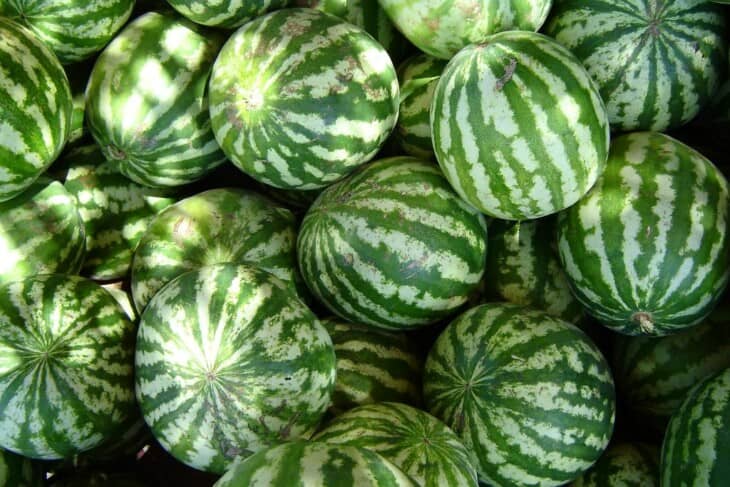
- Fruit size and shape vary widely among cultivars.
- Bees are the primary pollinators for flower set.
- Rind and seeds are edible but may cause digestive upset in pets if fed in large amounts.
Watermelon (Citrullus lanatus) is a warm season, sprawling vine grown for large sweet fruit. It needs full sun, warm soil, and consistent moisture while fruits develop.
Identification
Watermelon forms a low growing vine with the leaf canopy usually 12 to 24 inches above the soil and trailing vines that extend far beyond the crown. Fruit size and shape vary widely by cultivar, from small personal melons to very large varieties, while leaves and prostrate habit make the plant easy to recognize in a vegetable patch.
Best uses and where to grow
Grow watermelon as a summer annual for fresh fruit, roadside or home garden beds, and mounded hills where vines can spread. It requires full sun to develop sugars for sweet fruit and is commonly planted outdoors after frost in USDA zones 3 to 11; tropical climates may support continuous growth year round.
Planting time and propagation
Plant after all danger of frost has passed when soil is warm. Seed is the primary propagation method with direct sowing the simplest option. Starting transplants indoors can shorten the season but handle seedlings carefully to avoid root disturbance when setting them out into warm soil.
Soil sun and watering
Watermelons prefer fertile, well drained sandy loam with a soil pH near 6.0 to 7.5 and full sun of at least six to eight hours daily. Maintain steady moisture while fruit is developing because drought or uneven watering reduces fruit quality. Conversely poor drainage leads to root loss and smaller, poorer tasting melons.
Flowering and pollination
Plants bloom in warm months, typically during summer as vines mature. Bees are the primary pollinators for flower set, so avoid broad insecticide applications during bloom and encourage pollinator activity to improve fruit set and yield.
Space management and control
Vines typically spread six to twelve feet depending on cultivar and training, so allow substantial space per plant or grow on mounded hills to contain runners. Control spread by planning large beds or limiting plants per area; regular removal of stray vines helps keep watermelon out of established beds.
After flowering and harvest care
After flowers set, keep soil moisture steady to support fruit filling and prevent cracking. Full sun during ripening helps sugar development; reduced light slows maturity and lowers sweetness. Harvest timing varies by cultivar and climate so rely on variety cues rather than a fixed calendar.
Toxicity and pets
Flesh is edible and non toxic. Rind and seeds are generally safe for people but can cause digestive upset in pets if consumed in large amounts. Do not assume wild cucurbit relatives are safe for eating.
Frequently asked questions
- How fast does Watermelon grow?
- Growth accelerates once soil and air temperatures are consistently warm. Vine extension is rapid in heat but time to harvest varies strongly by cultivar and local climate.
- When should I plant watermelon?
- Direct seed or set transplants only after all danger of frost has passed and soil is warm enough to encourage quick germination and growth.
- How much space does a watermelon need?
- Vines commonly spread six to twelve feet. Give each plant ample room or use mounded hills to limit runner spread and reduce competition.
- What soil do watermelons prefer?
- Fertile well drained sandy loam with a pH near 6.0 to 7.5. Avoid waterlogged or compacted soils that cause root loss and poor fruit quality.
- Are watermelon rinds safe for pets?
- Small amounts of flesh or seed are usually harmless but large quantities of rind or seeds can cause gastrointestinal upset in dogs and cats.
Gallery

Related Plants


Mentioned In (1)
Plants
7 Plants That Look Like Pumpkin
Pumpkins have long been a staple food for many delicious culinary creations across many cultures. Pumpkins is another vernacular term…