
Key Facts
- Perennial root system with biennial fruiting canes.
- Common types are floricane (summer bearing) and primocane (fall or everbearing).
- Makes edible aggregate fruits composed of many drupelets.
- Prefers full sun for best fruit production.
- Grows from suckers and spreads by root systems if not confined.
- Often trained on supports or grown in rows.
- Thorny canes can cause minor skin scratches when handling.
Raspberry is a perennial bramble grown for sweet red aggregate fruits and fits well in fruiting rows or small edible landscapes. Plants have a perennial root system and biennial canes and are available as floricane types that fruit on second year canes or primocane types that fruit on first year canes.
Identification
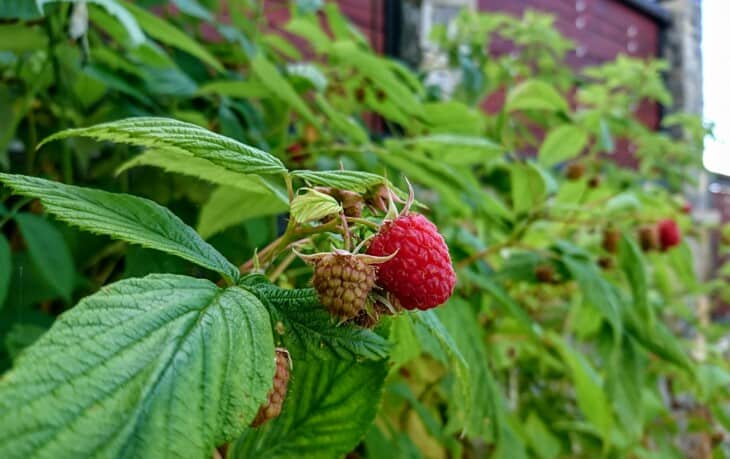
Raspberry has thorny canes that typically reach two to six feet in height and form a clump that can spread two to six feet if suckers are allowed to run. Fruit are edible aggregates made of many drupelets and can be red or other colors depending on cultivar. Handle canes with gloves to avoid minor scratches.
Where to grow and best uses
Plant raspberries in full sun for best yield, although they tolerate some light afternoon shade with reduced fruiting. They are commonly grown in rows with supports or trained on trellises and work well for a backyard berry patch or small commercial beds. Many garden cultivars are adapted to USDA zones 3 through 8 depending on the variety.
Planting time and spacing
Plant when stock is dormant and soil is workable with timing that varies by local climate and cultivar. Space plants according to the mature spread of the cultivar and the intended training method, commonly about two to six feet apart to allow for suckering and air flow. Adjust spacing tighter when using supports and pruning to control vigor.
Soil light and watering
Raspberries prefer fertile well drained loam with good organic matter and a slightly acidic pH near 5.5 to 6.5. Full sun produces the best crops and shade will reduce yields. Keep soil evenly moist during establishment and fruiting because waterlogged soils lead to root diseases and poor growth.
After flowering care and pruning
Because canes are biennial remove canes that produced fruit after harvest to make room for new growth. For floricane types remove spent second year canes while preserving healthy new canes. For primocane types choices include allowing first year canes to fruit later in the season or cutting canes back to encourage fresh growth the next year. Thin crowded canes to improve air flow and light penetration.
Controlling spread and propagation
Raspberries spread by root suckers so contain patches with regular sucker removal or barriers when you do not want them to naturalize. Propagate reliably by division tip layering root cuttings and softwood or hardwood cuttings to preserve cultivar traits. Seed produces variable offspring and is not a common method for maintaining named varieties.
Pests diseases and safety
Waterlogged sites increase the risk of root rot and decline while dense shade can raise disease pressure. Cane prickles can cause minor skin abrasions so wear protection when handling. Ripe fruit are edible and listed as non toxic to dogs and cats but large amounts of any new food can upset stomachs so consult local poison control for serious reactions.
Frequently asked questions
- How fast does Raspberry grow?
- Growth varies by cultivar and site but canes commonly reach two to six feet in height and a patch can spread two to six feet over seasons if suckers are left to develop. Vigor depends on soil fertility and management.
- How do I prune raspberries?
- Remove canes that have fruited and thin remaining canes to improve light and air flow. Follow different pruning for floricane and primocane types based on whether fruiting occurs on first year or second year canes.
- Are raspberries safe for dogs and cats?
- Raspberries are listed as non toxic to dogs and cats but eating large amounts of any new fruit can cause stomach upset. For severe reactions contact local poison control or a veterinarian.
- How far apart should I plant raspberries?
- Spacing depends on cultivar and training but allow about two to six feet between plants to accommodate mature spread and sucker development. Adjust spacing when using trellises or close pruning.
- Do raspberries need full sun?
- Yes full sun gives the best fruit yields. They tolerate some light shade but yields drop and disease risk can increase under dense shade.
Gallery
Related Plants


Mentioned In (1)

Plants
10 Plants That Look Like Virginia Creeper
The Virginia Creeper (Parthenocissus Quinquefolia) is a vine plant. It's part of the grape family and produces small, grape-like purple…