
Key Facts
- Tropical evergreen perennial most commonly grown as a houseplant.
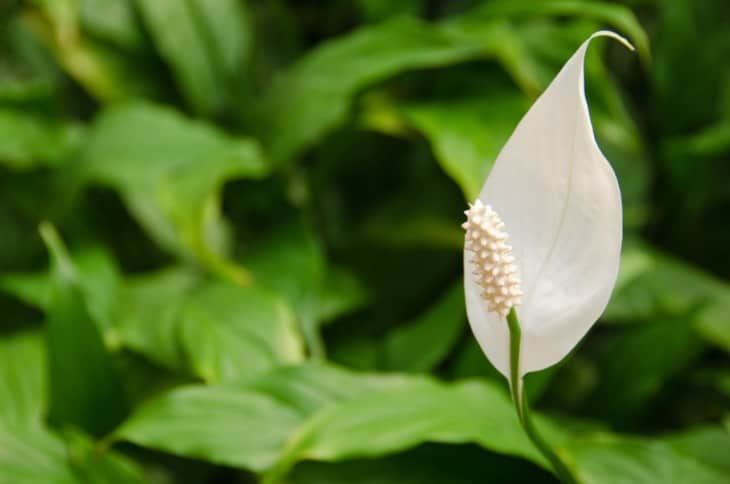
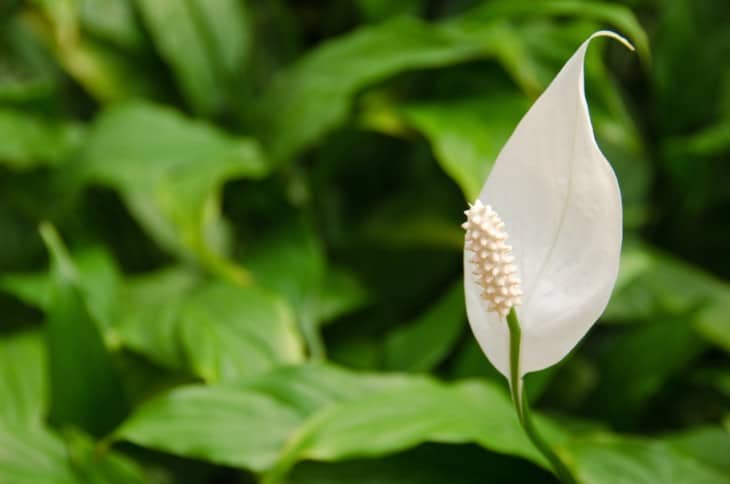
- Produces white spathes around a central spadix that are often called flowers.
- Prefers consistently moist but well drained soil and higher humidity.
- Flowers more reliably in bright indirect light and less in deep shade.
- Propagated primarily by division of the clump.
- Contains calcium oxalate crystals that cause oral irritation if ingested.
- Usually kept indoors in temperate climates and set outdoors only in frost free areas.
A tropical evergreen perennial most often grown as a houseplant for glossy green leaves and white spathes. It performs best in bright filtered light and moist well drained soil but contains calcium oxalate crystals that cause oral irritation if eaten.
Identification
Peace Lily is Spathiphyllum wallisii and forms a clump of glossy lance shaped leaves with occasional white spathes around a central spadix that are often called flowers. Typical cultivated plants range from about 12 to 36 inches tall and spread roughly the same across depending on cultivar and growing conditions.
Where to grow and best uses
Use Peace Lily as an indoor specimen or grouped in shaded patios where frost is not a risk. It works well in homes, offices and bathrooms because higher humidity suits it. Outdoors it belongs only in frost free areas roughly equivalent to USDA 10 through 12 where it can remain year round.
Light and placement
Bright indirect light yields the most reliable flowering while low light keeps plants alive but reduces blooms. Avoid direct hot sun because leaf scorch is common. Place plants near an east or north facing window or behind a sheer curtain to balance light and prevent leaf damage.
Soil and watering
Grow in a rich potting mix that retains moisture but drains freely. Keep the soil evenly moist because waterlogging leads to root rot and drought causes browning and leaf drop. Water when the topsoil begins to feel slightly damp rather than fully dry or constantly soggy.
Feeding and after flowering care
Feed lightly with a balanced houseplant fertilizer during the active growing season to support foliage and blooms. After flowering remove spent spathes at the base and tidy any yellowing leaves. Maintain steady moisture and moderate light to encourage future blooms.
Propagation and repotting
Propagate by dividing the clump at repotting for reliable results. Mature clumps can be split into sections with roots and leaves intact and then potted individually. Repot in spring when roots fill the container or when growth slows due to crowding.
Pests and toxicity
Peace Lily is prone to common houseplant pests such as scale and spider mites when stressed by low humidity or poor light. All parts are toxic if ingested because of calcium oxalate crystals that cause oral irritation, drooling and vomiting. Keep away from children and pets and wash hands after handling.
Containers and outdoor care
Containers suit Peace Lily well because they allow controlled soil moisture and mobility. Choose pots with drainage and a moisture retaining mix. Move plants outdoors in warm months to shaded patios in frost free zones but return them indoors before cool nights or cold weather arrives.
Frequently asked questions
- How fast does Peace Lily grow?
- Growth is moderate and clumping. Plants commonly reach between about 12 and 36 inches tall over time depending on cultivar, light and care.
- Are Peace Lilies toxic to pets?
- Yes. They contain calcium oxalate crystals that cause oral irritation, drooling and vomiting if eaten. Seek veterinary help for severe symptoms.
- How do I get my Peace Lily to bloom?
- Provide bright filtered light, steady moisture and moderate feeding. Improved light usually increases the chance of producing white spathes.
- Can I put my Peace Lily outside?
- Yes in frost free climates roughly USDA 10 through 12. Keep it in shaded or filtered light and bring it indoors before cool nights begin.
- How often should I water a Peace Lily?
- Water so the potting mix stays evenly moist but never waterlogged. Allow the topsoil to feel slightly damp before watering again to avoid root rot and leaf browning.
Gallery


Related Plants



Mentioned In (1)

Plants
6 Plants That Look Like Calla Lilies
Calla Lilies' simplistic beauty has been the inspiration for many paintings. Calla blooms are associated with peace, serenity, and fertility.…