
Key Facts
- Very fast growing deciduous tree with large heart shaped leaves.
- Produces clusters of fragrant tubular lavender to pale violet flowers in spring before or as leaves emerge.
- Valued for rapid timber production and ornamental spring flowers.
- Can spread from abundant seed and root suckering and is considered invasive in parts of the United States.
- Prefers full sun for best flowering but tolerates some light shade.
- Does best in well drained fertile soil but tolerates poor soils.
- May resprout vigorously after cutting or winter dieback.
- Susceptible to reduced flowering and crown dieback in colder climates.
Royal Empress Tree (Paulownia tomentosa) is a very fast growing deciduous tree prized for large heart shaped leaves and clusters of fragrant lavender to pale violet flowers in spring. It is grown for quick timber and bold spring display but can spread from abundant seed and root suckers in some regions.
Identification
Large heart shaped leaves give the tree an unmistakable silhouette and the spring display is clusters of tubular lavender to pale violet flowers often appearing before or as leaves emerge. Typical mature size ranges from about 30 to 50 feet tall with a crown spread commonly 20 to 40 feet in open sites.
Best uses and where to grow
Use as a focal ornamental or for rapid timber production on large sunny sites where vigorous growth is acceptable. The tree performs best in full sun for strong flowering and does well in well drained fertile soils while tolerating poorer, disturbed soils. Avoid small yards and tightly planted borders because of its size and spread.
Planting and spacing
Give each tree room to develop a 20 to 40 foot crown when planning spacing and site placement. In USDA zones 5 to 9 choose a sunny, well drained location to support flowering and growth. Confirm local restrictions before planting because the species spreads readily by seed and suckers in some areas.
Soil and watering
Thrives in fertile, well drained soils but tolerates a wide range of soil types. Avoid waterlogged sites because poor drainage leads to root problems and reduced growth. Good soil and drainage encourage the fastest growth and best flowering; compacted or very wet ground reduces survival and vigor.
Pruning and after-flowering care
Prune to shape or limit size but expect vigorous resprouting after cutting or winter dieback. In colder climates crown dieback and reduced flowering are possible, so repair or selective pruning can remove dead wood. Monitor for root suckers and remove them promptly to prevent unwanted clonal spread.
Spread and control
The species produces abundant seed and can send up root suckers, which contributes to invasive behavior in parts of the United States. Control young seedlings, remove suckers at the root, and avoid letting seed heads mature in sensitive landscapes. Check regional invasive species lists and local regulations before planting.
Frequently asked questions
- How fast does Royal Empress Tree grow?
- It is described as very fast growing and reaches a typical mature height of 30 to 50 feet depending on soil fertility and climate.
- Is Royal Empress Tree invasive?
- Yes. It can spread from abundant seed and by root suckering and is considered invasive in parts of the United States. Local restrictions may apply.
- When does it bloom?
- Blooms in spring, often April to May in temperate Northern Hemisphere locations, with fragrant clusters of violet to pale lavender flowers.
- What light does it need?
- Full sun gives the best flowering. The tree tolerates some light shade but will flower less in deeper shade.
- Is it suitable for small yards?
- No. Its rapid growth, mature size and tendency to spread by seed and suckers make it unsuitable for small or confined sites.
Related Plants


Mentioned In (4)

Trees
Trees of North Carolina: Common, Oak & Flowering Trees
North Carolina has three distinct regions, the Mountains, the Piedmont and the Coastal Plain, and each has its own tree…
Trees
Trees of Tennessee: 42 Common Native Trees (and 4 to Avoid)
The most common trees in Tennessee are red maple, tulip poplar (the state tree), white oak, chestnut oak, sugar maple,…
Trees
Trees of West Virginia: 30 Common Native Trees (and 2 Not to Plant)
About three-quarters of West Virginia is forest, making it one of the most heavily forested states in the country, behind…
Trees
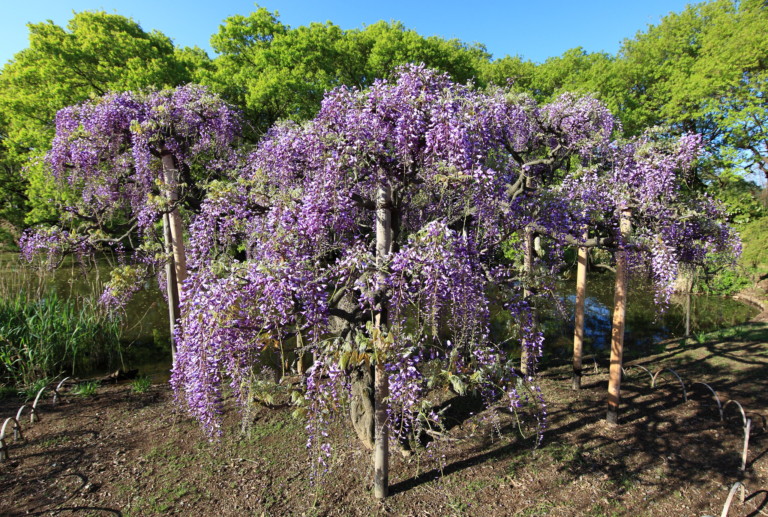
10 Trees Similar to Wisteria, for Warm and Cold Climates
The tree that looks most like wisteria is the jacaranda, with clouds of lavender-blue flowers in late spring, but it…