
Key Facts
- Native deciduous tree of the Pacific Northwest coast.
- Fast growing and commonly colonizes disturbed and riparian sites.
- Forms nitrogen fixing root nodules with actinorhizal bacteria.
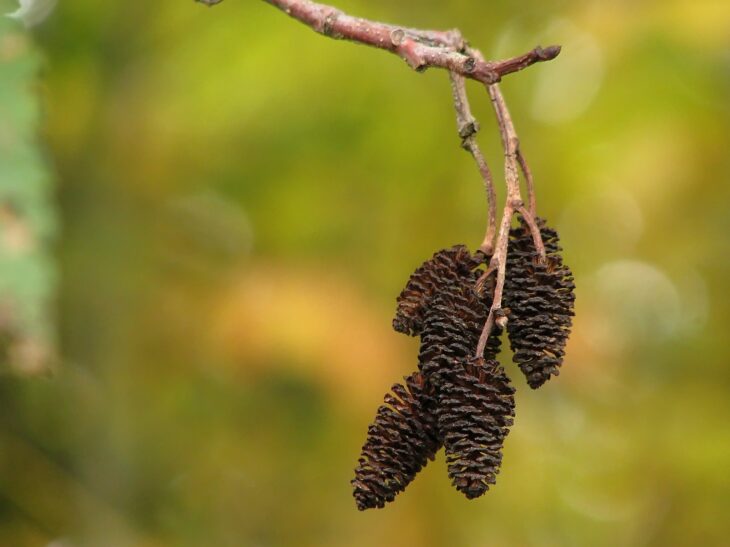
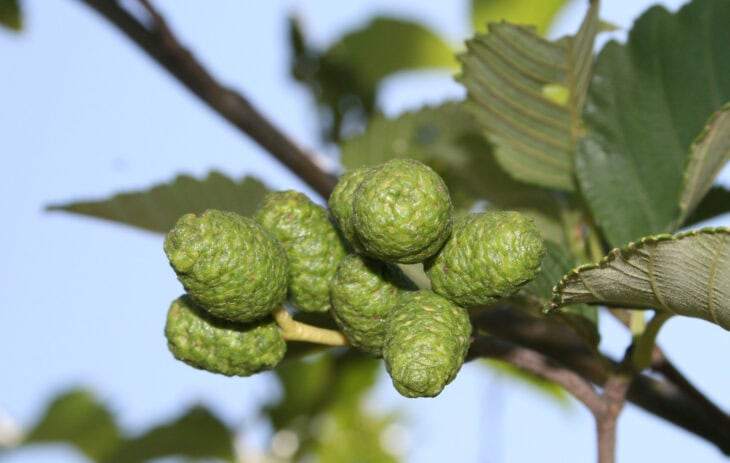
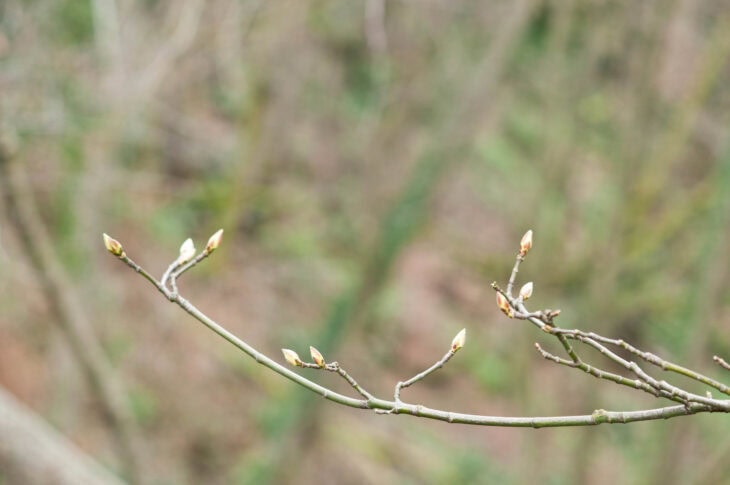
- Produces long male and short female catkins before leaf out.
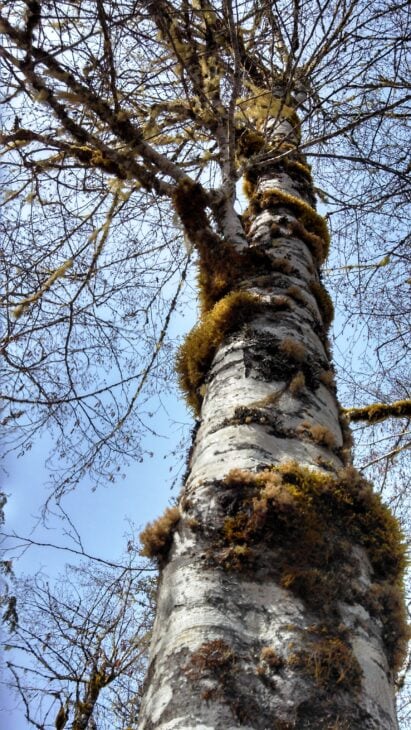
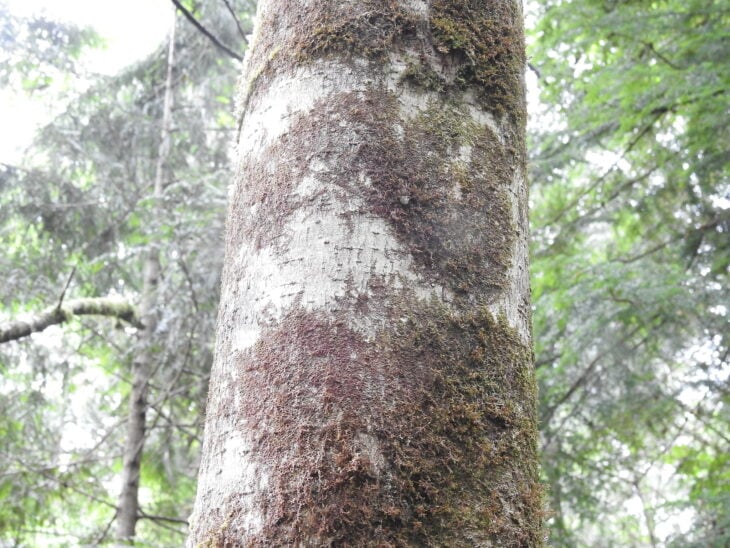
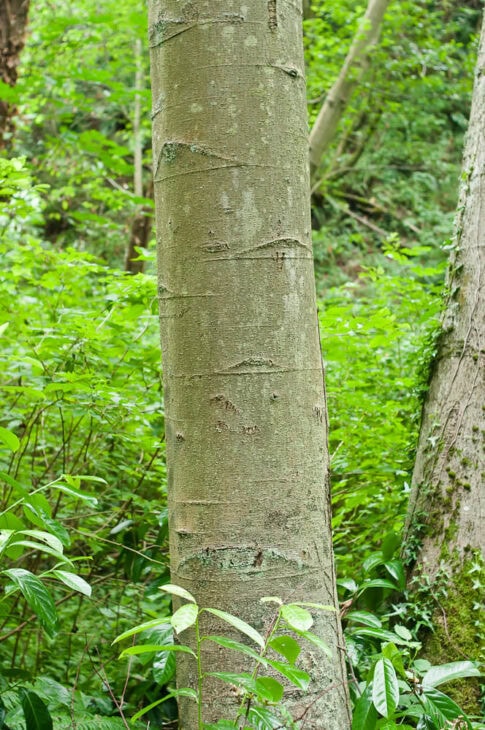
- Bark smooth and pale when young often becoming reddish or gray with age.
- Wood used for furniture, cabinetry and smoking foods.
- Tolerates wet soils and seasonal flooding better than many hardwoods.
- Relatively short lived compared with many other shade trees.
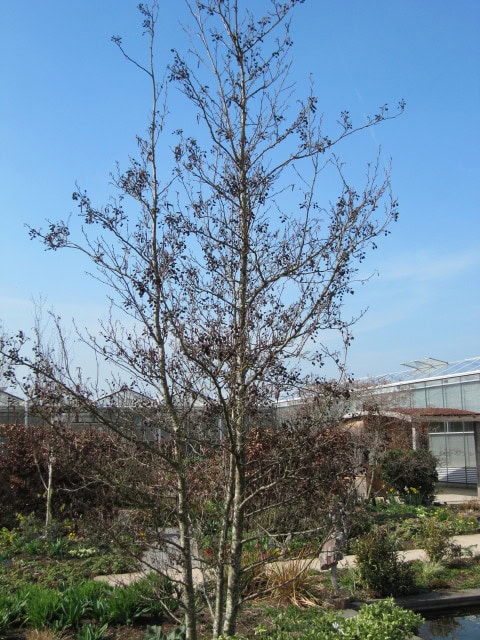
Red Alder (Alnus rubra) is a fast growing deciduous tree native to the Pacific Northwest that fixes nitrogen and readily colonizes moist disturbed sites. It flowers as long male and short female catkins before leaf out in late winter to spring and is commonly used for riparian restoration and quick shade.
Identification
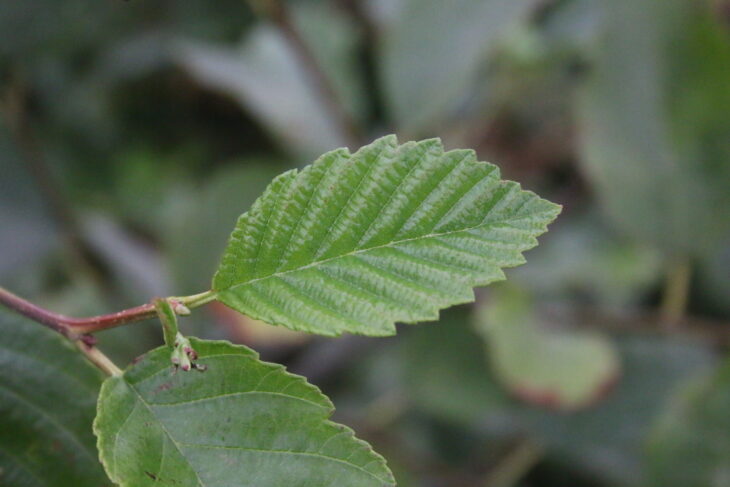
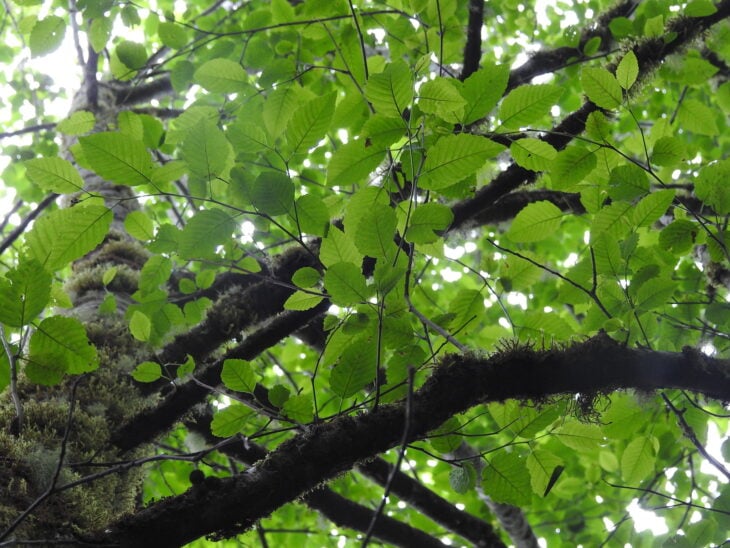
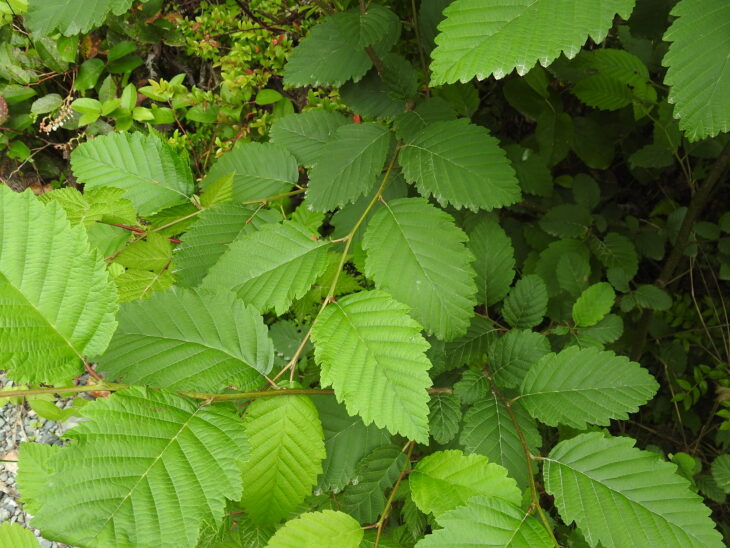
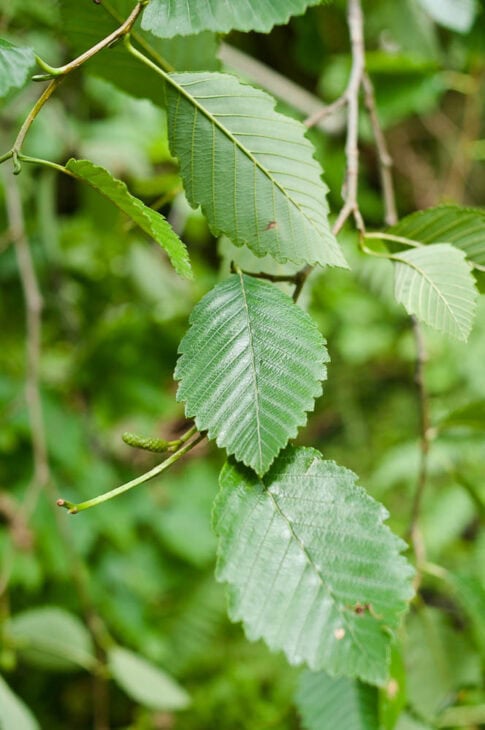
Leaves are simple and deciduous with a rounded to slightly tapered shape and a serrated edge. Bark is smooth and pale when young often becoming reddish or gray with age. Flowers are produced as long male and short female catkins before leaves open in late winter to spring.
Best uses and where to grow
Use Red Alder for riparian buffers soil stabilization and restoration where rapid cover is needed. It thrives in coastal lowlands and moist valleys within USDA zones 6 to 9 and does well on stream banks and other seasonally wet sites that many hardwoods avoid.
Planting and seasonal timing
Plant container or bare root stock during the dormant season in your region to give roots time to establish before summer drought. Timing shifts with latitude and elevation so match planting dates to local frost and soil moisture conditions for best survival.
Soil light and watering
Prefers moist to wet soils and tolerates occasional flooding yet performs best in moist well drained loams with slightly acidic to neutral pH. Give full sun to partial shade for fastest growth. Avoid prolonged drought because growth and survival decline on dry sites.
Maintenance and controlling spread
Red Alder is fast growing but relatively short lived compared with many shade trees and commonly suckers to form multi stem clumps. Control naturalizing by removing unwanted suckers and coppicing stems. Expect faster crown spread on open sites and narrower crowns when grown in shade.
Propagation
Propagate by seed after cold stratification or by using root and stump sprouts for restoration planting. Vegetative suckering and coppice sprouting are common so clonal regeneration provides rapid canopy closure and soil stabilization after disturbance.
Uses and safety
Wood is valued for furniture cabinetry and smoking foods. No major human or pet toxicity is widely reported but wood dust and smoke can irritate sensitive people. If ingestion or allergy is a concern confirm safety with local poison control or extension services.
Frequently asked questions
- How fast does Red Alder grow?
- Red Alder is fast growing especially in full sun with moist fertile soil. On good riparian sites young trees can add substantial height within a few years though mature size varies by site.
- How large does Red Alder get?
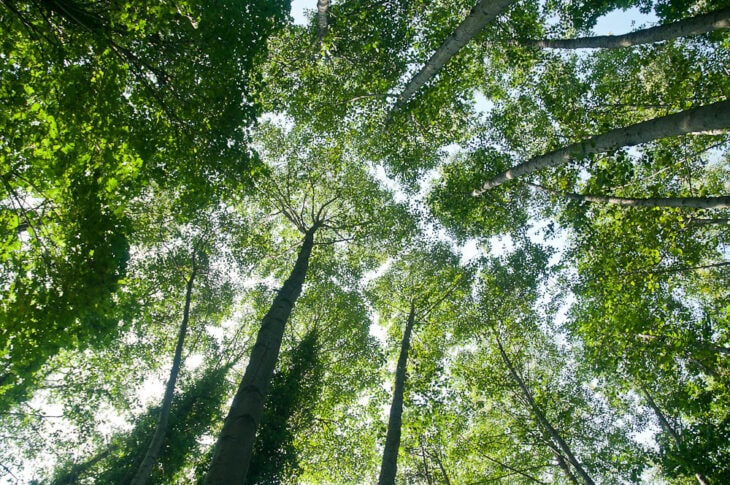
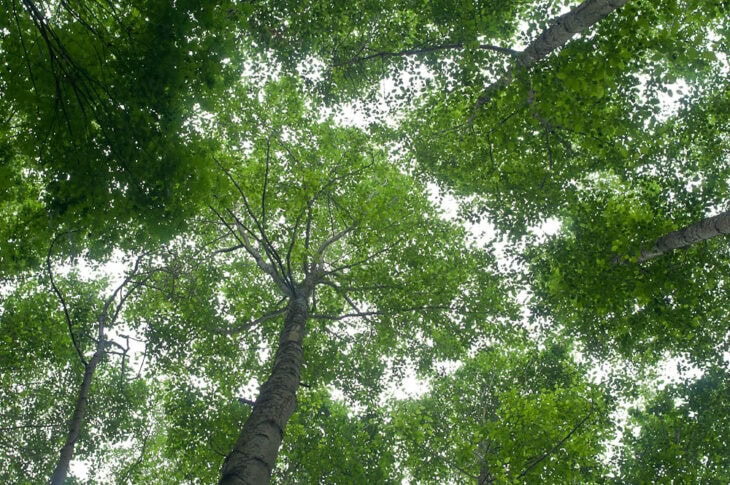
- Mature height commonly ranges from 40 to 80 feet with a crown spread around 30 to 60 feet depending on soil fertility moisture and whether it forms multiple stems.
- When does Red Alder bloom?
- It produces male and female catkins in late winter to spring often before leaves emerge. Exact timing moves earlier in coastal lowlands and later inland or at higher elevations.
- Can Red Alder tolerate flooding?
- Yes it tolerates wet soils and seasonal flooding better than many hardwoods making it suitable for stream banks and other seasonally saturated locations.
- How do I control suckers and spread?
- Remove unwanted suckers at the base and coppice stems to manage size. Regular removal prevents multi stem clumps and limits naturalizing in managed landscapes.
Gallery

Related Plants


Mentioned In (7)

Trees
10 Trees Similar To Birch
You admire birch trees' slender, upright growth habit and their white bark, yet you're concerned about birch borer targeting your…
Trees
17 Most Common Trees in England
The country of England is home to a large variety of trees. Due to the temperate climate, there are many…

Trees
28 Most Common Trees in the World
Our world is filled with nature’s wonders. From mountains and oceans to beaches and forests, every region is filled with…
Trees
20 Most Common Trees in North America
The North American continent is home to an enormously diverse array of landscapes, topographies, geographies, and climates, covering a total…

Trees
15 Most Common Trees in Washington State
Like many other northwestern states, Washington is home to a large and diverse collection of trees. As a part of…
Trees
15 Most Common Trees in Oregon
With partly rainforest and partly mountainous landscape, Oregon is home to a diverse array of trees, as is typical of…

Trees
20 Different Types of Hardwood Trees
Hardwood trees are usually sought after by those who wish to make strong, sturdy furniture and other items so it…