
Key Facts
- A medium to large deciduous legume tree native to West Africa.
- Produces pods with seeds that are fermented into the condiment dawadawa.
- Forms root nodules and contributes nitrogen to the soil.
- Tolerant of seasonal drought and commonly used in agroforestry.
- Prefers full sun and open sites for a wide spreading crown.
- Typically propagated by seed with scarification or soaking to improve germination.
- Used for shade, fodder, timber, and food from seeds and young pods.
- Frost sensitive and not adapted to cool temperate climates.
African Locust Bean is a medium to large deciduous legume tree valued for edible fermented seeds and for use in agroforestry. It provides broad shade and improves soil nitrogen but is frost sensitive and best suited to warm open sites.
Identification and key traits
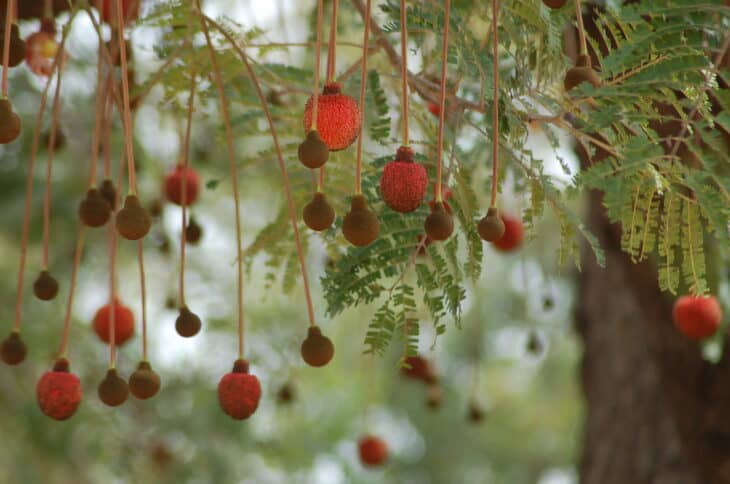
Parkia biglobosa grows to about 7 to 20 meters tall and often forms a wide spreading crown roughly 5 to 15 meters across. It produces long pods that contain seeds traditionally fermented into the condiment dawadawa. The tree forms root nodules and contributes nitrogen to soils where it is established.
Where to grow and best uses
Grow African Locust Bean in warm tropical to subtropical climates roughly USDA 10 to 12 because frost will cause dieback or mortality. It prefers full sun in open sites and well drained sandy to loamy soils. Common uses include shade tree, fodder, timber, and source of edible seeds and young pods in agroforestry systems.
Planting season and site selection
Plant seedlings at the start of the local rainy season so young plants establish with natural rainfall. Choose a sunny open site with good drainage and plenty of room for the crown to develop. Flowering and fruiting follow the onset of rains so timing varies with local climate.
Propagation and spacing
Propagation is mainly by seed and germination improves with scarification or a hot water soak before sowing. Nursery seedlings are raised and later transplanted to the field. Allow plenty of room between trees to match the crown span and plan for spacing on the order of 5 to 15 meters between mature trees depending on site and purpose.
Watering and soil care
The species tolerates seasonal drought once established but young trees need regular moisture while roots develop. Avoid waterlogged soil because poor drainage can cause root problems. Low soil fertility is tolerated and the tree contributes nitrogen through root nodules which can benefit nearby crops.
Pruning harvesting and after flowering care
Prune to shape the crown for shade or to manage timber form and remove dead wood to reduce breakage. Harvest pods when mature for seed processing and fermentation into dawadawa. After flowering thin heavy fruiting branches if needed to prevent limb failure on larger trees.
Control and toxicity notes
African Locust Bean is not widely reported as invasive but its large shade can suppress understory plants when planted densely. Seeds are edible for humans after processing and fermentation. Pet toxicity is not well documented so keep pets from consuming seeds or pods until local veterinary advice is obtained.
Frequently asked questions
- How fast does African Locust Bean grow?
- Growth rate varies with soil fertility and rainfall. In suitable warm sites it reaches mature dimensions of about 7 to 20 meters over several years so expect a moderate to fairly rapid canopy development under good conditions.
- Can I grow African Locust Bean in a pot?
- This species becomes a large tree and is not suited to long term container growing. Use ample ground space for root and crown development instead of pots.
- What is the best soil for this tree?
- Well drained sandy to loamy soils are preferred and the tree tolerates low fertility. Avoid heavy clay or waterlogged sites to prevent root problems.
- When will it flower and produce pods?
- Flowering and pod production follow the local rainy season. Exact months vary by region so plan planting and harvest around the onset of seasonal rains.
- How should seeds be prepared for sowing?
- Scarify the seed coat or use a hot water soak to improve germination. Raise seedlings in nursery beds and transplant when established and the rains begin.
Gallery
Related Plants


Mentioned In (1)

Trees
7 Trees Similar To Honey Locust
The honey locust is an aggressive, invasive colonizer because it produces abundant seeds and root suckers and can grow in…