
Key Facts
- A small deciduous tree or large multi-stemmed shrub.
- Native to the southeastern United States.
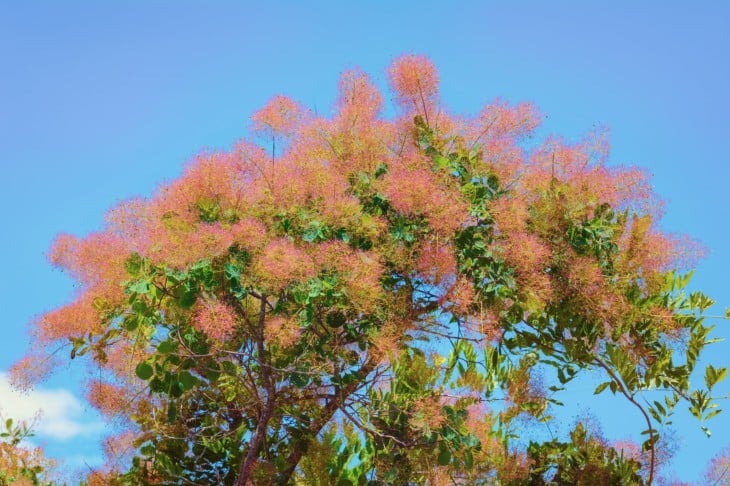
- Noted for airy, smoky seed clusters that follow the flowers.
- Produces good fall color in many climates.
- Prefers full sun for best foliage color and flowering.
- Tolerant of drought once established.
- Prefers well drained soils and tolerates poor, rocky sites.
- Propagated by seed, cuttings, suckers or grafting.
The American Smoke Tree (Cotinus obovatus) is a small deciduous tree often grown for its airy, smoky seed clusters and attractive fall color. It works well as a specimen or in mixed shrub borders where full sun and well drained soil are available, and it tolerates dry, rocky sites once established.
Identification
Multi stemmed shrubs or small trees reaching about 15 to 30 feet, the American Smoke Tree is noted for loose clusters of tiny flowers that are followed by wispy seed panicles that create a smoky visual effect. Leaves turn showy fall colors and growth habit can be single trunk or broadly rounded and shrub like depending on pruning and site.
Best uses and where to grow
Use as a specimen tree, in mixed shrub borders, or on rocky slopes where poor soils limit other plants. Full sun produces the best foliage color and flowering. It is native to the southeastern United States and adapts to temperate gardens in USDA zones 5 to 8, performing best on well drained sites.
Planting and timing
Plant in spring or fall in a sunny, well drained location to help roots establish before summer drought or winter cold. Avoid heavy, waterlogged soils because poor drainage increases risk of root decline. Space plants where a 15 to 25 foot mature spread will fit unless you plan on regular pruning or single trunk training.
Soil light and watering
Prefers well drained loam, sandy or rocky soils and tolerates poor soil. Full sun gives the best flowering and leaf color; light shade reduces color and can encourage legginess. Water regularly while young to establish roots. Once established the tree is drought tolerant; prolonged wet soil leads to root problems and visible decline.
After‑flowering care and pruning
After the smoky seed clusters fade, prune lightly to shape or remove crossing branches. Pruning to a single trunk controls a tree form while removing basal suckers keeps plants from reverting to a multi stemmed shrub. Avoid heavy pruning back into old wood which can reduce next season’s flowering.
Controlling spread and suckering
Plants commonly produce basal suckers that change appearance from grafted or selected cultivars. Remove unwanted suckers at the base or prune them out as they appear. Training a single leader and timely selective pruning reduce spread and keep the plant in a managed footprint in the landscape.
Propagation
Propagate by seed, hardwood cuttings, basal suckers or grafting for named cultivars. Seedlings and suckers may vary from the parent plant while grafting preserves selected foliage and growth traits. Cuttings and grafting are commonly used when uniformity of a cultivar is desired.
Frequently asked questions
- How fast does American Smoke Tree grow?
- Growth rate varies by site, cultivar and care. Many plants reach a portion of the typical 15 to 30 foot mature height over several years and continue filling out; growth appears faster on favorable sites with good sun and moderate moisture.
- When does the Smoke Tree bloom?
- Flowers appear in late spring to early summer and are followed by the airy seed panicles that give the smoky appearance. Exact timing depends on local climate and latitude.
- What light and soil does it need?
- Full sun for best foliage color and flowering and well drained loam, sandy or rocky soils. It tolerates poor soils but does not do well in prolonged wet or waterlogged conditions.
- Is it drought tolerant?
- Yes. Once established the American Smoke Tree tolerates drought. Young plantings need regular water to establish a healthy root system.
- How is it propagated?
- Propagation options include seed, hardwood cuttings, basal suckers and grafting. Grafting preserves cultivar traits while seedlings and suckers can differ from the parent.
Gallery


Related Plants


Mentioned In (6)

Trees
37 Most Common Trees in Texas
Texas is located in the Southernmost region of the United States and is bordered by New Mexico and other Mexican…
Trees
19 Different Smoke Tree Varieties
Are you looking for stunning and bold trees and shrubs with magnificent foliage and distinctive flowering to plant in your…

Trees
27 Terrific Flowering Trees For Texas Yards
Are you looking to plant flowering trees in Texas? Well, you will be immensely pleased to know that despite its…

Trees
22 Terrific Flowering Trees For Tennessee
Are you on the lookout for elegant, distinctive flowering trees in Tennessee? The good news is that the Volunteer State…

Trees
34 Gorgeous Flowering Trees For Arkansas
If you’ve just moved to Arkansas and are looking to plant some beautiful flowering trees in your garden, you’re in…

Trees
26 Great Flowering Trees for Wisconsin Yards
If you’re looking to expand your garden and plant unique, breathtaking flowering trees in your home garden in Wisconsin, you…