
Key Facts
- Clump forming perennial grown for feathery plume like flowers
- Best in consistently moist humus rich soil
- Performs well in partial to full shade
- Flowers typically appear in late spring to early summer
- Commonly propagated by division every few years
- Used in woodland borders, shade gardens and containers
- Tolerates periodic wetness but declines in dry soils
Astilbe is a shade loving perennial prized for feathery plume like flowers and fernlike foliage. Home gardeners should know whether it will naturalize, whether it suits containers or indoor growing and how much moisture and shade it needs.
Identification
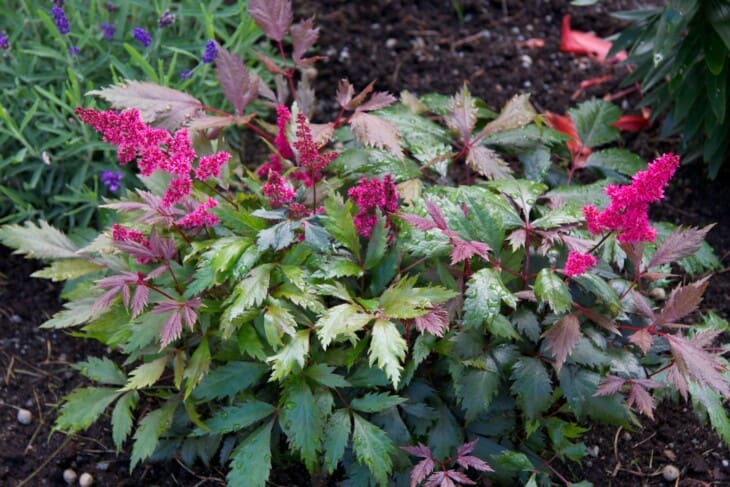
Astilbe is a clump forming perennial with feathery, plume like flower panicles above finely divided leaves. Height varies by variety from about 6 to 36 inches and typical clump spread is roughly 12 to 24 inches.
Where to grow and best uses
Grow Astilbe in woodland borders, shade gardens and containers. It performs best in partial to full shade and is commonly used where moist, cool soil is available. Hardiness varies by species and cultivar but is commonly listed for USDA zones 4 to 8.
When to plant
For established plants, divide and replant in spring or fall. Many gardeners also plant bareroot or potted stock in spring when soil warms. Exact timing will vary with local climate and the cultivar you choose.
Spacing
Give plants room to form clumps. A spacing of about 12 to 24 inches between crowns matches typical mature spread and helps air circulate through the foliage.
Soil and watering
Astilbe prefers rich, humus rich soil that stays evenly moist and drains reasonably well. It tolerates periodic wetness but will decline in dry or compacted soils. If soil dries regularly you are likely to see reduced flowering and weaker plants.
Light
Partial shade to full shade is ideal. Morning sun with afternoon shade is often recommended. In cooler climates some varieties can tolerate more sun if soil moisture is kept high.
Bloom time
Flowers typically appear in late spring to early summer, roughly May through July in many temperate Northern Hemisphere locations. Timing varies by species, cultivar and climate.
Propagation and division
Division in spring or fall is the most reliable propagation method and also rejuvenates older clumps. Astilbe can also be raised from seed or from root and crown cuttings. Seed grown plants may not be true to a named cultivar and often need cool stratification.
After flowering and maintenance
To keep clumps healthy divide every few years to control size and vigor. Regular mulching with organic matter helps retain the consistent moisture Astilbe prefers and supports flowering.
Containers and indoor growing
Astilbe is used successfully in containers provided the potting mix is rich and kept evenly moist. It is primarily an outdoor shade perennial. Indoor culture is possible short term in very bright, cool, consistently moist conditions but performance is generally better outdoors.
Control and spread
Plants form clumps and increase in spread with age, especially in moist fertile soil. Division is the standard way to control clump size. Astilbe is not commonly listed as invasive in the sources referenced here.
Frequently asked questions
- How fast does Astilbe grow?
- Growth rate varies by species, cultivar and growing conditions. Clumps expand over several seasons and are commonly divided every 3 to 4 years to manage size.
- Astilbe indoors vs outdoors?
- Astilbe is primarily grown outdoors in shade gardens and containers. Indoor culture can work short term if the plant receives cool temperatures, bright indirect light and consistently moist soil.
- Is Astilbe toxic to pets or people?
- Astilbe is not widely listed as toxic in general gardening references. Verify pet safety with your local poison control or the ASPCA before making definitive claims.
- When should I divide Astilbe?
- Divide clumps in spring or fall. Division every 3 to 4 years rejuvenates plants and helps control spread.
- Can Astilbe handle full sun?
- Full sun in hot climates can cause leaf scorch and reduced flowering unless soil moisture is consistently high. In cooler climates some varieties tolerate more sun with reliable moisture.
Gallery
Related Plants

