
Key Facts
- Botanically a tender perennial often grown as an annual in temperate gardens.
- Produces edible fruit ranging from mild to hot depending on cultivar.
- Prefers full sun and warm growing conditions.
- Likes fertile well drained soil with a near neutral pH.
- Frost sensitive and will be damaged or killed by hard freezes.
- Commonly started from seed or transplants.
- Flowers in warm weather and sets fruit through summer into fall.
Aurora Pepper is a warm season Capsicum annuum grown for ornamental and culinary fruit, prized for colorful peppers and garden interest. It is frost sensitive and usually grown as an annual where freezing temperatures occur.
Identification
Aurora Pepper is a tender perennial species often grown as an annual in cooler climates. Fruit heat varies by cultivar from mild to hot and plants commonly reach about 12 to 36 inches tall with a 12 to 24 inch spread depending on variety and growing conditions.
Where to grow and best uses
Grow Aurora in full sun where warm conditions encourage flowering and fruit set. Use it for summer vegetable beds, mixed edible borders or seasonal container displays in temperate gardens. In USDA zones 9 to 11 plants may persist year to year; in colder zones expect an annual habit because frost will damage or kill plants.
Planting time and season
Start seeds indoors and transplant after the danger of frost has passed. Plants flower in warm weather and set fruit through summer into early fall, with exact timing varying by climate and planting date.
Spacing and planting
Space plants about 12 to 24 inches apart depending on vigor and pruning choices. Peppers are commonly established from transplants; follow seed vendor guidance for cultivar spacing and confirm mature size to avoid crowding and shading that reduce yields.
Watering and soil
Plant Aurora in fertile, well drained soil with pH near neutral for best yields. Poor drainage leads to root problems and low yields. Avoid prolonged waterlogging and aim for even moisture during fruit development to support good set and quality.
After flowering and harvest
Fruit develop after flowering through summer into fall and can be harvested until frost. Removing frost damaged plants prevents further decline. In warm climates plants may become woody and persist beyond a single season.
Spread and control
As a Capsicum annuum cultivar Aurora is not invasive but will not tolerate hard freezes. In USDA zones 9 to 11 plants can persist and grow woody; in cooler regions plants are typically killed by frost and do not naturalize long term.
Containers and moving plants
Aurora peppers are commonly started from seed or transplants and can be grown where warm sunny conditions are available. In cooler sites container culture lets you place plants in full sun and move them if a hard freeze threatens; ensure containers use well drained mix and adequate space for root growth.
Frequently asked questions
- How fast does Aurora Pepper grow?
- Growth rate varies by cultivar and conditions. Many garden pepper types reach roughly 12 to 36 inches during the growing season under warm, sunny, fertile conditions.
- Are Aurora Peppers perennial?
- Botanically a tender perennial, but usually grown as an annual where frost occurs. In USDA zones 9 to 11 plants may persist and become woody.
- Are the fruits edible?
- Yes. Fruit are edible and heat level depends on cultivar. Capsaicin in hot types can irritate skin, eyes and mucous membranes and may upset pets or children if consumed in large amounts.
- When should I plant Aurora Pepper outside?
- Transplant after all danger of frost has passed and soil has warmed. Start seeds indoors to get an early start where the outdoor season is short.
- How should I water Aurora Pepper?
- Keep soil evenly moist but not waterlogged. Good drainage and moderate, consistent moisture support fruit set; standing water leads to root problems and lower yields.
Related Plants
Mentioned In (1)
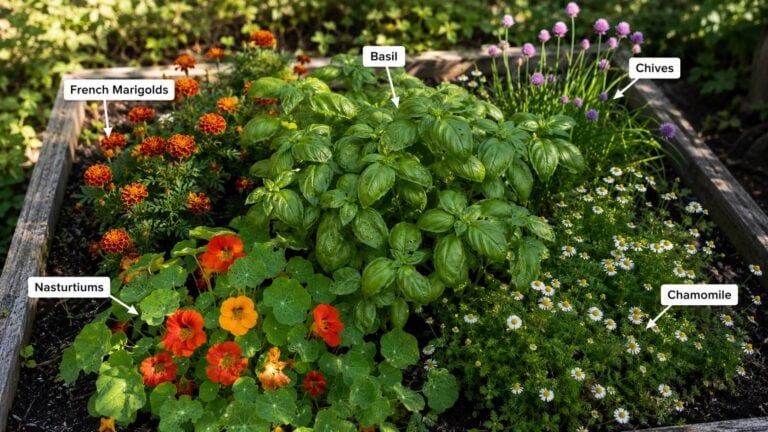
Plants
Companion Plants for Basil: What Works and Why
Basil bolts faster than almost any other herb in the summer garden, and once it flowers, the leaves turn bitter…