
Key Facts
- Native warm season perennial bunchgrass of North America.
- Forms low tufts of fine blue green foliage.
- Produces distinctive comb like seedheads on short stalks.
- Drought tolerant and well suited to dry, sunny sites.
- Used in xeriscaping, prairie restoration and low input lawns.
- Prefers well drained soils and tolerates poor and alkaline soils.
- Propagated by seed or division.
Blue Grama Grass (Bouteloua gracilis) is a native warm season bunchgrass prized for drought tolerance and low maintenance. It forms compact clumps of fine blue green foliage and produces distinctive comb like seedheads on short stalks that add summer texture to dry, sunny sites.
Identification and key traits
Blue Grama is a short perennial bunchgrass usually 6 to 20 inches tall with a 12 to 24 inch clump spread. Leaves are fine and blue green. Flowers appear in summer and show comb like seedheads on short stalks. The species is adapted to a range of dry soils and tolerates alkaline and rocky conditions.
Best uses and where to plant
Use Blue Grama in xeriscapes, prairie restorations and low input lawns where a low, native grass is desirable. It performs best in full sun and well drained soil. Avoid heavy, waterlogged clay because poor drainage reduces vigor. It is suited to sunny, open plantings and dry slopes.
Planting and establishment
Establish from seed or by division with plugs commonly used for faster results. Seed is often surface sown and lightly firmed rather than buried deeply. Space plants to allow 12 to 24 inches per clump for eventual spread. In colder zones expect winter dieback of top growth and slower spring recovery.
Watering and drought care
Blue Grama is drought tolerant and suited to dry sunny sites. Moderate moisture increases height and seed production while prolonged wet soils lead to root decline. Water sparingly once established and allow the soil to dry between deep infrequent irrigations to maintain a compact tussock form.
After flowering and ongoing maintenance
Flowering occurs in mid to late summer with timing influenced by rainfall. Little maintenance is required beyond occasional division to rejuvenate older clumps and removing unwanted seedlings. Leaving seedheads benefits wildlife and helps naturalize plantings, while cutting back in early spring tidies winter dieback in colder zones.
Spread and naturalizing control
Blue Grama grows in clumps and expands slowly by tillering and seed rather than aggressive rhizomes. Dense swards may develop over time from close plantings or abundant seed. Control spread by removing seedheads if you want to limit self seeding and by dividing clumps to reduce overcrowding.
Frequently asked questions
- How fast does Blue Gamma Grass grow?
- Establishment speed varies with method and site. Plugs and divisions establish faster than broadcast seed. Natural spread is gradual as clumps tiller and produce seed rather than rapidly invading by rhizomes.
- Is Blue Grama Grass drought tolerant?
- Yes. It is a native warm season grass adapted to dry sites and well drained soils. It tolerates sandy, rocky and alkaline soils but declines in waterlogged heavy clay.
- Can I use it for a low input lawn?
- Yes. It is used for low input lawns and prairie plantings where a short, native turf is desired. Expect a clumpier appearance than typical turfgrass and less mowing and irrigation.
- When and how should I plant seed?
- Seed is commonly surface sown and lightly firmed. Regional sowing times vary so follow local extension guidance for the recommended season. Plugs speed establishment when quicker cover is needed.
- Is Blue Grama safe for livestock and pets?
- It is used as forage and is not widely reported as toxic. Check local extension or poison control for livestock or pet specific concerns and for treated plants.
Related Plants


Mentioned In (1)
Plants
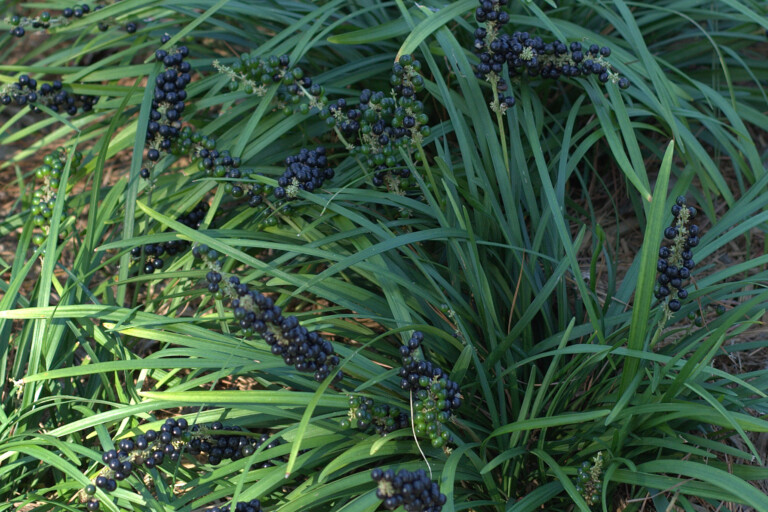
10 Plants That Look Like Monkey Grass
Monkey grass is a favored ornamental grass for coastal gardens as it is salt tolerant. There are two main options…