
Key Facts
- Native shrub of California found in riparian canyons and coastal ranges.
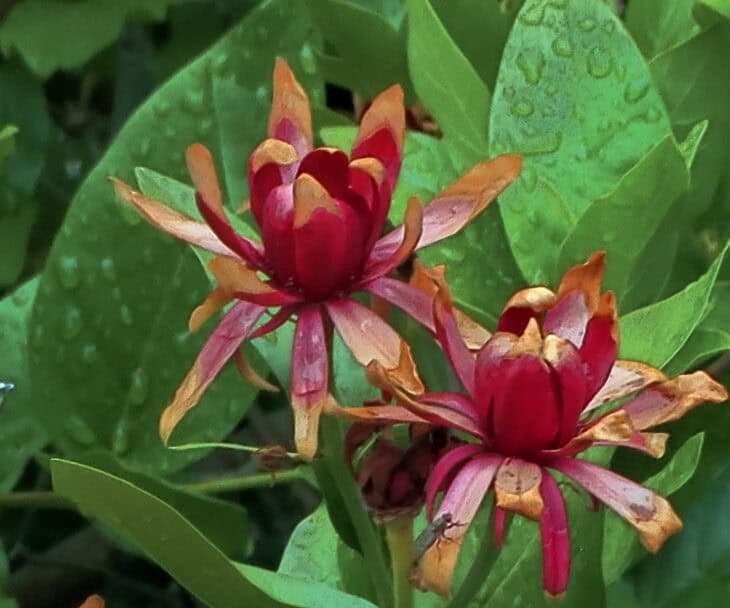
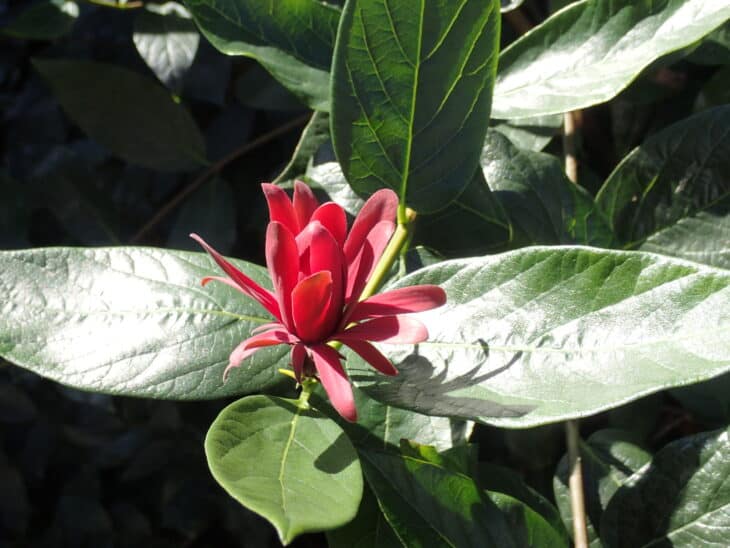
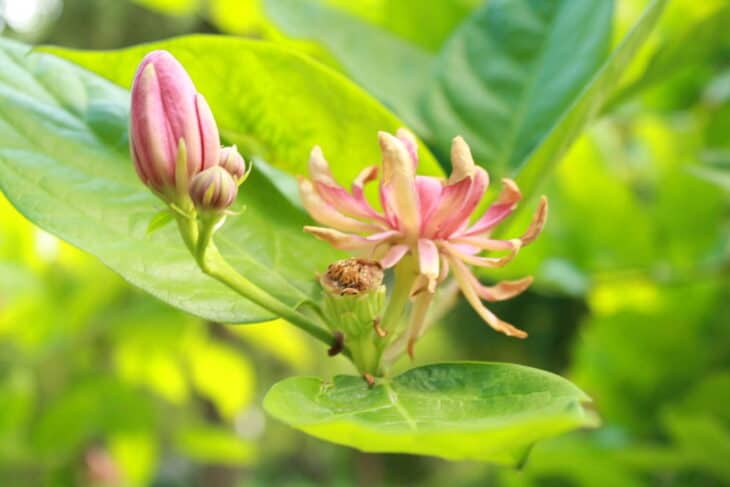
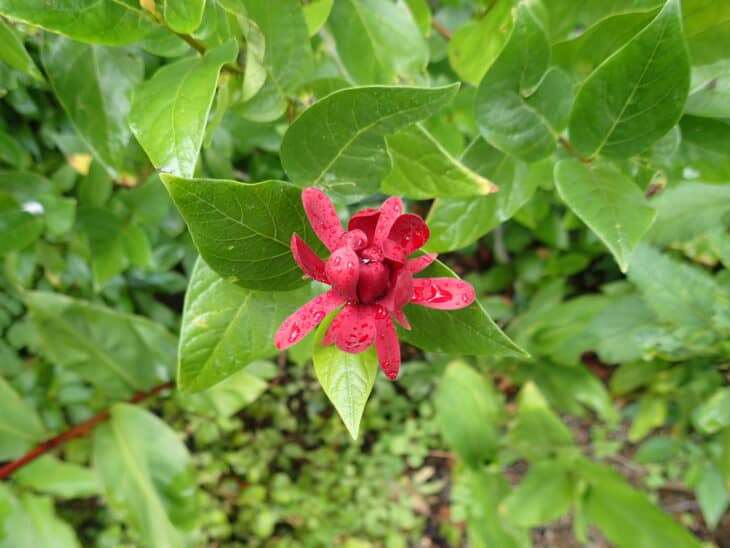
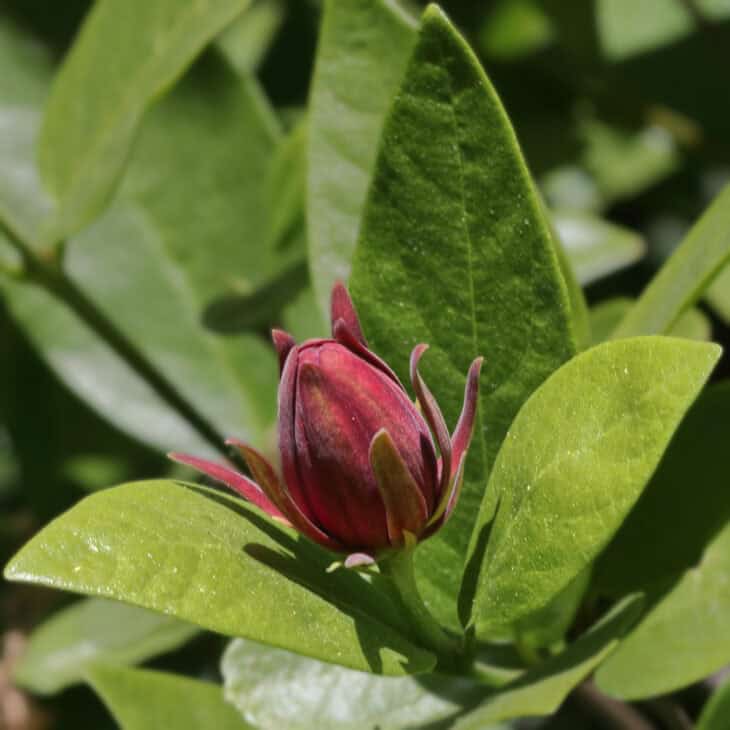
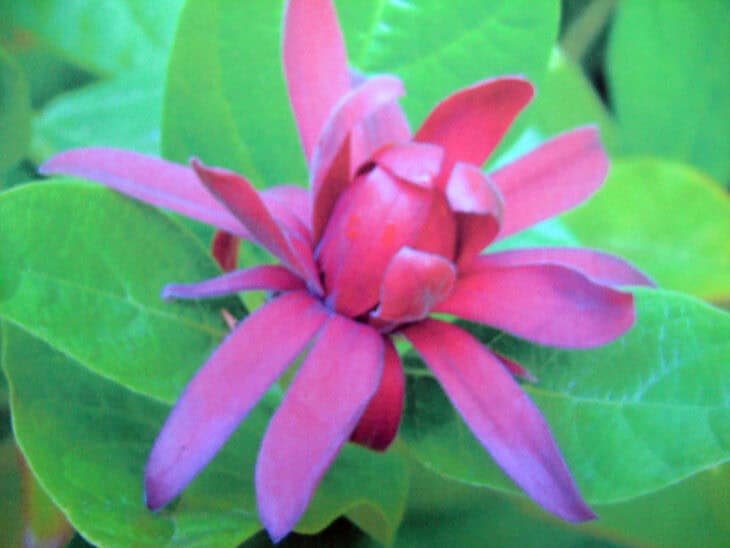
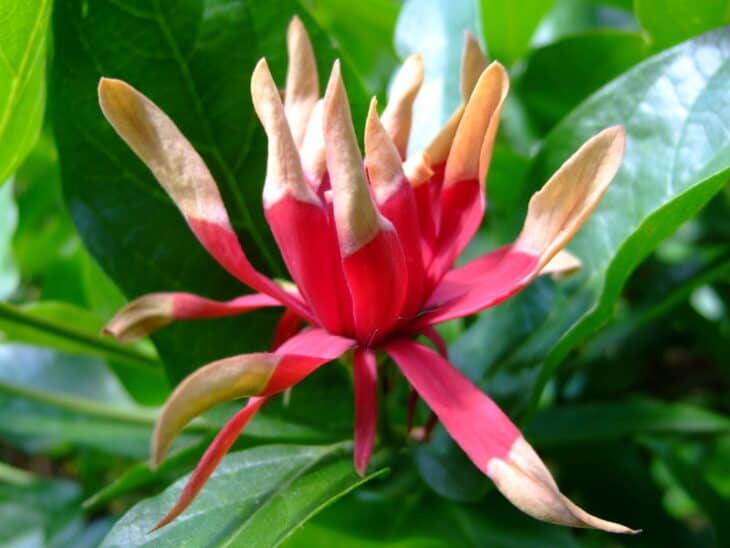
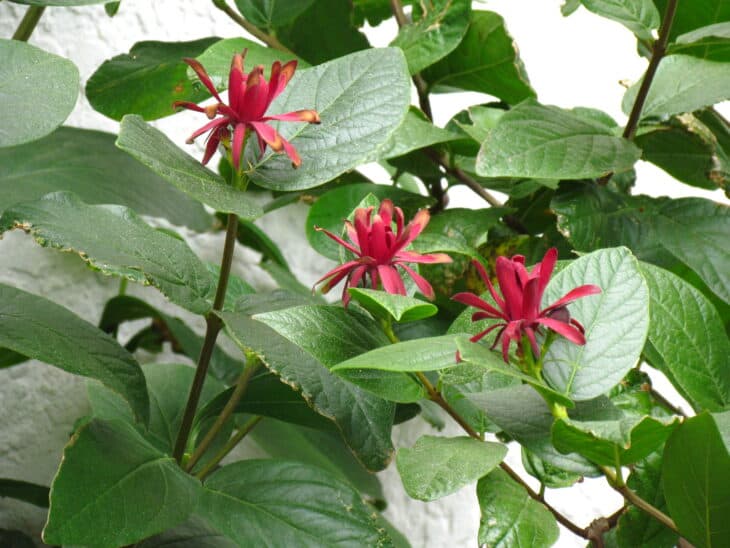
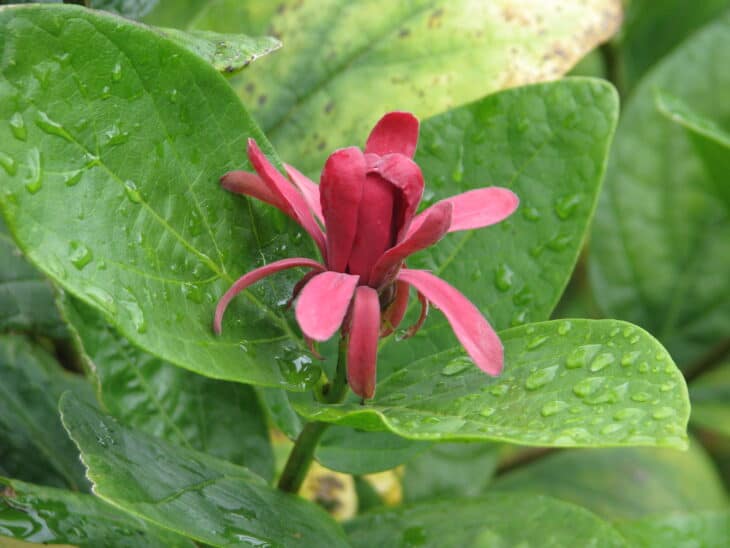
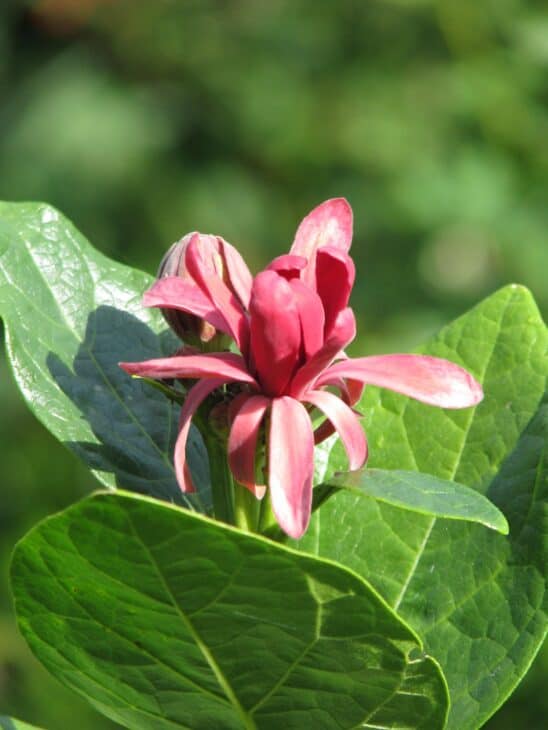
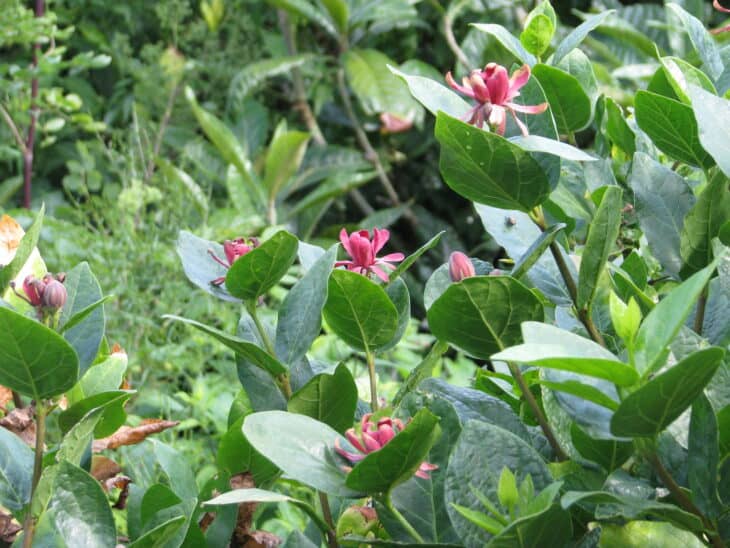
- Showy aromatic flowers typically reddish to maroon and pleasantly fragrant.
- Deciduous to semi evergreen depending on winter severity.
- Prefers consistently moist, well drained soils but tolerates short dry periods once established.
- Valued in native plant and wildlife gardens for fragrance and pollinator visits.
- Reproduces by seed and can be propagated by cuttings and layering.
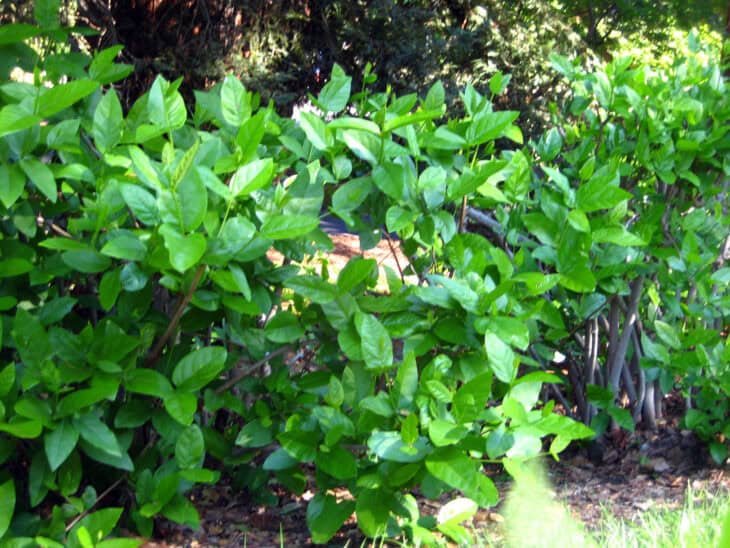
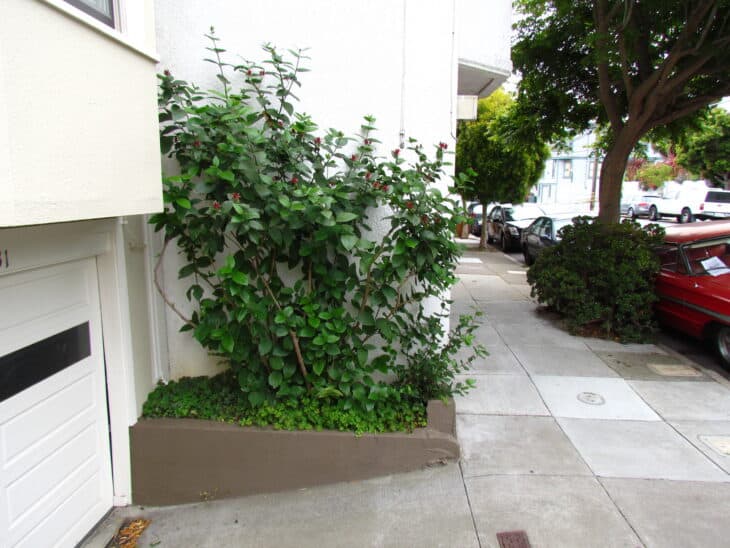
- Moderate growth habit often forming multi stem shrubs or thickets.
- Not widely listed as highly toxic but avoid ingestion and monitor pets.
California Sweet Shrub is a fragrant native shrub with reddish maroon flowers valued for scent and pollinators. It performs best where moisture is available and often forms a multi stem shrub or thicket in suitable sites.
Identification and habit
Leaves are simple and the plant ranges from about 4 to 12 feet tall depending on site and climate. Flowers are showy and aromatic, typically reddish to maroon. The shrub can be deciduous to semi evergreen depending on winter severity and frequently forms multi stem clumps or thickets where conditions favor suckering.
Where to grow and best uses
Native to California riparian canyons and coastal ranges, this shrub suits native plant and wildlife gardens near streams and moist slopes. Use it as a fragrant specimen, a wildlife sheltering hedge, or a naturalizing shrub in riparian buffers. In hotter inland locations give some afternoon shade to reduce stress.
Hardiness and bloom timing
Plants are commonly grown in approximately USDA zones 7 to 10 and may die back in colder climates. Bloom typically occurs in late spring to early summer in many California climates, with exact timing varying by microclimate and latitude.
Planting and spacing
Allow room for a mature spread of about 4 to 10 feet when siting plants. Set the root ball at the existing soil level and firm soil around roots to remove air pockets. Plant where roots can access consistent moisture yet the soil remains well drained to avoid summer decline.
Soil and watering
This shrub prefers moist, well drained soils and tolerates heavier loam or clay near streams. Avoid prolonged waterlogging to prevent root rot and expect reduced growth and fewer flowers in very dry soils. Once established plants tolerate short dry periods but perform best with regular moisture.
After flowering care and pruning
Light selective pruning maintains shape and removes dead wood without heavy rejuvenation unless needed. If the shrub becomes overly dense, remove a few older stems at the base to open the center and encourage new basal shoots. Regular pruning controls width and reduces thicket formation.
Controlling spread and naturalizing
The species can form colonies by suckering in favorable conditions. To keep a single specimen, remove new suckers from the base or mow them out in larger plantings. For naturalizing use occasional thinning to prevent excessive crowding and to maintain plant health.
Containers and propagation
Young plants can be grown in large containers that hold consistent moisture and free draining potting mix. Propagation options include seed, cuttings and layering, with established clumps also dividing or using suckers. Propagation success varies by method and timing so consult local extension or botanic propagation guidance for protocols.
Frequently asked questions
- How fast does California Sweet Shrub grow?
- Growth is moderate and depends on water and climate. Under favorable moist conditions it reaches mature height of about 4 to 12 feet more quickly than in dry or cold sites.
- How far apart should I plant California Sweet Shrub?
- Space plants roughly 4 to 10 feet apart to accommodate a mature spread and allow airflow between shrubs.
- Can it handle full sun?
- Yes it grows in full sun to part shade. In hot inland sites afternoon shade helps reduce summer stress and leaf scorch.
- What soil does it need?
- Prefers moist, well drained soils and tolerates heavier soils near streams. Avoid soils that remain waterlogged for long periods.
- Is it safe for pets and children?
- Toxicity information is sparse. Avoid ingestion and check with local poison control or the ASPCA for current guidance before planting where pets or children may chew buds or seeds.
Gallery
Related Plants


Mentioned In (1)

Plants
9 Plants That Look Like Camellia
Camellia is a dense shrub with large, brilliant flowers. Camellias grow between 6 and 12 feet tall. They have dark…