Key Facts
- Evergreen mat forming perennial often used as groundcover.
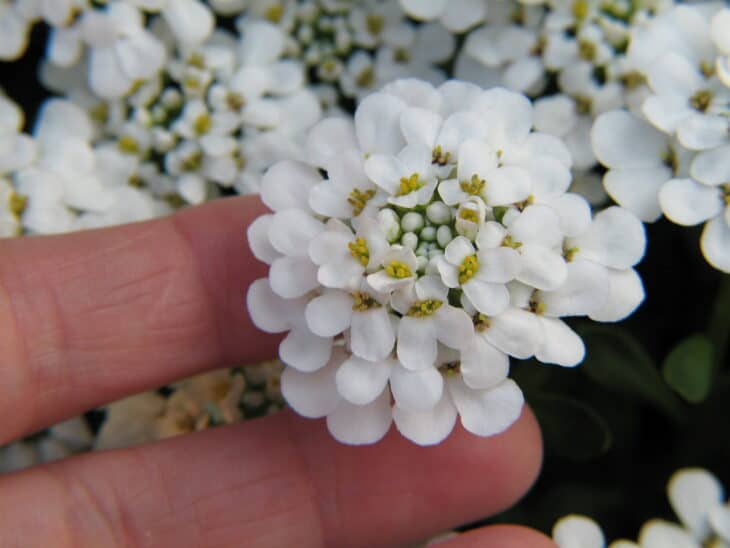
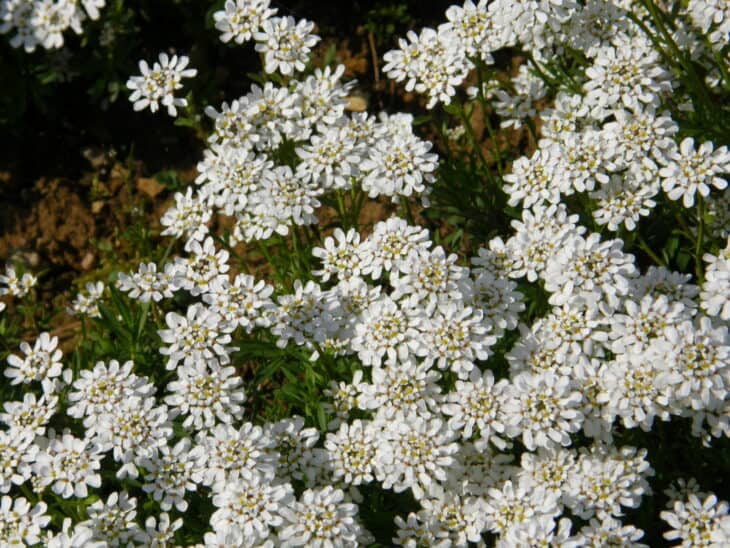
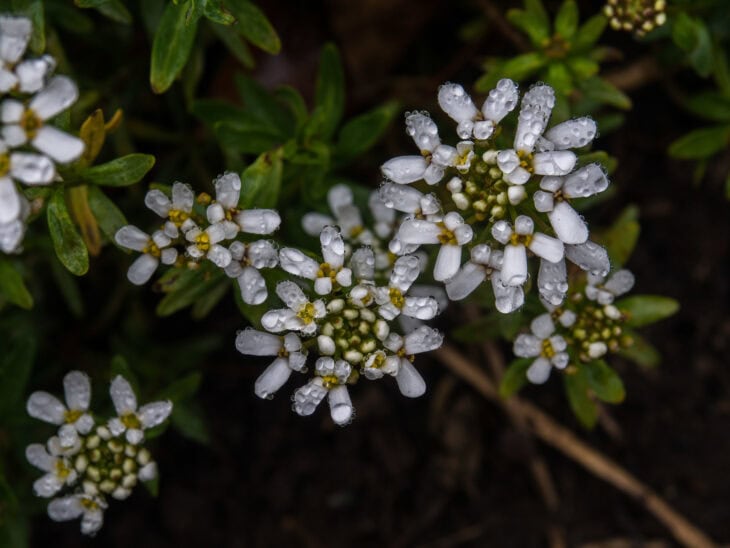
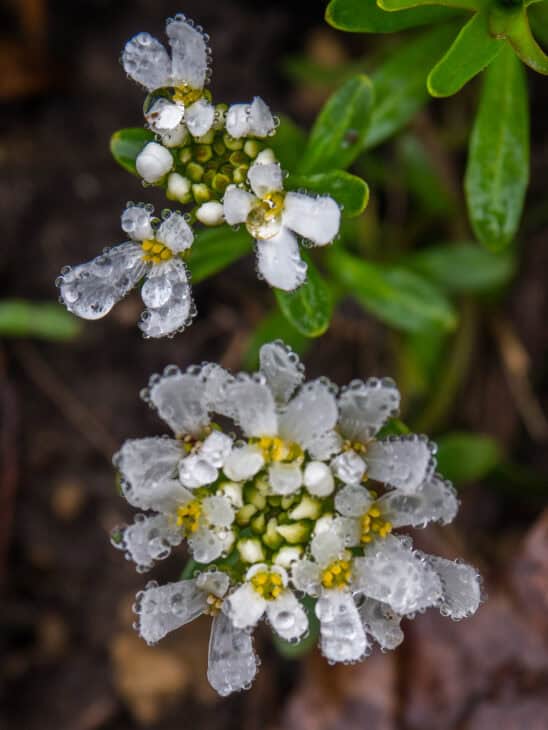
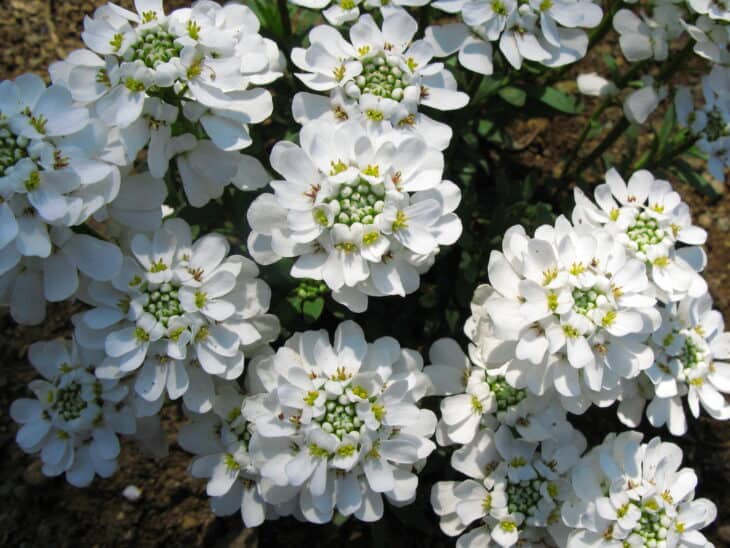
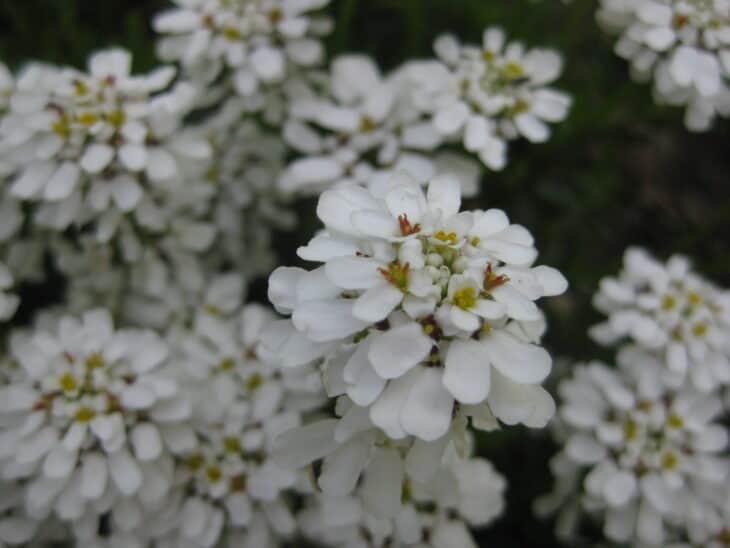
- Produces clusters of white to pale pink flowers in spring.
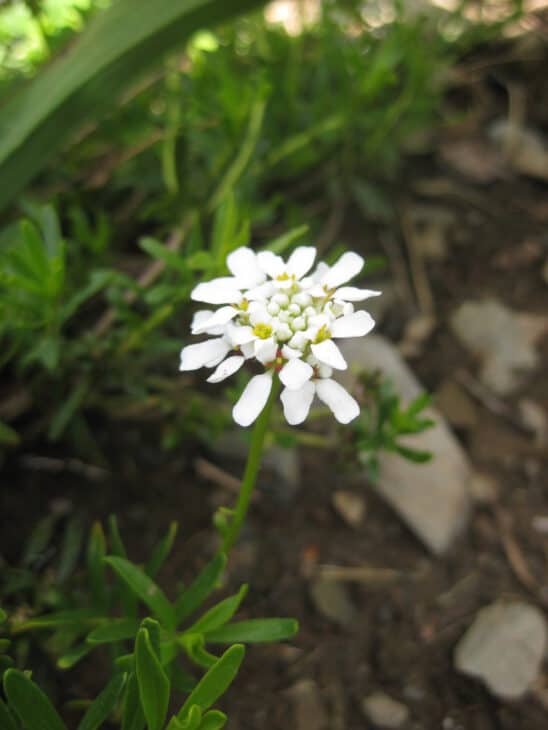
- Low growing habit makes it suited to rock gardens and borders.
- Prefers well drained soil and dislikes waterlogged conditions.
- Tolerates poor soils and some drought once established.
- Typically grown in full sun to part shade.
- Hardy across a wide range of temperate climates.
- Propagated by seed, cuttings, or division.
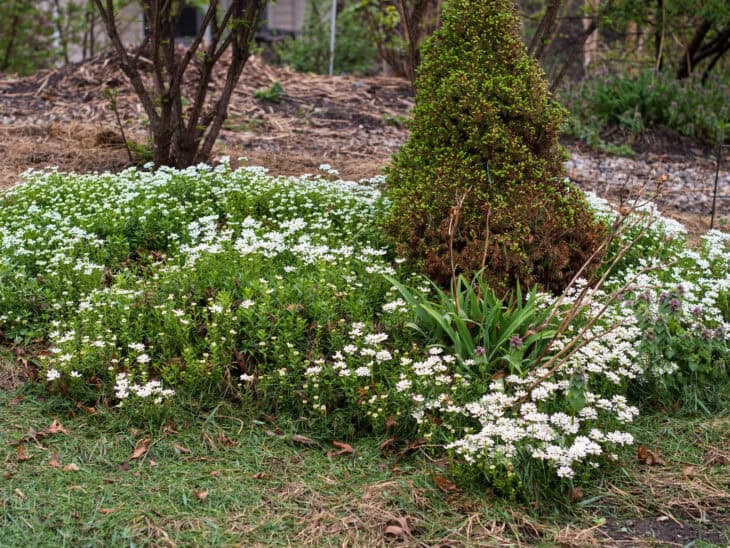
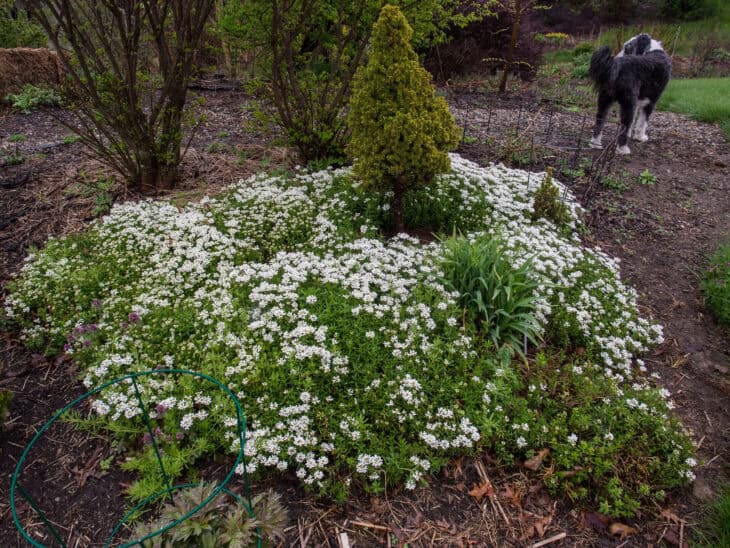
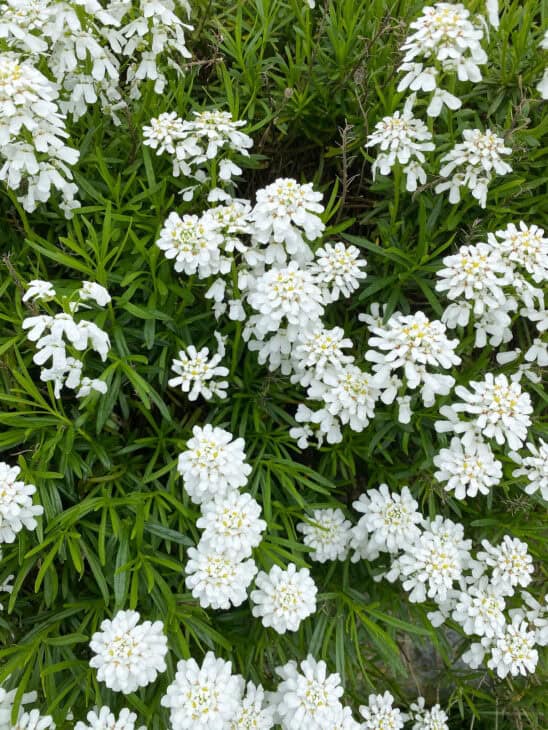
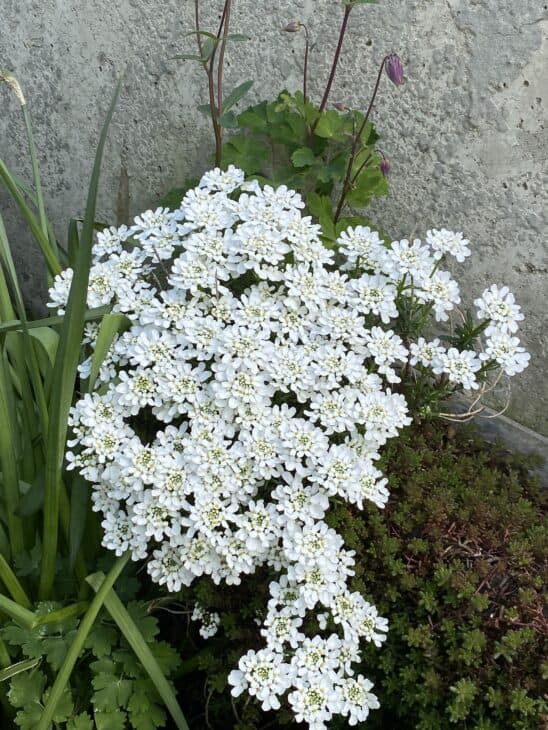
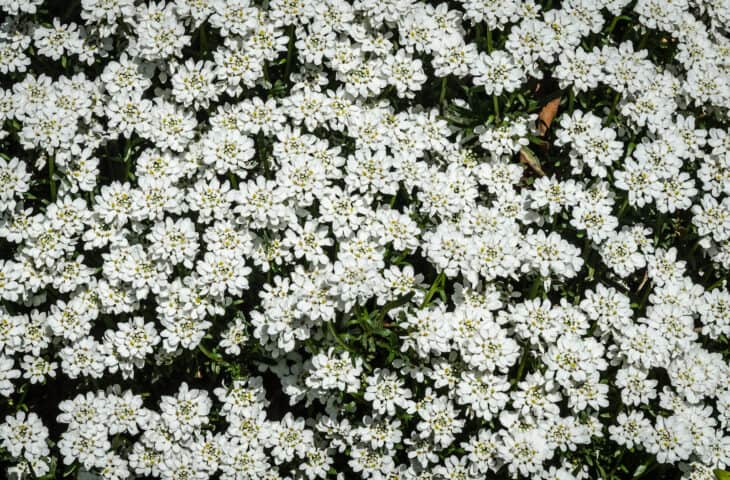
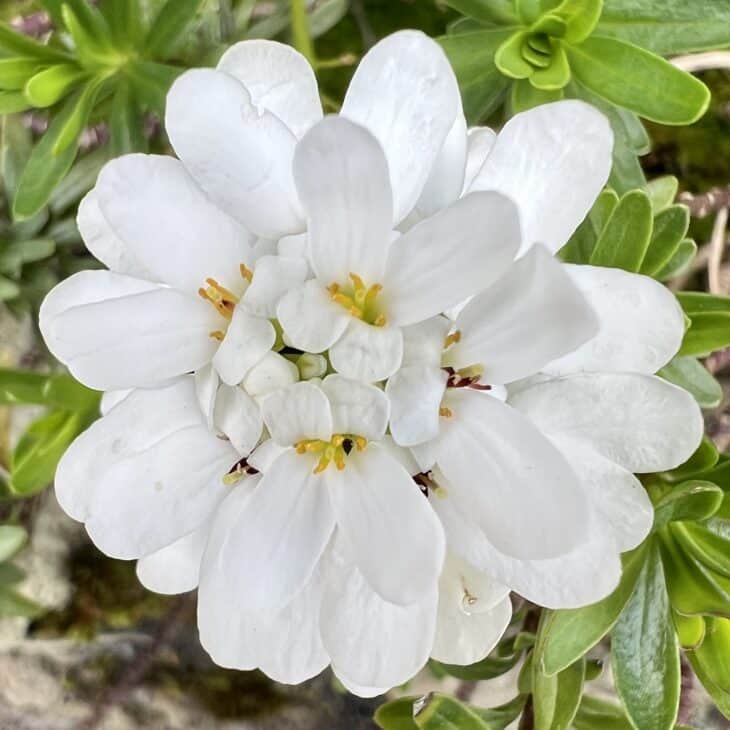
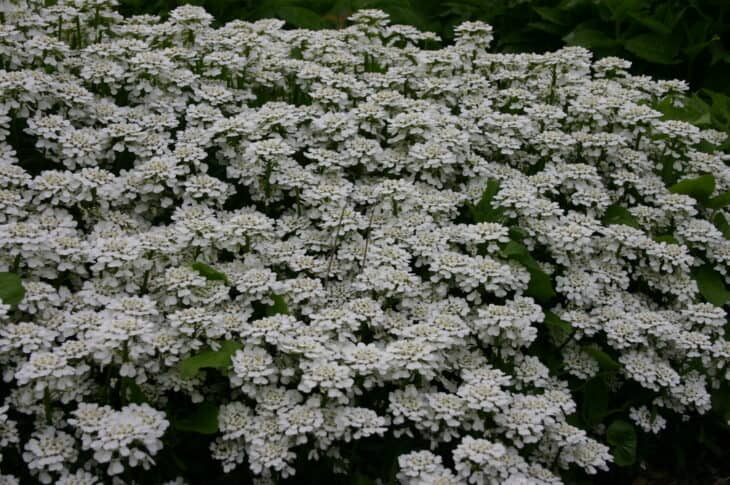
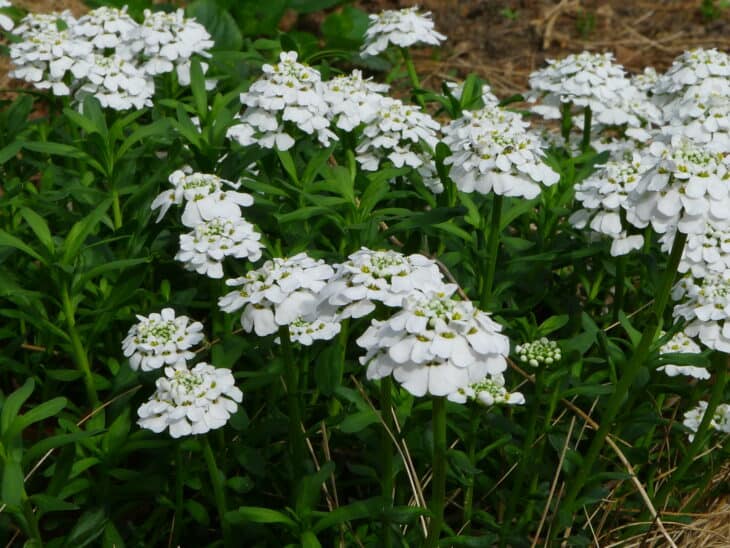
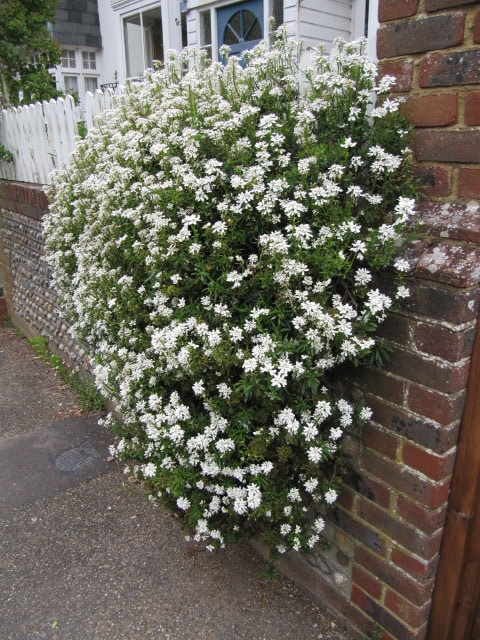
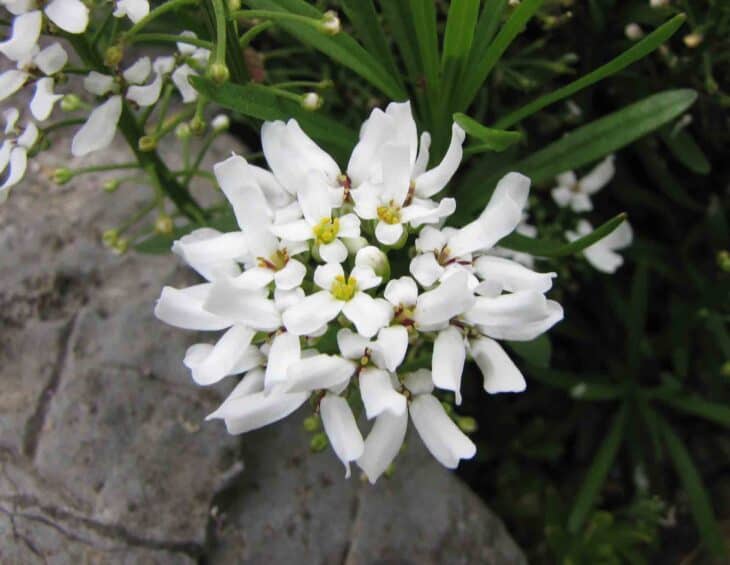
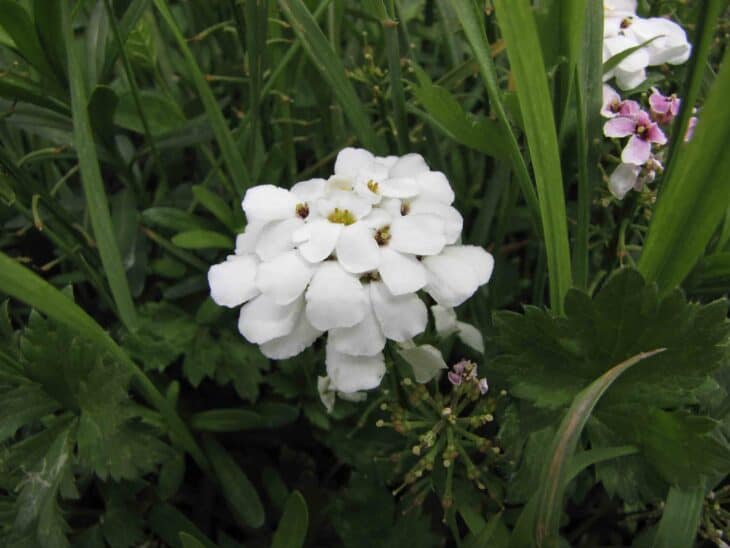
Candytuft (Iberis sempervirens) is an evergreen, low perennial that makes a dense flowering mat in spring. It produces clusters of white to pale pink flowers and is commonly used as groundcover in rock gardens and along borders. The plant balances strong spring display with a compact habit suited to low plantings.
Identification
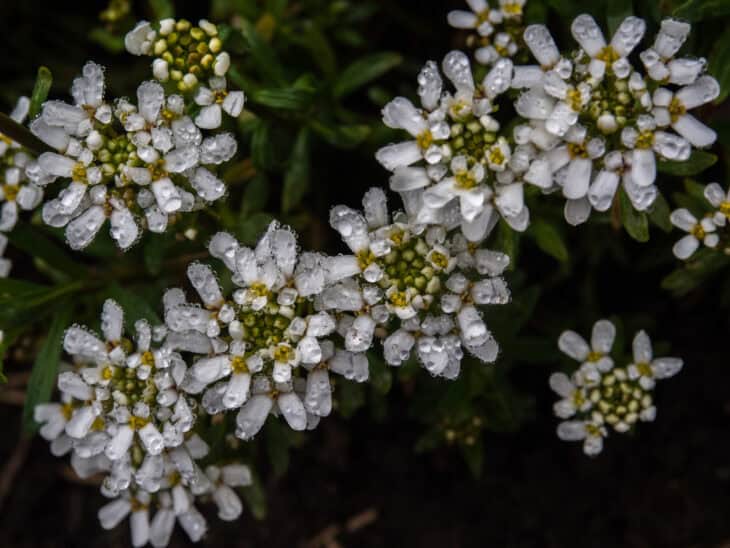
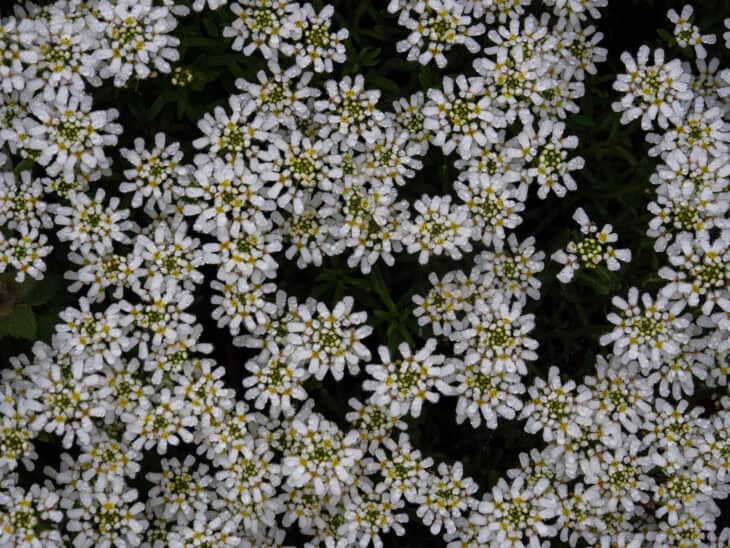
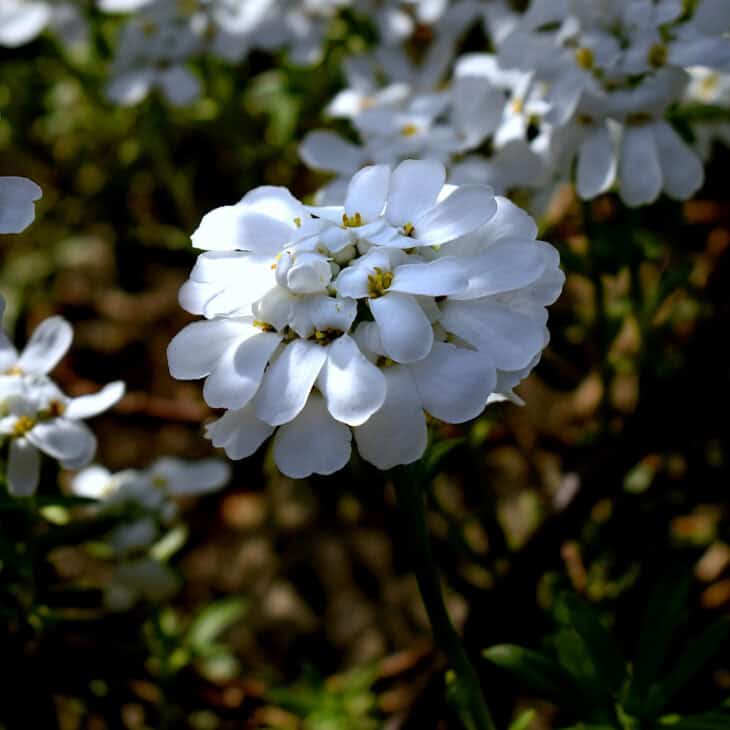
Candytuft forms a mat 6 to 12 inches tall and typically spreads 12 to 24 inches. Leaves stay evergreen and the plant bears clusters of white to pale pink flowers in spring, usually April to May in the Northern Hemisphere. Different cultivars vary in exact color and spread.
Best uses and where to grow
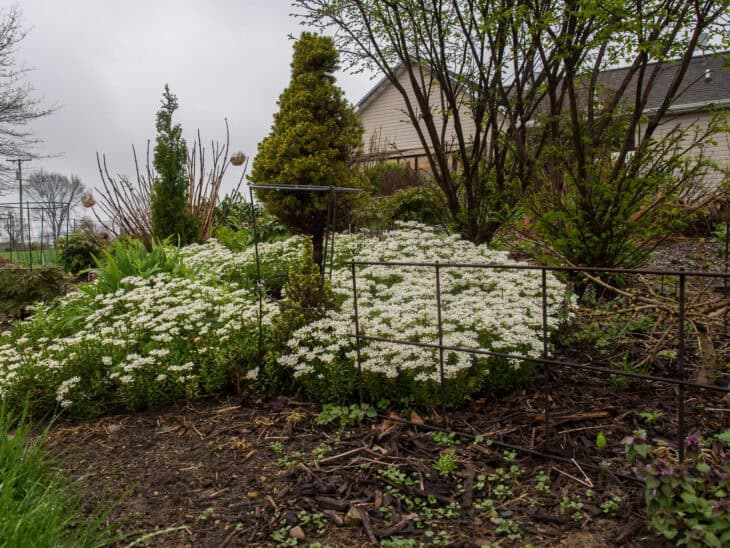
Use candytuft as groundcover, in rock gardens, or at the front of borders where a low floral mat is wanted. It performs best in full sun to part shade and is hardy in USDA zones 3 to 9. In hot climates light afternoon shade will help maintain flowers and foliage.
Soil light and planting
Plant candytuft in well drained, gritty to loamy soil and avoid waterlogged locations because poor drainage causes crown rot. It tolerates poorer soils and some drought once established. Space plants about 12 to 24 inches apart depending on the cultivar and how quickly you want the mat to fill.
Watering and drainage
Keep young plants evenly moist until established, then reduce watering since candytuft tolerates some drought. Waterlogged soil leads to root and crown rot, so improve heavy clay with grit or plant on a slight rise or raised bed. Visible signs of overwatering include yellowing foliage and collapse at the crown.
After flowering care
After bloom, trim back spent flower stems to keep the mat tidy and encourage fresh growth. Where mats become congested divide plants after flowering to renew vigor and to control spread. Regular light maintenance preserves shape and promotes better flowering the following season.
Propagation
Propagate candytuft by seed, softwood cuttings, or division. Take softwood cuttings in spring or early summer and divide mature clumps after flowering. Seed can be used for larger areas but cultivars may not come true from seed, so take cuttings for exact variety replication.
Containers and rock garden use
The low, spreading habit suits rock gardens, troughs, and shallow containers where it can spill over edges. Use a free draining mix and avoid deep, moisture retentive compost. In containers water more frequently than in beds but maintain good drainage to prevent crown problems.
Spread and naturalizing control
Candytuft naturally forms mats that can fill planting space quickly in favorable sites. Expect a typical spread of 12 to 24 inches depending on cultivar and growing conditions. Control expansion by lifting and dividing crowded clumps after flowering and by removing runners before they root if you need to limit spread.
Frequently asked questions
- How fast does Candytuft grow?
- Growth rate varies by cultivar and site. Expect mats to reach roughly 12 to 24 inches across over a few seasons, with faster filling in ideal conditions.
- When does Candytuft bloom?
- Bloom is in spring, typically April to May in the Northern Hemisphere, with timing shifted earlier in warmer climates and later in cooler ones.
- What soil does Candytuft prefer?
- It prefers well drained, gritty to loamy soil and tolerates neutral to slightly alkaline conditions. Avoid waterlogged sites to prevent crown rot.
- How do I propagate Candytuft?
- Propagate from seed, softwood cuttings taken in spring or early summer, or by dividing established clumps after flowering.
- Is Candytuft suitable for containers?
- Yes. Its low habit suits rock garden troughs and shallow containers provided the potting mix drains well and watering is monitored.
Gallery