Key Facts
- Native North American perennial twining legume vine.
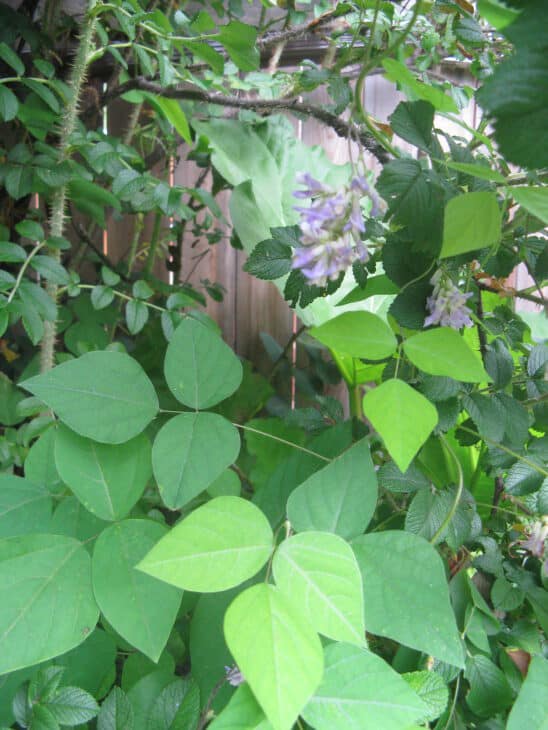
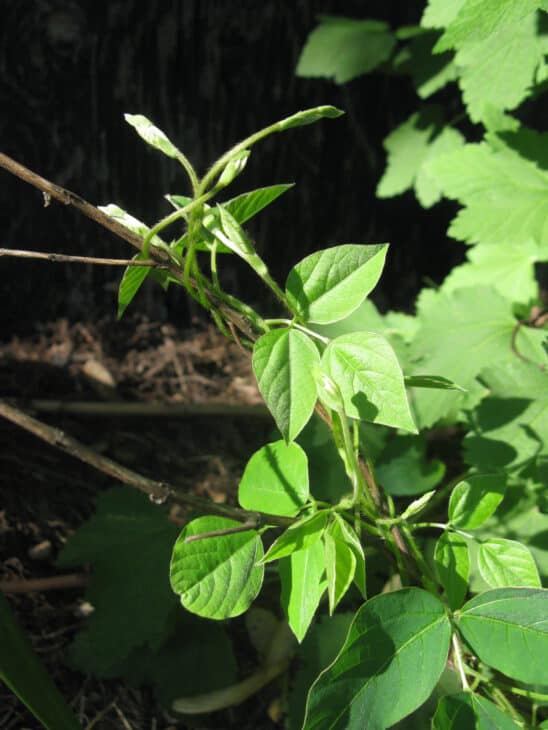
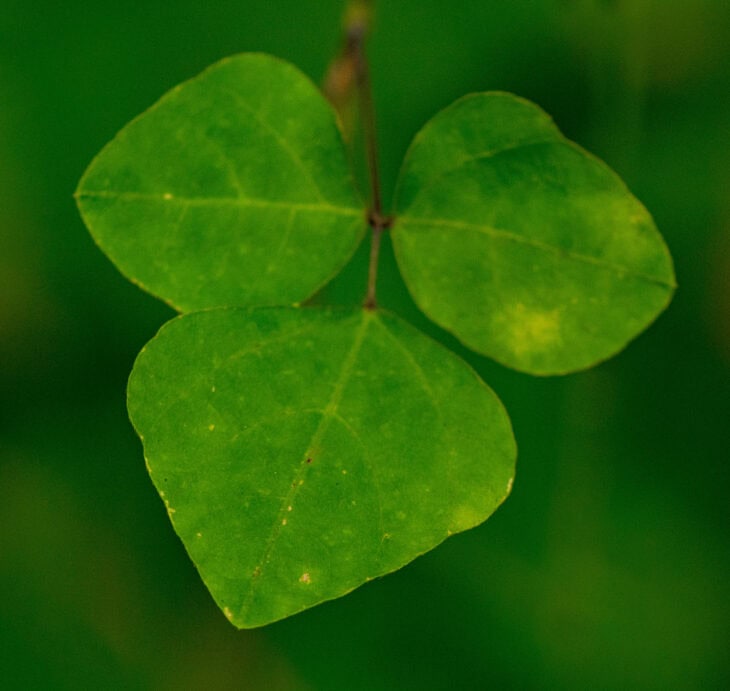
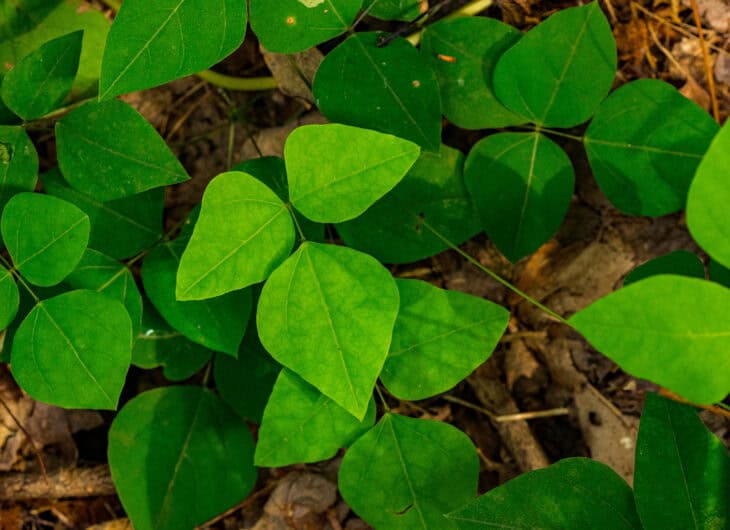
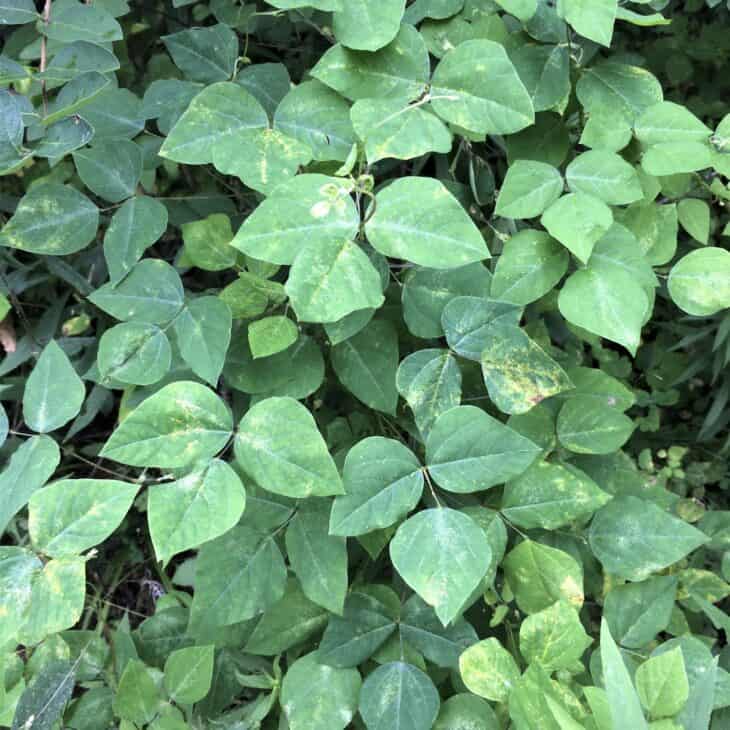
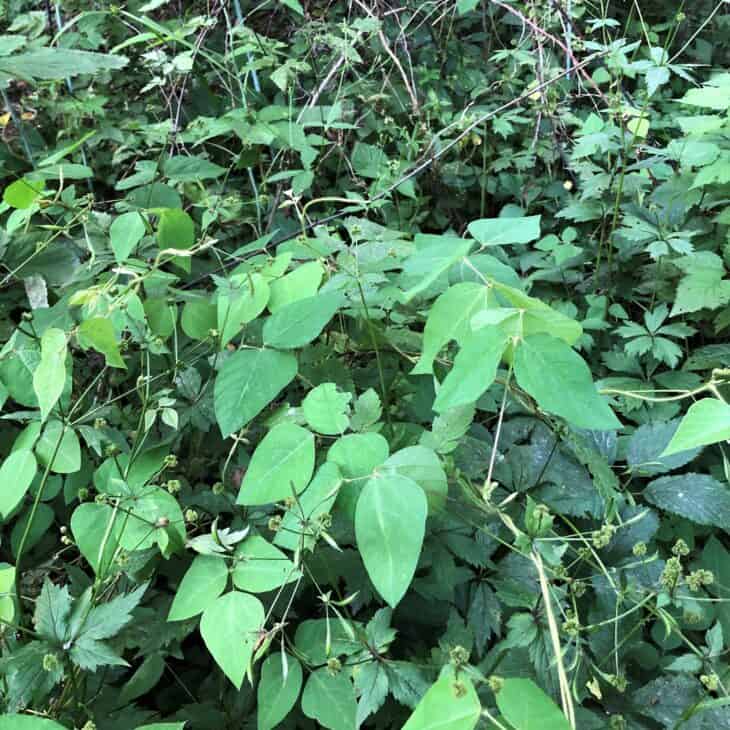
- Leaves are trifoliate and stems climb or scramble through low vegetation.
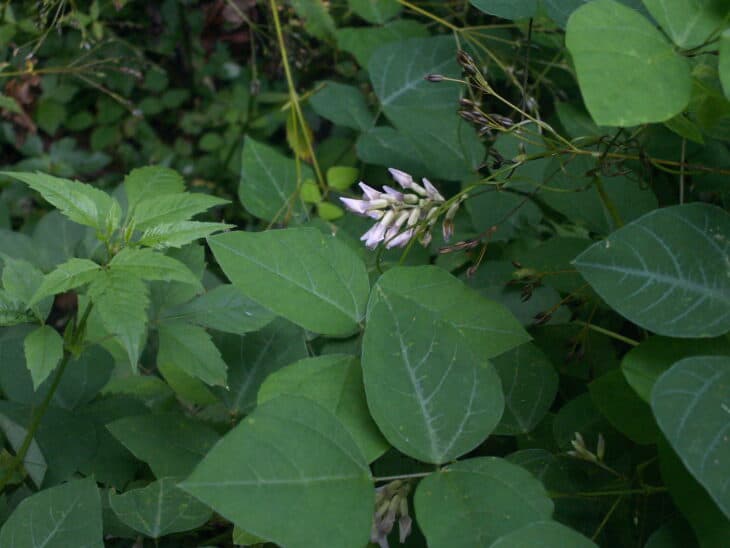
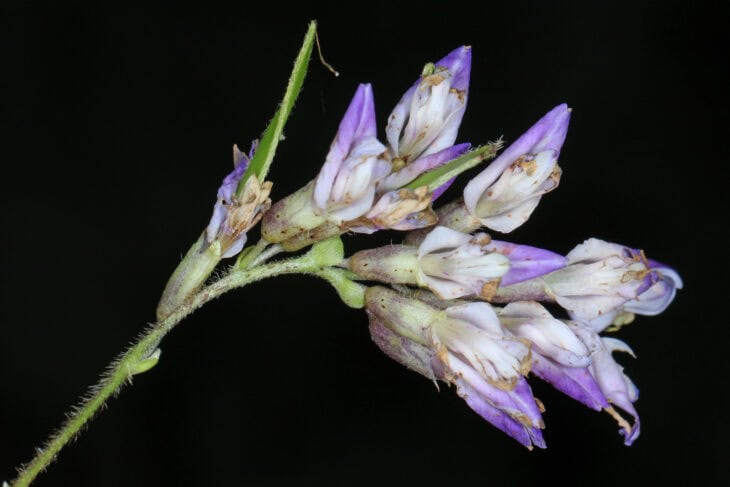
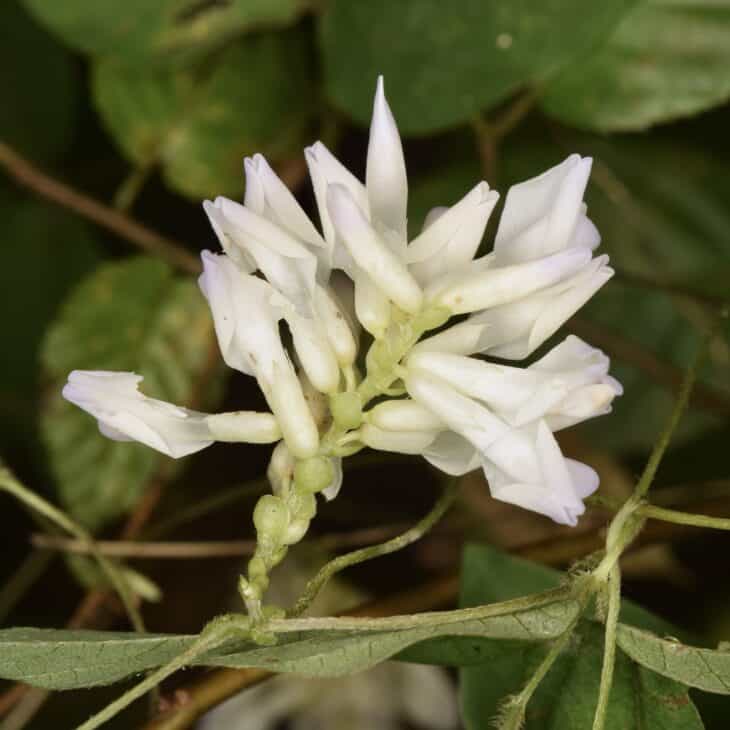
- Produces small pink to purplish pea-like flowers above ground in summer.
- Develops both aboveground pods and subterranean pods that produce single seeds.
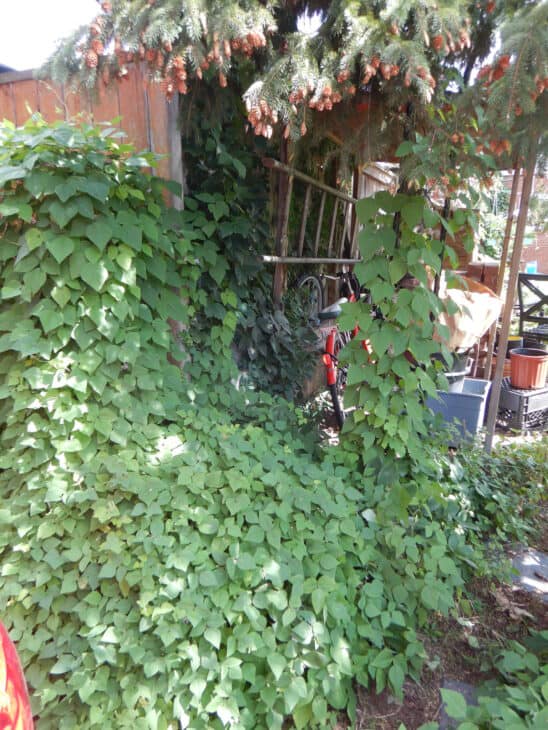
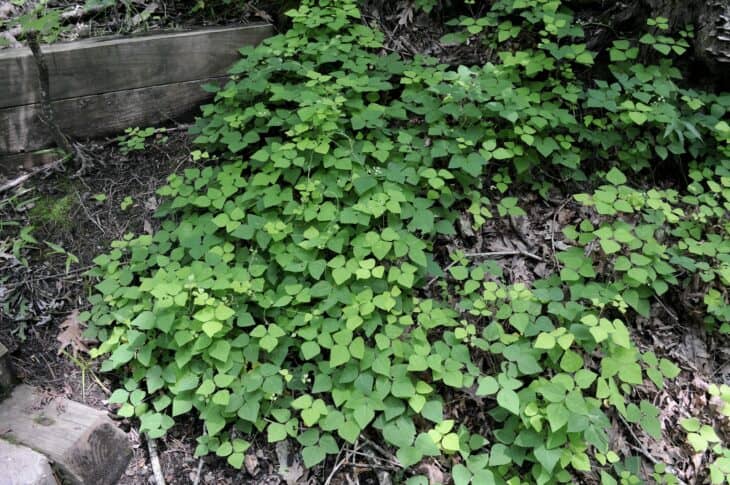
- Spreads readily by seed and can form low patches in shaded areas.
- Prefers humusy woodland soils and tolerates shade.
- Valued by wildlife for seed and as habitat but not commonly grown as an ornamental.
Hog Peanut (Amphicarpaea bracteata) is a native North American twining legume that makes a low shade tolerant groundcover in woodlands and along edges. It flowers in summer with small pink to purplish pea like blooms but also produces subterranean seeds that help it persist and spread.
Identification
Leaves are trifoliate and stems climb or scramble through low vegetation. Aboveground flowers are small and pea like, pink to purplish, appearing in summer. The plant forms both aerial pods and hidden subterranean pods that each yield single seeds.
Where it grows and best uses
Hog Peanut prefers humusy, well drained to seasonally moist woodland soils and thrives in part shade to full shade. It is listed commonly for USDA zones 3 to 9. Use it as a native groundcover or to naturalize shaded borders where a low, twining vine and wildlife value are desired.
Planting and propagation
Establish plants from seed or by transplanting seedlings. The species produces both aerial and subterranean seed so it reseeds readily once established. Plan location and management accordingly if you do not want it to spread.
Watering and care
Keep soil humusy and reasonably moist while plants become established. The vine tolerates drier soils once established but performs better with some consistent moisture in hotter or sunnier sites. Allow flowering and seed set when naturalizing, or remove flowers before seed develops to limit local reseeding.
Managing spread and maintenance
Spread is driven largely by seed and subterranean pods can make local persistence likely. To control spread remove plants or pull seedlings before they set seed. Repeated cutting back before pods mature will reduce local reseeding.
Ornamental use and containers
This species is valued more for habitat and wildlife food than for formal ornament. It is not commonly grown as a container plant and is best used where naturalizing on the woodland floor or at shaded edges is acceptable.
Frequently asked questions
- How fast does Hog Peanut grow?
- Stems commonly reach about 2 to 6 feet as they twine or scramble over low plants in a single season. Local growth and spread depend on site conditions and reseeding.
- Is Hog Peanut a good groundcover for shade?
- Yes. It thrives in part shade to full shade and forms low patches in humusy woodland soils.
- What soil and light does it prefer?
- It prefers rich, humus rich, well drained to seasonally moist soils and does best in part to full shade. In hotter exposures it needs more consistent moisture.
- How does Hog Peanut spread?
- It spreads readily by seed from both aerial pods and subterranean pods and will form mats in favorable shady sites.
- How can I reduce unwanted spreading?
- Remove plants or hand pull seedlings before seed set. Regularly cutting flowering stems before pods mature will reduce reseeding.
Gallery
Related Plants