
Key Facts
- Evergreen clumping perennial used as a low groundcover or edging.
- Forms tufts of narrow, glossy, grasslike leaves.
- Produces small lavender to white flowers on short stalks in late spring to summer.
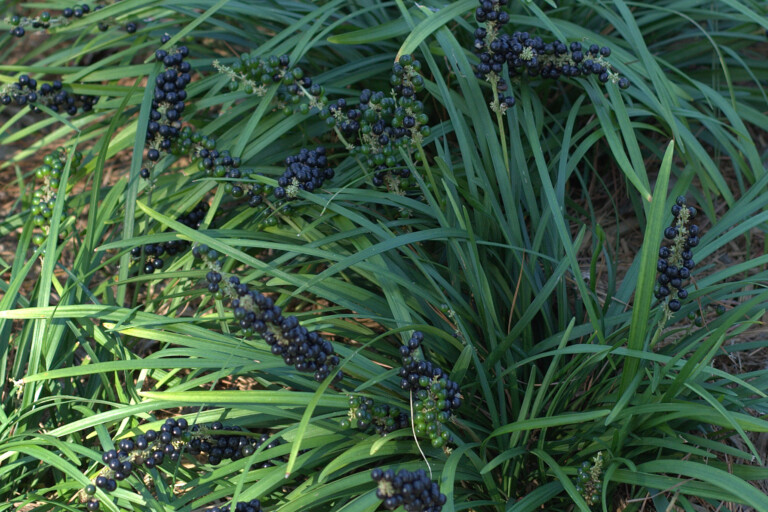
- Often sets small dark berries after flowering.
- Prefers shade to part shade and tolerates a range of soils if moisture is adequate.
- Commonly propagated by division and also by seed.
- Generally hardy in warm temperate climates and can be slow to establish.
Mondo Grass is an evergreen clumping perennial used as a low groundcover or edging in shade. It makes low tufts of narrow, glossy leaves and produces small lavender to white flowers in late spring to summer, often followed by small dark berries.
Identification
Mondo Grass forms tidy clumps of narrow, grasslike leaves and typically reaches about 6 to 8 inches tall with a spread of roughly 12 to 18 inches. Flower stalks rise just above the foliage and bear small lavender to white blooms in late spring to summer. Some plants set dark berries after flowering.
Best uses and where to grow
Use Mondo Grass as a low shade groundcover, border planting, or edging where turf struggles. It performs best in partial to full shade and is hardy in USDA zones 6 to 10. It tolerates morning sun if soil remains moist but can scorch in hot, full sun unless irrigation is consistent.
Planting time and spacing
Plant or divide clumps in spring or autumn depending on local climate, with spring preferred in many regions. Space plants roughly 12 to 18 inches apart to match their typical mature spread. Division is the quickest way to establish an even cover and to rejuvenate older clumps.
Watering and soil
Mondo Grass prefers rich, moist, well drained soil but adapts to average soils including loam and clay if moisture is adequate. Keep soil evenly moist during establishment and avoid waterlogged sites, which can cause root and crown decline. In drier spots provide supplemental water to prevent foliage scorch.
Maintenance and controlling spread
Plants are generally slow to establish and form a slowly spreading clump over time. Divide every few years to refresh plants and to control expansion. Use physical edging or raised beds where you need a firm boundary, since some cultivars with vigorous rhizomes will expand faster in favorable conditions.
After flowering
After the late spring to summer flowers fade, small dark berries may appear on many plants. Remove spent flower stalks and berries if you want a tidier look or to limit seeding. Leaving berries in place is fine for seasonal interest and wildlife food where that is acceptable.
Propagation
Division of clumps is the easiest and most reliable method and can be done in spring or autumn. Seed propagation is possible but slower and less common. Dividing every few years both spreads planting material and rejuvenates older, thinning clumps for denser coverage.
Frequently asked questions
- How fast does Mondo Grass grow?
- Mondo Grass is generally slow to establish and forms a gradually spreading clump. Speed depends on cultivar, soil moisture and site conditions and it may take several seasons to fill a planted area.
- Is Mondo Grass suitable for full sun?
- It prefers shade to part shade and tolerates some sun when soil remains consistently moist. In hot, sunny sites foliage can scorch unless irrigation is reliable.
- Can I plant Mondo Grass in clay soil?
- Yes, it adapts to loam and clay provided the soil is not waterlogged. Improve drainage if the site stays wet to avoid root or crown decline.
- How do I propagate Mondo Grass?
- Propagate by dividing clumps in spring or autumn for the fastest, most reliable results. Seed can be used but is slower and less commonly employed.
- Will Mondo Grass survive cold winters?
- It is generally hardy in USDA zones 6 to 10. In colder parts of that range plants may show winter dieback and slower recovery the following season.
Related Plants


Mentioned In (1)
Plants
10 Plants That Look Like Monkey Grass
Monkey grass is a favored ornamental grass for coastal gardens as it is salt tolerant. There are two main options…