
Key Facts
- Evergreen conifer native to western North America.
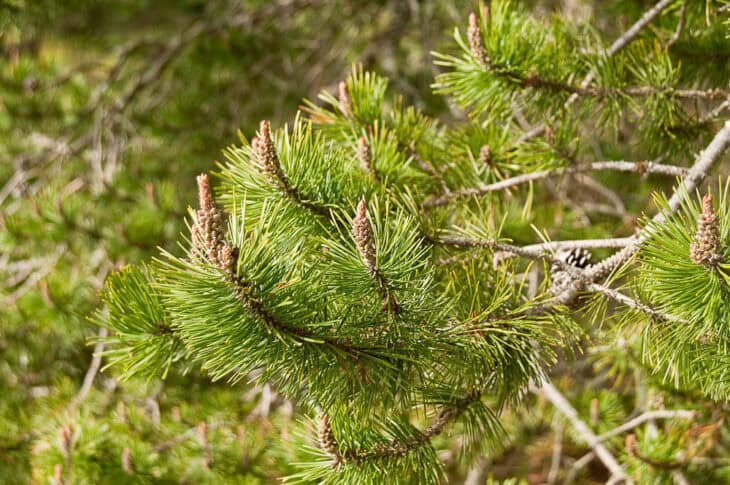
- Needles in pairs and persistent on the tree.
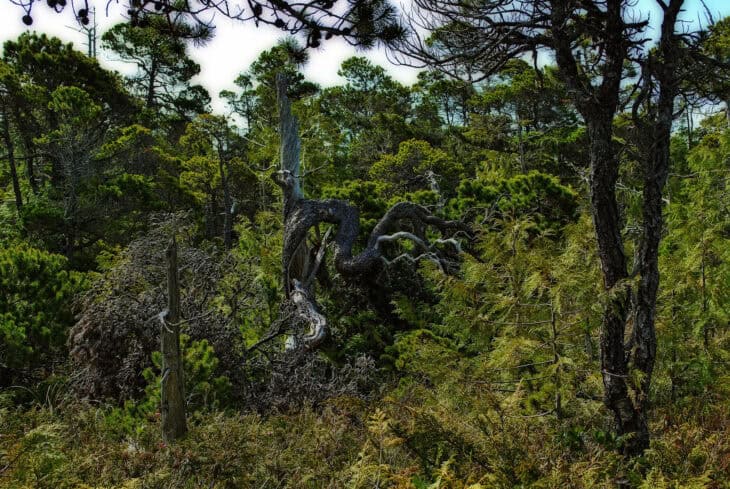
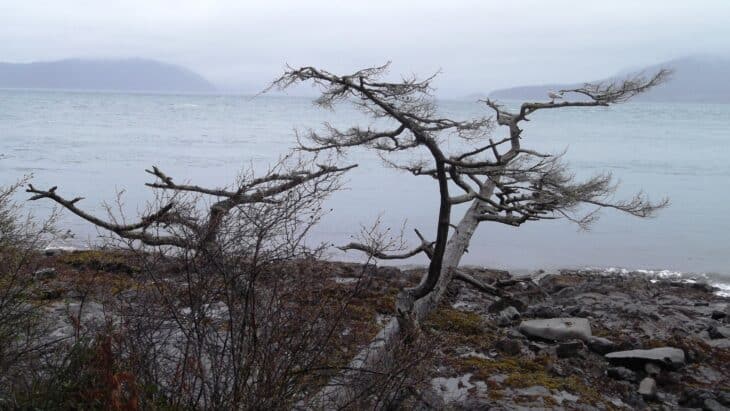
- Forms range from shrublike coastal trees to tall inland trees depending on variety.
- Tolerates poor, sandy soils and coastal salt spray.
- Reproduces by seed and some varieties have cones that open after heat or fire.
- Used for coastal windbreaks, habitat and reforestation.
- Wind pollinated rather than showy flowering.
Shore Pine or Lodgepole Pine is an evergreen conifer native to western North America. It ranges from low shrubby coastal forms to taller inland trees and is valued for coastal windbreaks and habitat despite variable growth habits.
Identification
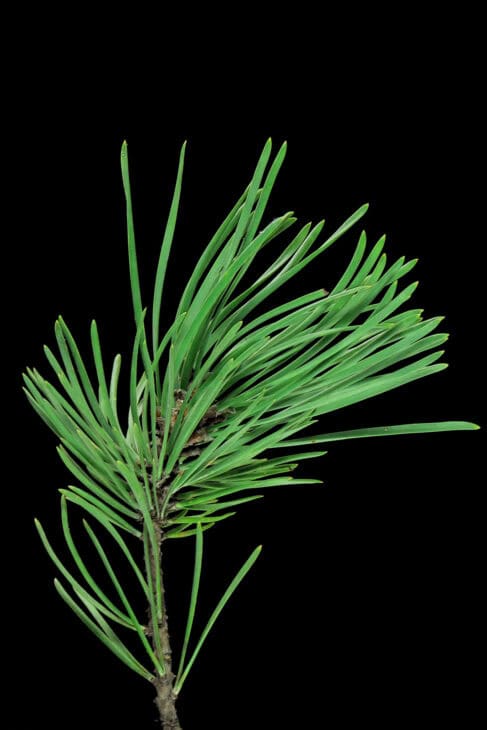
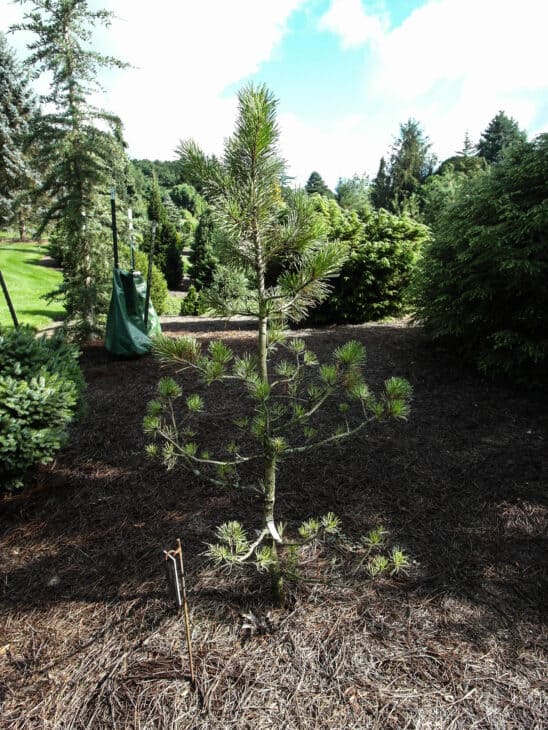
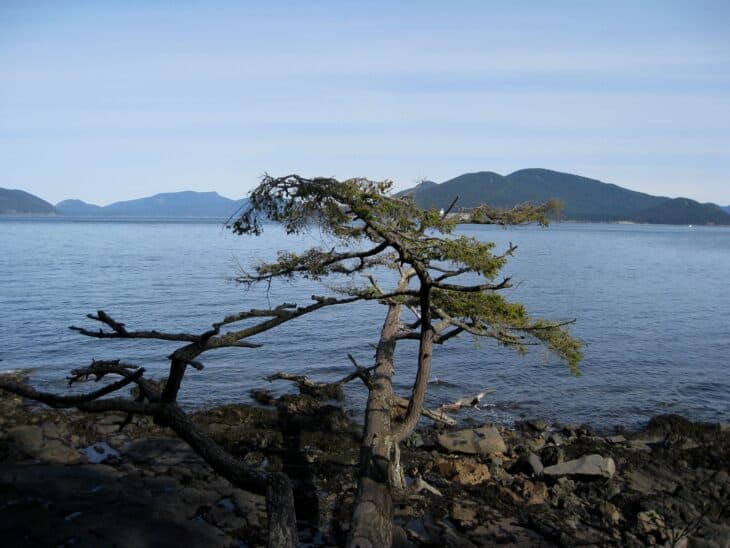
Needles occur in pairs and remain on the tree year round. Cones appear in spring and the species shows wide form variation with coastal specimens often low and wind shaped and inland provenances reaching 10-40 ft (3-12 m) tall. Crown spread commonly ranges 10-30 ft (3-9 m) on established trees.
Where to grow and best uses
Shore Pine tolerates poor sandy soils and coastal salt spray and performs best in full sun on exposed sites. Use it for coastal windbreaks, wildlife habitat and reforestation on dry, well drained sites where its variable form is an asset rather than a uniform landscape tree.
Planting and spacing
Plant nursery seedlings during the local dormant season to reduce transplant stress and match provenance to site conditions. Space plants according to mature crown spread, typically 10-30 ft apart depending on the desired density and the variety you are using.
Watering and general care
Choose well drained sandy to loamy soils and avoid prolonged waterlogging which leads to root loss and decline. Keep young transplants watered until they establish but reduce supplemental water on mature trees. Minimal pruning is needed except to remove dead wood or to shape a young specimen.
After flowering and cone behavior
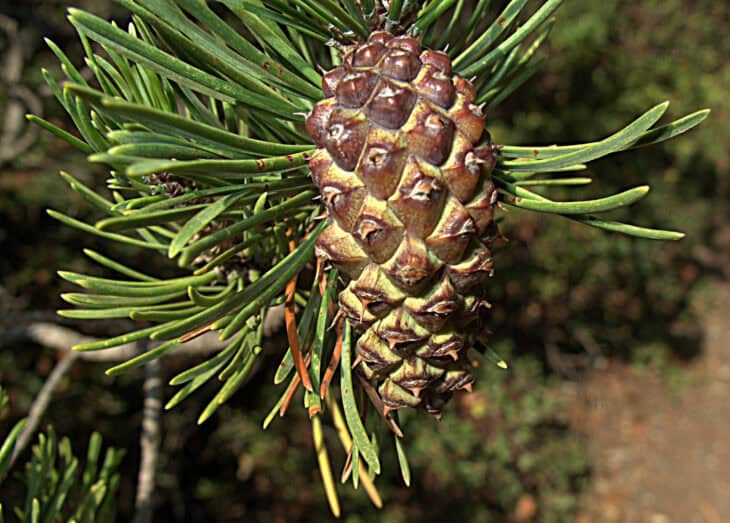
Shore Pine produces male pollen and developing female cones in spring and does not have showy flowers. Some varieties hold cones that open only after heat or fire, while others release seed more readily, so check the behavior of your local variety before using it in restoration or fuel management plans.
Propagation
Propagate by fresh seed or by planting nursery seedlings for the easiest results. Cuttings are generally difficult and unreliable. Some provenances regenerate naturally after fire from cones that open with heat, but this trait varies by variety and local population.
Pests, disease and toxicity
Shore Pine is not widely listed as highly toxic, though ingestion of needles or seeds can cause gastrointestinal upset in pets. Confirm specific risks with local poison control or a veterinarian before advising on livestock or pet exposure. Trees stressed by poor drainage or extreme cold show increased dieback and pest susceptibility.
Frequently asked questions
- How fast does Shore Pine grow?
- Growth rate varies by variety and site. Coastal forms are often slow and wind pruned while inland provenances can grow faster and reach larger sizes.
- Is Shore Pine salt tolerant?
- Yes it tolerates coastal salt spray and poor sandy soils when planted in full sun and well drained sites.
- Can I plant Shore Pine near the coast?
- Yes it is commonly used as a coastal windbreak but choose local provenances when possible to match exposure and soil.
- Are Shore Pine cones serotinous?
- Some varieties have cones that open after heat or fire, but this trait varies by variety and population.
- Are Shore Pines toxic to pets?
- Not widely listed as highly toxic. Needle or seed ingestion can cause stomach upset and you should verify risk with a veterinarian or poison control.
Gallery
Related Plants


Mentioned In (10)

Trees
19 Most Common Trees in Colorado
Colorado is known for its mountainous terrain and lush forests. The state has a range of ecosystems, which means there…
Trees
27 Most Common Trees in Canada
There are many different types of trees in Canada. Some unique to certain regions, others common across the country. This…

Pine
4 Different Types Of Pine Trees In Alberta
When we think of Alberta, golden wheat fields and cows grazing on lush green grass is usually what comes to…
Pine
12 Iconic Types Of Pine Trees In New Zealand
Did you know plantations cover over seven percent of New Zealand's total area? Today, New Zealand has a total of…
Pine
12 Most Common Types Of Pine Trees In Canada
Do you love collecting pine cones and smelling that fresh, evergreen smell of pine on your early morning jog? Well,…
Pine
7 Types Of Pine Trees In British Columbia
People in British Columbia hold a deep appreciation for nature and the beauty it offers. From scenic landscapes to evergreen…
Pine
6 Types of Pine Trees in Lake Tahoe
Planning a vacation to Lake Tahoe soon? The North Lake Tahoe flora and fauna attract hundreds of tourists from around…

Pine
4 Main Types of Pine Trees in Washington State
Washington State is known for its beauty and its vast landscapes, and it should come as no surprise that there…

Pine
29 Different Types of Pine Trees in California (Northern & Southern)
People love pine trees, and there is little wonder why. The cones can be easily decorated for a variety of…

Pine
51 Common Types of Pine Trees in North America (photos)
Wherever you go in North America, it is difficult not to see pine trees. These are tall, elegant trees that…