
Key Facts
- Cool season leafy vegetable grown for its edible leaves.
- Usually grown as an annual though some varieties can overwinter in mild climates.
- Prefers fertile, well drained soil with steady moisture.
- Succeeds in full sun in cool weather and in part shade in warm climates.
- Will bolt and flower as temperatures warm.
- Propagated easily by direct sowing of seed.
- Contains soluble oxalates which can affect susceptible humans and animals.
Spinach is a cool season leafy green grown for tender edible leaves and quick harvests. It performs best in fertile, well drained soil and is usually direct sown from seed, though some varieties can survive mild winters.
Identification and key traits
Spinach forms a low rosette, typically about 6 to 12 inches tall and across, with a compact habit used for cutting or baby-leaf harvests. It is a cool season vegetable that will bolt and produce small, inconspicuous flowers as temperatures and day length increase.
Best uses and where to grow
Use spinach in vegetable beds, raised beds and containers for continuous fresh greens during cool months. It is usually grown as an annual, though some cultivars can overwinter in mild climates. USDA zone range varies by variety and use, so choose crops suited to local winters.
Planting season and propagation
Sow seed directly into garden soil in cool weather where seeds germinate best; seeds often fail in hot soil. Starting indoors and transplanting is possible but less common. Stagger sowings through the cool season to maintain a steady harvest rather than planting once.
Soil, light and watering
Spinach prefers fertile, well drained loam or sandy loam and a near neutral soil pH about 6.0 to 7.5. Provide steady moisture to maintain yields and reduce bolting. Give full sun during cool weather and provide part shade in hot conditions to prevent leaf scorch and premature flowering.
Bolting, flowering and aftercare
Plants bolt and flower as temperatures warm, typically in spring to early summer in temperate climates. Once bolting begins leaves become bitter and less useful for fresh eating. Remove bolting plants or let a few go to seed if saving seed is the goal.
Containers and harvest
Spinach adapts well to containers when kept evenly moist and fed with steady fertility. Harvest outer leaves or cut entire rosettes for baby greens. Regular harvesting slows seed production and helps prolong the edible period in favorable cool weather.
Toxicity and pets
Spinach contains soluble oxalates that can interfere with calcium absorption and may cause digestive upset in susceptible people or pets when consumed in large amounts. The plant is generally safe as food but consult poison control or a veterinarian for concerns about pet exposures.
Frequently asked questions
- How fast does Spinach grow?
- Growth is quick in cool, moist conditions and plants form a harvestable rosette within weeks under favorable weather. Warm soil and heat slow germination and trigger bolting.
- Can spinach overwinter?
- Some varieties can overwinter in mild climates, but spinach is usually treated as an annual. Winter survival depends on local conditions and cultivar choice.
- Will spinach bolt in heat?
- Yes. Rising temperatures and longer days cause bolts and flowering, which make leaves bitter. Provide shade and plant in cool windows to delay bolting.
- How should I water spinach?
- Keep soil steadily moist. Both waterlogged and very dry soils reduce yields and increase the chance of bolting, so aim for even moisture without prolonged saturation.
- Is spinach toxic to pets?
- Spinach contains oxalates that can cause digestive upset in some animals. It is not classified as highly toxic, but contact poison control or a veterinarian for specific incidents.
Related Plants


Mentioned In (3)

Plants
9 Plants That Look Like Basil
There are many types of basil worldwide. All of them are edible and differ in color, leaf shape, and taste.…

Plants
8 Plants That Look Like Lettuce
Lettuce is grown everywhere. Lots of it. The world produced about 24.9 million tons of lettuce in 2013. Though, anyone…
Plants
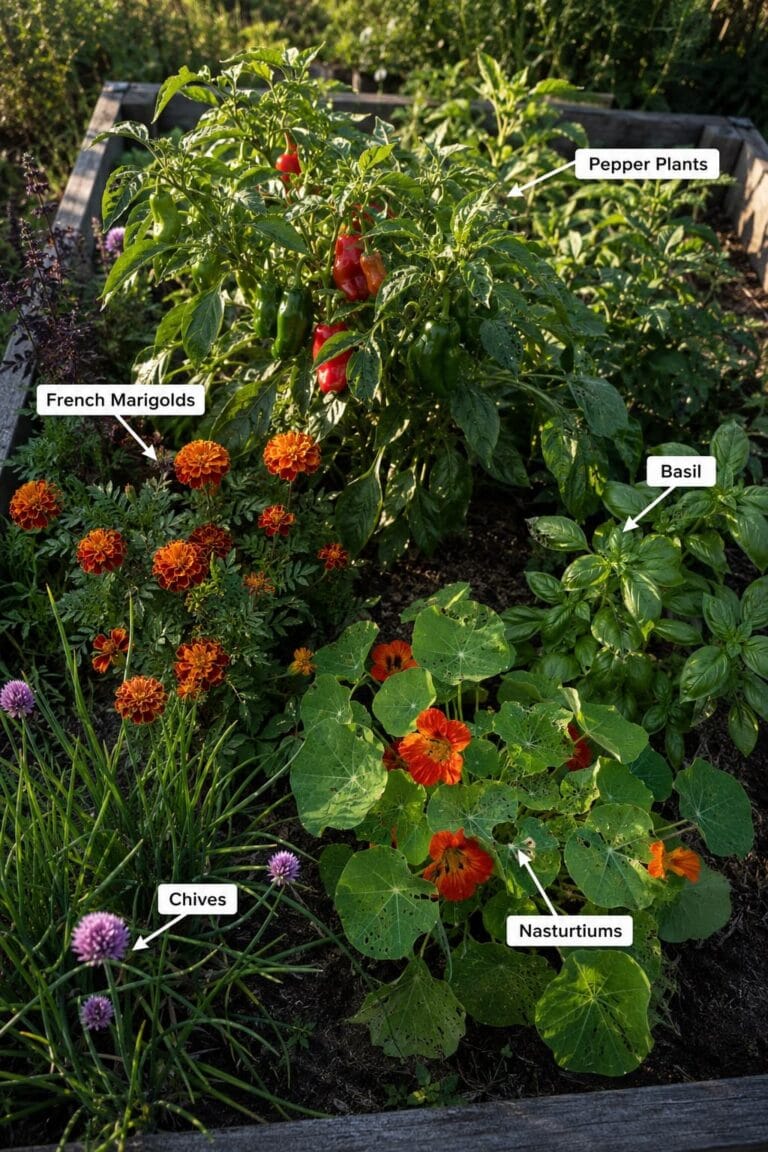
Companion Plants for Peppers: What Works and Why
Peppers are a magnet for aphids and thrips from the moment they go in the ground, and a plant this…