
Key Facts
- Native to the southeastern United States coastal plain.
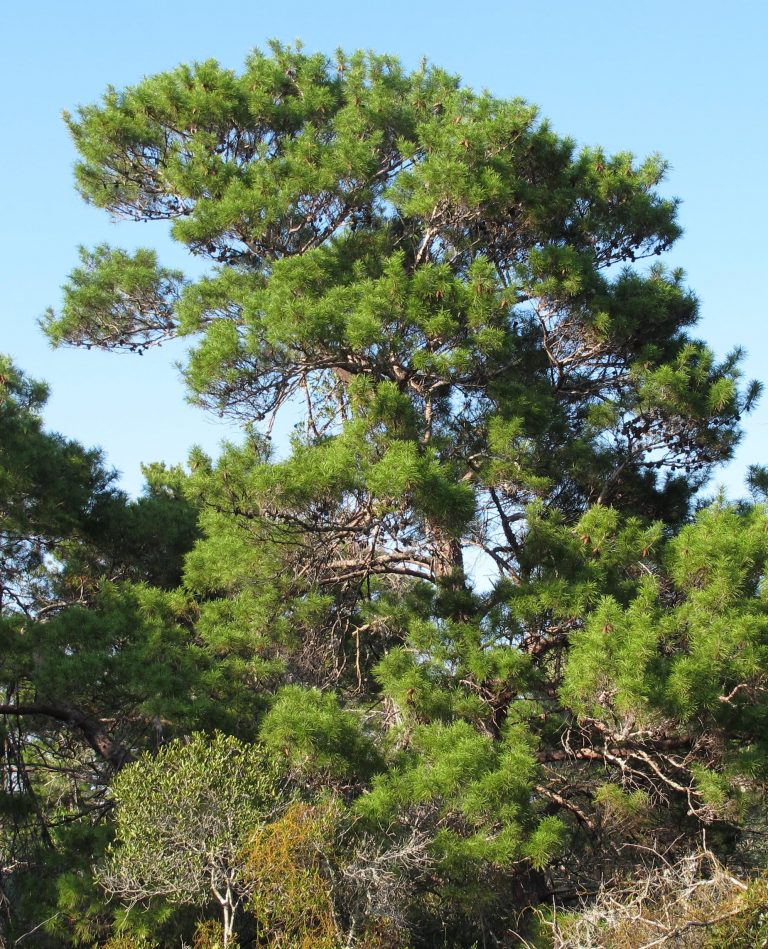
- Evergreen conifer with a slender, often pyramidal crown.
- More shade tolerant than many other pine species.
- Commonly found on moist acidic soils and lowland sites.
- Used in reforestation and as an ornamental in appropriate climates.
- Produces separate male pollen cones in spring and seed cones that are not especially showy.
- Propagation is commonly by seed collected from mature cones.
- Not widely regarded as highly toxic but ingestion of needles may upset pets.
Spruce pine is an evergreen conifer from the southeastern United States coastal plain that fits moist lowland sites where many pines struggle. It is used in native landscapes and reforestation when a slender pyramidal tree that tolerates light shade and wet acidic soils is desired.
Identification
Spruce pine is an evergreen conifer with a slender often pyramidal crown and fine textured foliage. Mature trees commonly reach 40-80 ft 12-24 m with a crown spread often 20-35 ft 6-11 m on open sites. Male pollen cones form in spring while seed cones develop but are not especially showy.
Best uses and where to grow
Use spruce pine in native planting schemes, lowland windbreaks and reforestation on moist acidic soils. It performs well in flatwoods and other seasonally wet sites where many pines fail. Avoid planting on strongly alkaline heavy calcareous ground where nutrient issues can occur.
Planting and spacing
Space trees to allow a mature crown spread of roughly 20-35 ft 6-11 m depending on light and site. Plant nursery transplants at the same soil depth they grew in the container or field. Timing and handling depend on local nursery practice and climate so follow regional transplant guidance.
Soil and watering
Spruce pine prefers moist acidic soils and tolerates poorly drained or seasonally wet conditions better than many pines. Establish young trees with regular moisture. On sites that remain waterlogged for long periods or that are saline the trees can struggle so choose sites with at least seasonal drainage.
Light and site care
The species accepts full sun to partial shade and is more shade tolerant than many pines. In heavier shade growth will be slower and form may become lanky. Mulch and moderate irrigation during establishment help root development on wetter lowland sites.
Blooming and cones
Male pollen cones are typically produced in spring while seed cones form through the growing season. Cones are modest and not a major ornamental feature. Pollen timing varies with latitude and local climate so expect earlier or later pollen shed depending on your region.
Propagation
Propagation is commonly by seed collected from mature cones and by nursery grown transplants for landscaping. Extract seed after cones dry and follow regional stratification or seed treatment recommendations to improve germination. Grafting is uncommon for this species.
After planting care and spread control
After establishment minimal maintenance is required beyond occasional watering during extended drought. In dense stands crowns tend to be narrower so natural spacing limits spread. Remove unwanted seedlings to control naturalizing and monitor for site specific pests or stresses reported by local extension services.
Frequently asked questions
- How fast does Spruce pine grow?
- Growth is generally moderate with final heights commonly 40-80 ft 12-24 m depending on site moisture light and competition. Trees grow faster on richer moist sites and slower in shade.
- Is Spruce pine suitable for small yards?
- Usually not for very small yards because mature height and spread can be substantial. Consider spacing and ultimate crown size before planting near structures.
- What soil does Spruce pine prefer?
- It prefers moist acidic soils and tolerates poorly drained or seasonally wet sites better than many pines. Avoid strongly alkaline heavy calcareous soils.
- How is Spruce pine propagated?
- Propagation is primarily by seed collected from mature cones and by buying nursery transplants. Dry cones and extract seed then follow regional seed treatment recommendations.
- When does Spruce pine release pollen?
- Pollen is typically released in spring. Exact timing varies by latitude and local climate so local records give the best schedule.
Related Plants


Mentioned In (5)
Pine
7 Types Of Pine Trees In Mississippi
Home to the Nottoway Plantation House, the Mississippi land has a rich history attached to flora and fauna thriving there.…
Pine
5 Typical Kinds of Pine Trees in Louisiana
Louisiana has been called a sportsman’s paradise, and indeed, if you love the outdoors, this is the place to be.…

Pine
51 Common Types of Pine Trees in North America (photos)
Wherever you go in North America, it is difficult not to see pine trees. These are tall, elegant trees that…

Pine
17 Common Types of Pine Trees in Georgia
If you’re unfamiliar with the many species of pine trees in existence, they may all look alike to you but…

Pine
9 Typical Types of Pine Trees in Florida
Thanks in part to the amount of sunshine it gets, the state of Florida is home to dozens of different…