
Key Facts
- Low growing herbaceous perennial with arrow shaped, sour tasting leaves.
- Leaves and stems contain oxalic acid and are eaten sparingly as a salad green or flavoring.
- Small reddish to greenish flowers are produced on wiry stems in spring to early summer.
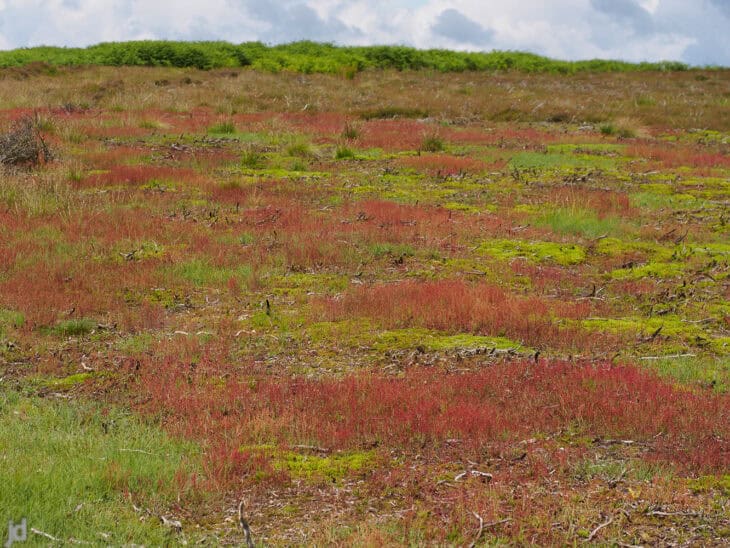
- Spreads readily by seed and can form persistent colonies in lawns and disturbed ground.
- Tolerates poor and acidic soils and compacted ground but does not tolerate prolonged waterlogging.
- Prefers sunny sites but will tolerate partial shade.
- Native to Eurasia and widely naturalized in temperate regions worldwide.
Sheep Sorrel (Rumex acetosella) is a low growing perennial with sour arrow shaped leaves used sparingly as a salad green or tangy flavoring and contains oxalic acid so eat with caution. It tolerates poor acidic and compacted soils and readily spreads by seed to form persistent patches, making it useful in rough ground but problematic in fine lawns.
Identification
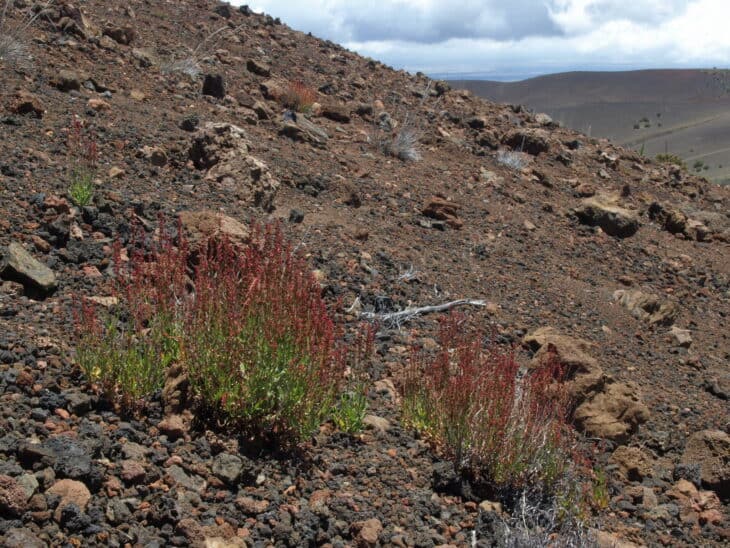
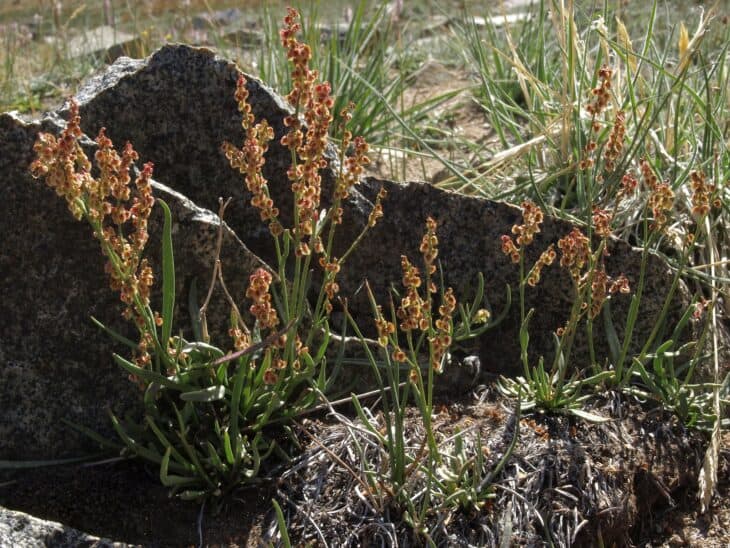
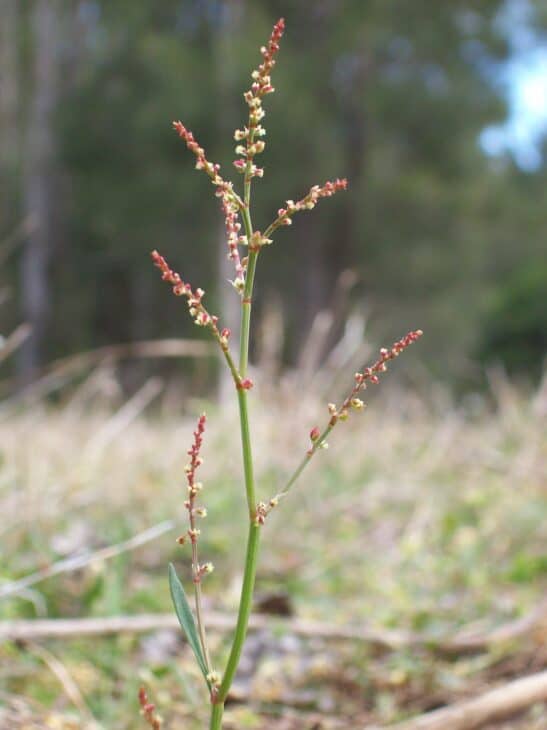
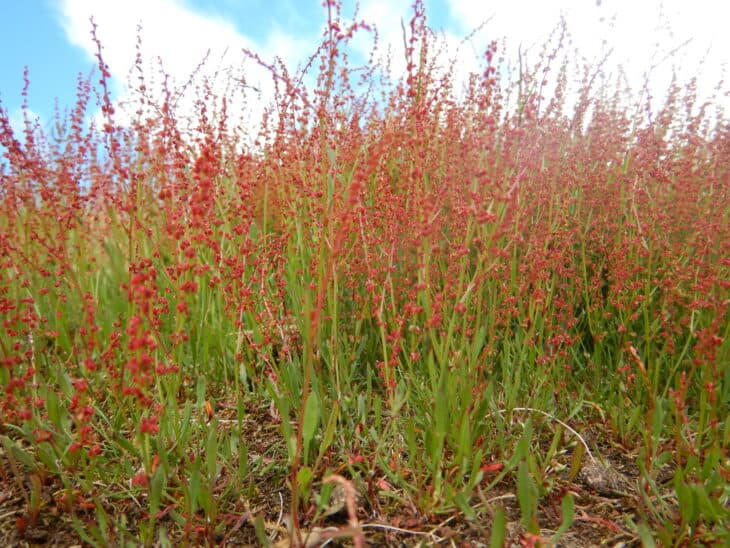
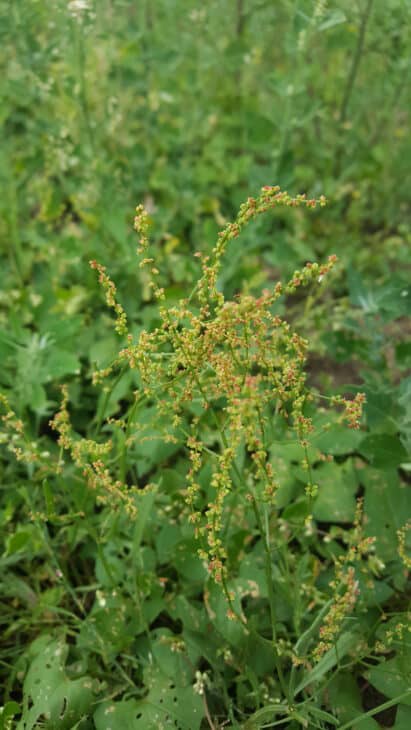
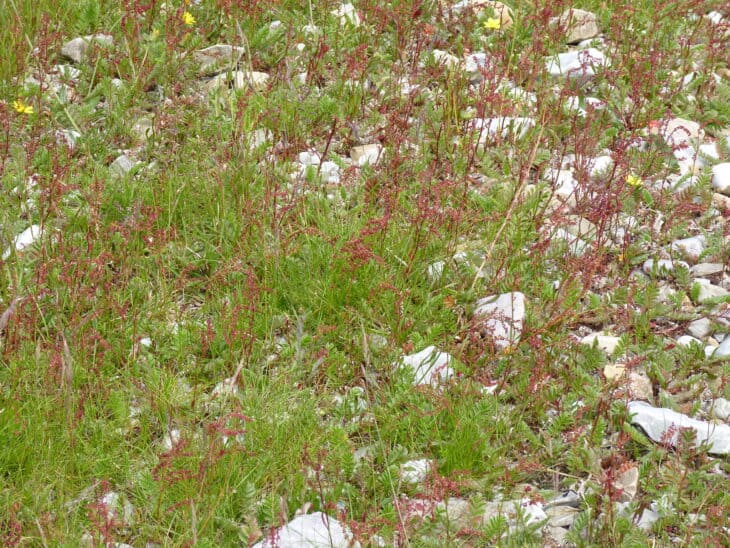
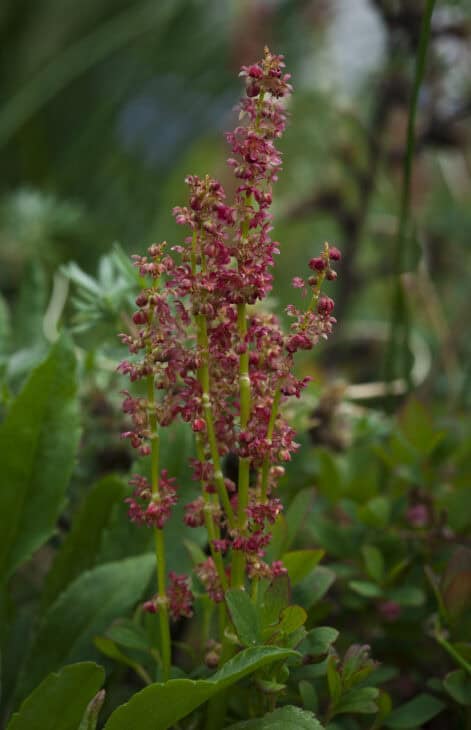
Plants reach about 4 to 12 inches tall and form small mats or patches. Leaves are arrow shaped and noticeably sour to the taste. Small reddish to greenish flowers appear on wiry stems in spring to early summer.
Where to grow and best uses
Grows in full sun to partial shade and tolerates poor, acidic and compacted soils. Use it as a low informal groundcover in wildflower pockets, gravel gardens or compacted patches where dense turf is unwanted. Avoid placing it where seed spread would threaten desirable plants.
Soil water and light
Prefers well drained to moderately moist soil. It tolerates poor and acidic conditions but does not tolerate prolonged waterlogging. In poorly drained sites vigour declines. Plant in sunny to partly shaded sites for best leaf flavour and flowering.
Planting care and after flowering
Place plants where their patch forming habit is acceptable since colonies expand by seed and local vegetative growth. Remove flower stalks before seed set to limit spread. Hand pulling works for small infestations but persistent colonies may regrow from root fragments if not fully removed.
Propagation and spread
Reproduces by seed and by forming colonies from creeping roots or rootstock. Seed dispersal and repeated seeding allow rapid establishment on disturbed ground. Expect patches roughly 6 to 18 inches across to develop where plants are left to naturalize.
Toxicity and edibility
Leaves and stems contain oxalic acid and are eaten sparingly as a salad green or flavoring. Small amounts are traditionally consumed but large intake can cause oxalate related health issues for people with kidney problems and can be harmful to livestock. Prevent large consumption by pets and livestock and check veterinary or poison control guidance for animal specific risks.
Frequently asked questions
- How fast does Sheep Sorrel grow?
- Plants are low growing but can expand their patch steadily through seed production and local vegetative spread. Speed of spread varies with disturbance seed set and climate.
- Is Sheep Sorrel edible?
- Yes in small amounts. The leaves are sour and used as a salad green or flavoring but contain oxalic acid so avoid large servings and do not eat if you have kidney concerns.
- When does Sheep Sorrel bloom?
- Flowers appear in spring into early summer, roughly April through August in northern temperate regions depending on local climate.
- How do I remove Sheep Sorrel from a lawn?
- Pull plants including roots before they set seed and repair with desirable turf. Prevent seeding by deadheading and reduce bare compacted patches that favor establishment.
- Can Sheep Sorrel be used as a groundcover?
- Yes for informal or wildlife friendly areas where a low sour leaved mat is acceptable. Do not use it where seed spread would threaten nearby beds or lawns.
Gallery
Related Plants


Mentioned In (1)

Plants
22 Poisonous Plants in Michigan
Known for its beautiful outdoor adventures, tourists and locals love spending their time hiking in Michigan. The weather is always…