
Key Facts
- Tropical perennial often grown as a houseplant.
- Noted for decorative patterned leaves that fold at night.
- Prefers bright indirect light and high humidity.
- Likes evenly moist but well drained soil.
- Usually kept compact at about 6–12 in (15–30 cm) tall.
- Propagated by division or stem cuttings.
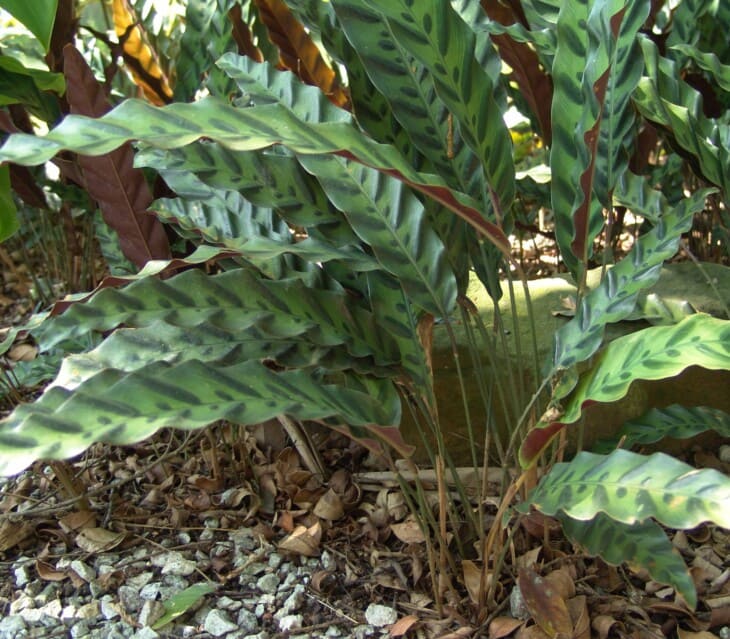
Prayer Plant (Maranta leuconeura) is grown mainly for its decorative patterned leaves that fold upward at night. Home gardeners choose it for small spaces, terrariums and shaded containers but it needs steady moisture and humidity to look its best.
Identification
Maranta leuconeura is a low, clumping tropical perennial valued for oval leaves with distinctive patterns and a habit of folding its leaves at night. Typical size in cultivation is compact, roughly 6 to 12 inches tall with a similar spread.
Where to grow and best uses
Most gardeners grow Prayer Plant as a houseplant. It can be grown outdoors in warm, frost free climates and is reported suitable outdoors in USDA zones 10 to 12. Outside that range keep it as a container plant indoors where warmth and humidity are easier to control.
Light
Provide bright filtered or indirect light. The leaf pattern is strongest with good indirect light. Avoid direct hot sun which can scorch leaves. It will tolerate lower light but patterns and growth can fade.
Soil and containers
Use a humus rich potting mix that drains freely yet holds some moisture. A mix for tropical houseplants or a standard potting mix amended with peat or coco coir and perlite works well. Plant at the same depth the plant was previously grown and choose a pot with drainage.
Watering and humidity
Keep the soil evenly moist but not waterlogged. If soil stays soggy roots may rot. If the soil dries out repeatedly leaves will brown and curl. Adjust watering frequency to light and temperature and increase humidity with a tray of pebbles, a humidifier or grouping plants.
Propagation and planting time
Propagate by dividing the clump or taking stem cuttings. Cuttings root readily in water or a moist potting mix. Division is easiest in spring, when the plant is actively growing.
After flowering and maintenance
Prayer Plant is grown for foliage. It can produce small flowers, sometimes in summer, but often does not flower indoors. Remove spent flower stalks and continue routine care. Divide to refresh older clumps and to control size.
Spread and size control
The plant forms a tight clump and typically reaches about 6 to 12 inches across. If it becomes crowded divide the rootball to create new plants and reduce spread.
Frequently asked questions
- How fast does Prayer Plant grow?
- Growth is moderate. In good light, warmth and humidity it will produce new leaves steadily but it remains a compact plant.
- Prayer Plant indoors vs outdoors?
- Grow it indoors as a houseplant in most climates. Outdoors it is suitable only in warm, frost free areas reported as USDA zones 10 to 12.
- Is Prayer Plant toxic to pets?
- Some sources list Maranta leuconeura as non toxic to cats and dogs but ingestion can still cause mild stomach upset. Check local poison control or the ASPCA entry for the latest guidance.
- How often should I water a Prayer Plant?
- Keep soil evenly moist. Water before the surface dries out completely but avoid letting the pot sit in water. Frequency depends on light, pot size and season.
- How do I propagate a Prayer Plant?
- Divide the rootball or take stem cuttings. Dividing in spring gives the best chance for rapid reestablishment. Cuttings root readily in water or a moist mix.
Gallery


Related Plants


Mentioned In (2)

Plants
10 Plants That Look Like Chinese Evergreen
When it comes to indoor plants, few make such a striking impression as a Chinese evergreen. Also known as Philippine…

Plants
8 Plants That Look Like Pothos / Devil’s Ivy (but are not)
Pothos (Epipremnum aurem), also known as devils ivy, are popular tropical vining plants. They are easy to care for and…