
Key Facts
- Evergreen trailing or climbing perennial commonly grown as a houseplant.
- Native to parts of Asia and the western Pacific region.
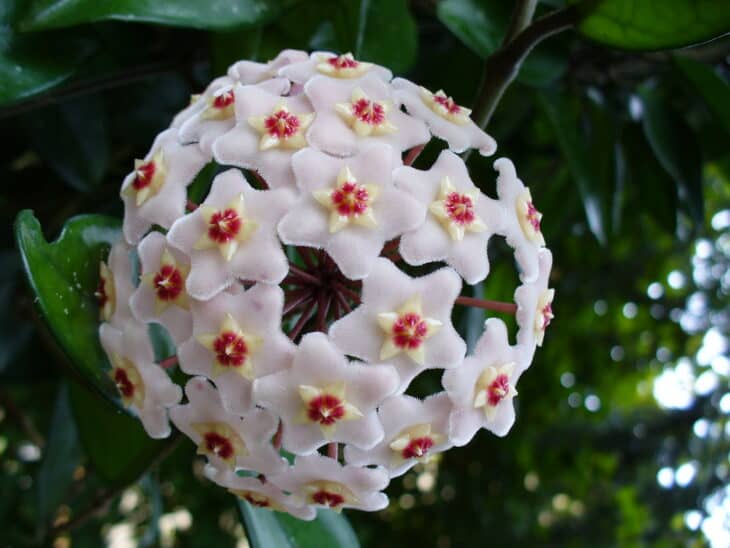
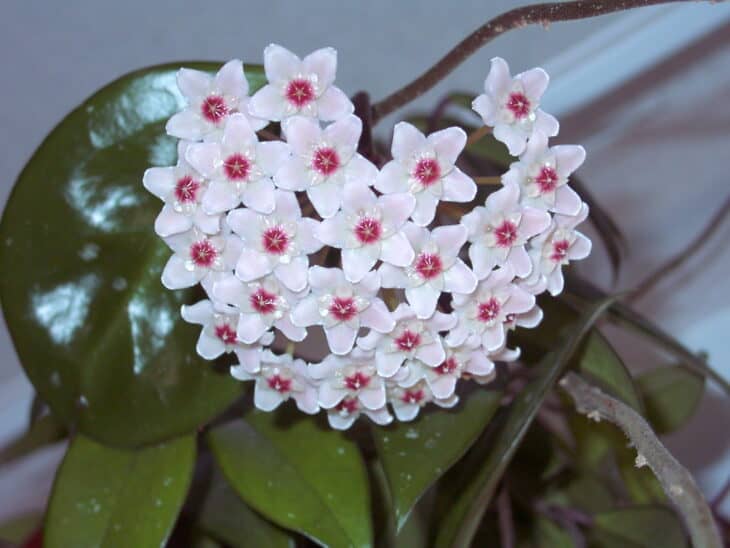
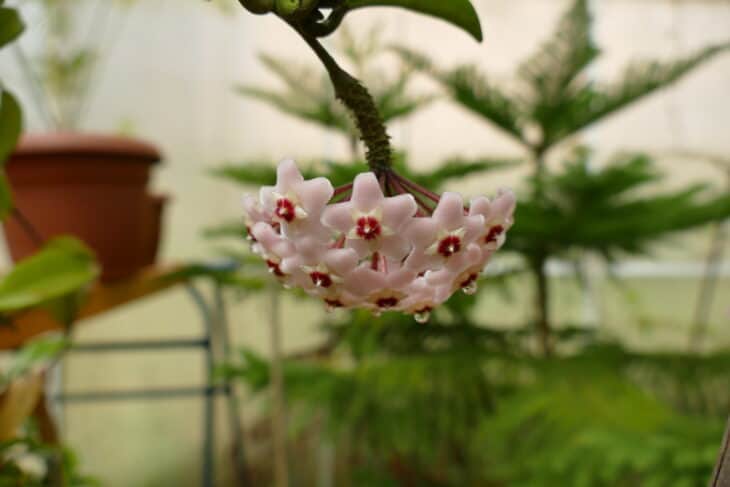
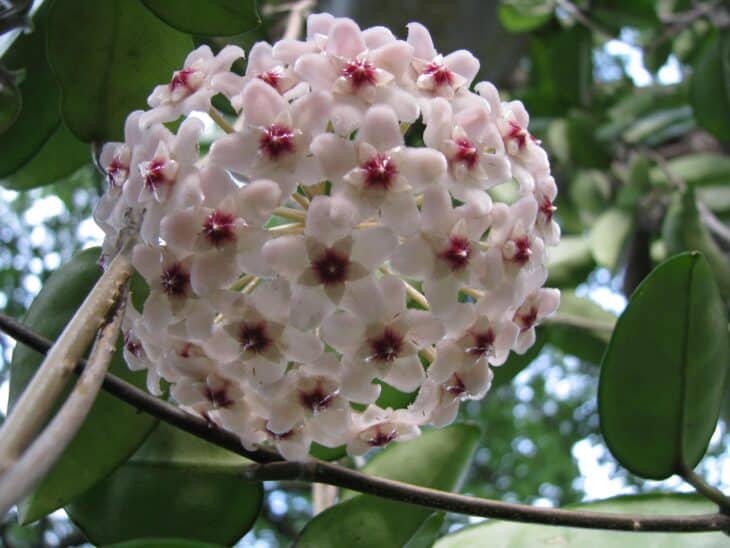
- Produces clusters of star-shaped waxy flowers that are often fragrant.
- Prefers bright indirect light and an airy well draining potting mix.
- Often propagated by stem cuttings taken from a mature vine.
- Generally regarded as low maintenance and drought tolerant between waterings.
- Usually kept as an indoor container plant outside warm climates.
Hoya is an evergreen trailing and climbing vine grown mainly as a houseplant for hanging baskets and trained displays. It produces clusters of star shaped waxy flowers that are often fragrant while remaining drought tolerant between waterings.
Identification and key traits
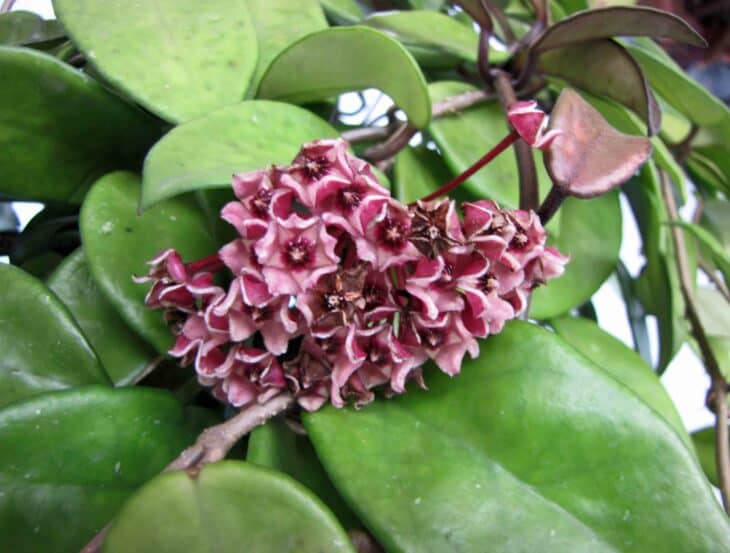
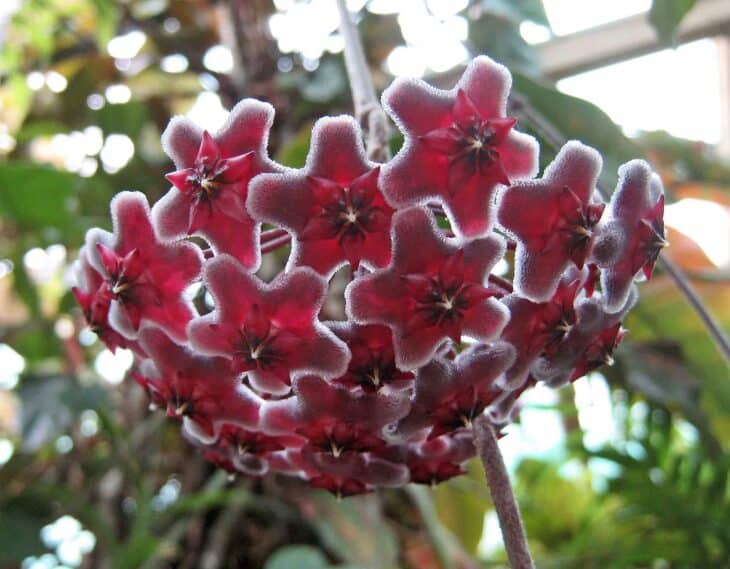
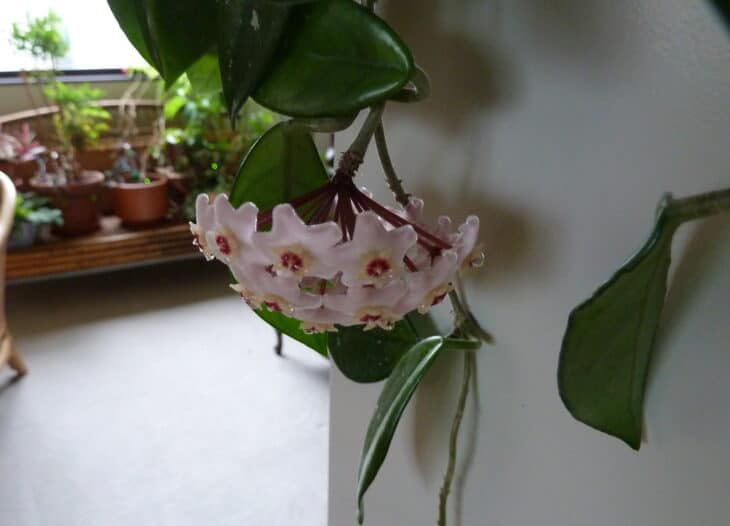
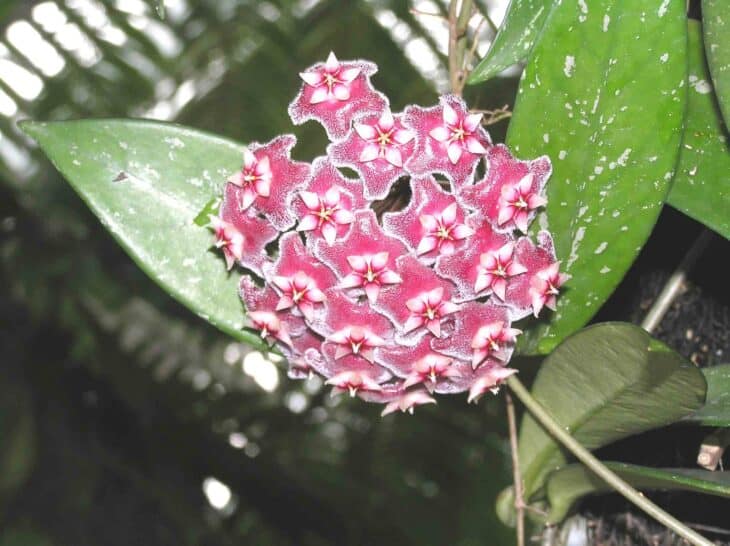
Hoya carnosa has fleshy leaves and twining stems that trail or climb for several feet in cultivation. Native to parts of Asia and the western Pacific region it is prized for umbels of star shaped, waxy flowers and a low maintenance habit.
Where to grow Hoya and best uses
Use Hoya as a hanging basket plant or train it on a small trellis indoors. In warm climates within USDA zones 10 to 11 it can be kept outdoors year round. Outside those zones keep it as an indoor container plant and bring it inside before cold weather.
Light and placement
Place Hoya in bright indirect light. It tolerates some morning sun but avoid prolonged hot direct afternoon sun which can scorch leaves. Lower light reduces the chance of flowering.
Soil and watering
Grow Hoya in an airy, well draining potting mix that mimics epiphytic conditions for best results. Add orchid bark or perlite to a houseplant mix to improve drainage. Allow the top of the mix to dry between waterings since waterlogged soil leads to root rot. The plant is drought tolerant between waterings and prefers to avoid constant wet feet.
Containers, training and size
Hoya commonly trails or climbs two to six feet from a container depending on age pot size and training. Use hanging baskets to show trailing stems or provide a small support if you want it to climb. Container size and pruning affect spread and overall length.
Propagation and care after flowering
Propagate from softwood or semi ripe stem cuttings rooted in water or a free draining mix. Layering or dividing larger clumps also works. Indoor flowering is sporadic and depends on light temperature and plant maturity. Maintain the same light and watering routine after blooms fade and use pruning to manage length and spread.
Pets and safety
Major pet safety sources list Hoya species as non toxic to cats and dogs but ingestion can cause mild gastrointestinal upset. Handle sap with care if you are sensitive and contact a veterinarian or poison control service for suspected poisoning.
Frequently asked questions
- How fast does Hoya grow?
- Growth rate varies with light pot size and age. Hoya commonly produces two to six feet of trailing or climbing stems in cultivation over time.
- When does Hoya bloom?
- Blooming depends on plant maturity light and temperature. It often flowers in warm months outdoors and may bloom sporadically indoors when conditions are favourable.
- Are Hoyas safe for pets?
- Major sources list Hoyas as non toxic to cats and dogs but eating the plant can cause mild stomach upset. Confirm with local veterinary or poison control resources for specific advice.
- How do I propagate Hoya?
- Take softwood or semi ripe stem cuttings and root them in water or a free draining mix. Layering and division are alternative methods. Avoid overwatering cuttings and provide warmth and humidity for best success.
- Can I grow Hoya outdoors?
- Yes in warm climates corresponding roughly to USDA zones 10 to 11. In cooler regions keep Hoya as an indoor container plant and protect it from cold.
Gallery
Related Plants


Mentioned In (1)

Plants
8 Plants That Look Like Pothos / Devil’s Ivy (but are not)
Pothos (Epipremnum aurem), also known as devils ivy, are popular tropical vining plants. They are easy to care for and…