
Key Facts
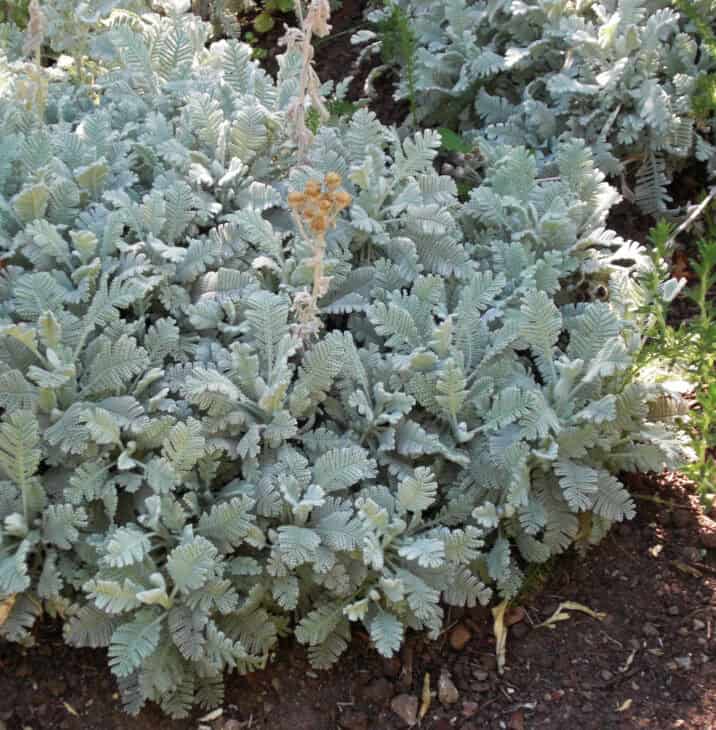
- Low growing mat forming perennial with silvery feathery foliage.
- Often evergreen to semi evergreen depending on winter severity.
- Produces small buttonlike yellow flowers in summer.
- Aromatic foliage when crushed.
- Prefers well drained, lean soils and tolerates poor rocky or sandy sites.
- Drought tolerant once established.
- Works well in rock gardens, gravel beds and low borders.
- Can be propagated by division, cuttings or seed.
Partridge Feather is a low growing mat forming perennial with silvery feathery foliage and small yellow button flowers. It fits rock gardens, gravel beds and low borders where lean well drained soil and full sun create its best habit. In colder winters plants may die back to the ground while in warmer areas they remain more evergreen.
Identification
Leaves form a dense silvery carpet of finely divided, feathery foliage that gives the plant a soft texture. Summer brings small buttonlike yellow flowers held above the foliage on short stems. The foliage is aromatic when crushed which helps with identification and makes the plant stand out in mixed rock garden plantings.
Best uses and where to grow
Use Partridge Feather as a ground cover in rock gardens, gravel beds and low borders where its mounding mat softens hardscape edges. It prefers full sun to part sun and performs best on lean, free draining soils. The plant is hardy in USDA zones 5 to 9 and can be evergreen to semi evergreen depending on winter severity.
Planting and spacing
Plant in spring after the last frost or in autumn in mild climates to allow roots to establish before hot weather. Space plants roughly the same as their mature spread which is about 12 to 24 inches apart to form a continuous mat. Avoid sites that hold water and prepare a gritty, well draining planting mix for best results.
Soil light and watering
Partridge Feather prefers well drained, lean soils such as sandy, gritty or rocky mixes and declines in heavy wet clay. Give it full sun for best flowering and overall habit while light afternoon shade can be useful in very hot sites. Water sparingly once established because the plant is drought tolerant and overwatering will cause poor growth or crown rot.
After flowering care and maintenance
Remove spent flower stems to keep the mat tidy and to encourage fresh foliage. Older clumps benefit from light division to renew vigor and to prevent center dieback. In colder regions allow plants to die back naturally and cut back in spring as new growth appears. In warmer regions occasional trimming controls spread and maintains a compact shape.
Propagation
Propagate by division, softwood cuttings or seed. Divide older clumps in spring or fall and take cuttings in spring or early summer for reliable results. Seed can be used but may vary from the parent plant in cultivar form. Match propagation timing to local climate for best establishment and higher success rates.
Control and naturalizing
Plants can spread to form wider mats especially in warmer climates where they remain evergreen. Control spread by lifting and dividing sections every few years and by trimming flowering stems before seed set. In confined sites use edging or containers and monitor new seedlings in gravel beds to prevent unwanted naturalizing into adjacent planting pockets.
Frequently asked questions
- How fast does Tanacetum Densum grow?
- Growth is moderate and site dependent. Expect a plant to fill a 12 to 24 inch space over a few growing seasons under good sun and drainage.
- Is Partridge Feather evergreen?
- It is often evergreen to semi evergreen depending on winter severity. In colder USDA zones it may die back to the ground and then regrow in spring.
- Does it tolerate drought?
- The plant is drought tolerant once established and prefers lean well drained soils. Regular watering during establishment helps roots develop but prolonged wet soil will harm the plant.
- What is the best soil for planting?
- Lean gritty or sandy soils that drain freely are best. Avoid heavy waterlogged clay which causes decline and poor growth.
- How do I propagate Partridge Feather?
- Propagate by dividing mature clumps in spring or fall, by taking softwood cuttings in spring or early summer, or by seed with variable results depending on cultivar.
Gallery
Related Plants


Mentioned In (1)

Plants
10 Plants That Look Like Brains
Plants can be weird and wonderful, but have you ever seen plants that look like brains? Plants that look like…