
Key Facts
- Evergreen shrub or small tree native to Texas and northern Mexico.
- Clusters of fragrant purple pea type flowers in late winter to spring.
- Glossy pinnate leaves give a compact evergreen form.
- Drought tolerant once established and suited to rocky or alkaline soils.
- Prefers well drained soil and will decline in poorly drained sites.
- Used as a specimen, screen, or small hedge.
- Slow growing and long lived.
- Seeds and pods are poisonous if ingested.
Texas Mountain Laurel is an evergreen shrub or small tree prized for clusters of highly fragrant purple pea type flowers in late winter into spring. It suits dry, rocky and alkaline sites where good drainage prevents decline, and it is slow growing and long lived when planted in appropriate conditions.
Identification
Glossy pinnate leaves form a dense evergreen habit and support showy clusters of purple pea like flowers that typically appear in late winter to spring. Mature plants usually reach about 6 to 15 feet tall and a similar spread. Seeds and pods develop after flowering and are considered poisonous if ingested.
Best uses and where to grow
Use as a specimen, informal screen or small hedge in landscapes that match its soil and light preferences. It performs best in full sun to light afternoon shade and tolerates alkaline, rocky or gravelly soils. Expect strongest flowering and the densest form when plants receive full sun.
Planting and spacing
Place plants where drainage is reliable to avoid root decline in soils that stay wet. Allow room for a mature spread of roughly 6 to 15 feet when planting multiple specimens. Planting in locations with protection from severe winter exposure reduces tip dieback in cooler parts of its range.
Watering and soil
Prefers well drained soils and will decline in poorly drained sites. The species is drought tolerant once established but young plants benefit from regular moisture while roots develop. Avoid long periods of soil saturation since persistent wet conditions commonly lead to root problems and plant decline.
After-flowering care and pruning
Light shaping after flowering maintains form while allowing next season’s blooms to set. Prune selectively to remove dead or crossing branches; heavy pruning is rarely needed because growth is slow. Allow mature specimens space to develop a multi stemmed shrub or small tree habit depending on desired form.
Propagation and establishment
Propagate by seed or semi hardwood cuttings. Seed often benefits from scarification or soaking to improve germination and seedlings are slow to establish, so expect gradual early growth. Cuttings are used commercially and by experienced propagators for more consistent results.
Toxicity and safety
Seeds and pods contain toxic alkaloids and are poisonous if ingested by people and animals. Exercise caution when planting where children or pets might access seed pods and contact a poison control center or veterinary toxicology source for exact clinical guidance in an exposure.
Frequently asked questions
- How fast does Texas Mountain Laurel grow?
- It is slow growing. Expect gradual size increases over several years rather than rapid early growth; plants are long lived once established.
- When does Texas Mountain Laurel bloom?
- Blooms appear in late winter to spring, commonly February through April in many parts of its range, with timing shifting by local climate.
- Is Texas Mountain Laurel drought tolerant?
- Yes. It is drought tolerant once established but young plants need regular moisture while roots develop. Avoid planting in soil that remains wet.
- What size does it reach and is it suitable for small gardens?
- Plants typically reach about 6 to 15 feet tall with a similar spread. It can work in smaller yards as a single specimen or trained as a small screen if space allows for its mature size.
- Are the seeds poisonous?
- Yes. Seeds and pods are poisonous if ingested. Keep pods away from children and pets and seek expert advice for exposures.
Related Plants


Mentioned In (5)
Trees
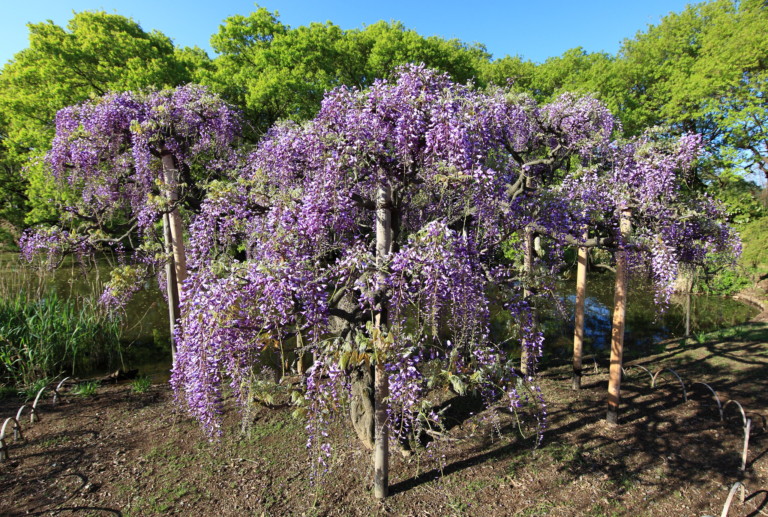
7 Trees Similar To Wisteria
Wisteria is gorgeous, like a bride draped for a purple wedding day. Despite appearances, Wisteria is not a tree but…

Trees
37 Most Common Trees in Texas
Texas is located in the Southernmost region of the United States and is bordered by New Mexico and other Mexican…

Trees
21 Flowering Trees For Arizona
Are you looking for the best flowering trees to plant in Arizona? Since the Copper State has a dry, hot…

Trees
27 Terrific Flowering Trees For Texas Yards
Are you looking to plant flowering trees in Texas? Well, you will be immensely pleased to know that despite its…
Trees
14 Beautiful Purple Flowering Trees in Spring
If you’re a fan of planting uniquely colored flowering trees in your garden, you must love purple flowering trees. After…