
Key Facts
- Native tree of the Sydney region of eastern Australia.
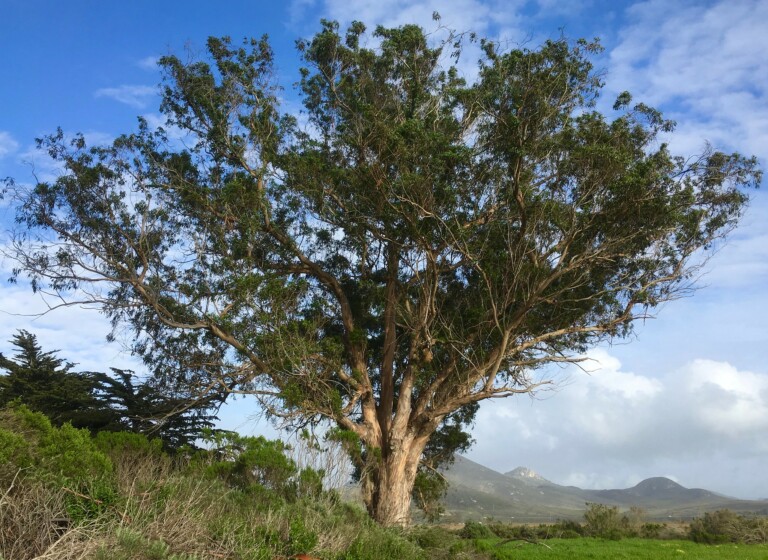
- Evergreen to semi-evergreen with smooth peeling reddish bark.
- Clusters of white to cream flowers appear in the warmer months.
- Common on sandstone derived soils and coastal sites.
- Used as a specimen and street tree and valued by birds for habitat.
- Tolerates poor, well drained soils but does not like waterlogging.
- Can reach a large tree size at maturity.
- Propagated chiefly by seed and sometimes by cuttings with difficulty.
Sydney Red Gum is a medium to large native Australian tree valued for its smooth peeling red bark and clusters of cream flowers. It works well as a street or specimen tree on well drained sites but will decline where soils remain waterlogged.
Identification
Evergreen to semi-evergreen, Sydney Red Gum has smooth, peeling reddish bark and forms clusters of white to cream flowers in the warmer months. The species is native to the Sydney region of eastern Australia and typically develops a spreading crown. Birds use the tree for habitat which makes it a noticeable feature in parks and coastal plantings.
Best uses and where to grow
Use Sydney Red Gum as a park, street or specimen tree where a tall canopy and bird habitat are desirable. It performs on sandstone derived, sandy or rocky soils and coastal sites and tolerates low fertility ground. Avoid planting it in poorly drained or waterlogged positions where root decline can occur.
Planting and spacing
Plant in full sun to part shade for best form and flowering. Allow room for a mature crown spread of about 6 to 12 metres 20 to 40 feet when siting new trees. When planting, match the root ball depth to the soil surface and avoid burying the trunk flare; heavier pruning may be needed later to maintain clearances for utilities or sidewalks.
Soil and watering
Sydney Red Gum prefers well drained sandy or sandstone derived soils and tolerates rocky, shallow sites. It does not like waterlogged conditions which can lead to root decline. Keep young trees watered until established but avoid prolonged wet feet. Mulch to conserve moisture and reduce weed competition while leaving the trunk flare clear of deep mulch.
Size and maintenance
Mature specimens commonly reach about 9 to 18 metres in height with a substantial spreading crown. Prune to remove dead wood and to establish a strong central leader when the tree is young if used as a street specimen. Expect a large eventual size so avoid planting too close to buildings, sewer lines or small gardens that will be shaded out.
Propagation
Seed is the primary and most reliable way to propagate Sydney Red Gum. Cuttings can be attempted but are frequently difficult to root and require specialist techniques. Grafting is used occasionally in commercial settings when a specific form or rootstock compatibility is needed.
Wildlife and toxicity
The tree provides habitat and food resources for birds and native fauna. There are no widespread reports of major human or pet toxicity although leaf oils in eucalypt relatives can irritate sensitive skin and cause mild dermatitis. Check local poison control or veterinary sources if pet safety is a critical concern.
After flowering and seedling control
After flowering expect seed production in maturity and potential seedling establishment, particularly in warmer regions. Remove unwanted seedlings promptly to prevent naturalising beyond intended sites. Routine pruning to manage canopy shape and remove dead branches will keep the tree healthy and reduce the risk of storm damage as it ages.
Frequently asked questions
- How fast does Sydney Red Gum grow?
- Growth rate varies with climate, soil and care. Mature height commonly falls between 9 and 18 metres; reaching that size takes several years and depends on site fertility and moisture.
- Is Sydney Red Gum suitable for small yards?
- Not usually, because it becomes a large tree with a 6 to 12 metre crown. For small yards choose a smaller species or plant well away from buildings and services.
- How is Sydney Red Gum propagated?
- Seed is the main method and is straightforward for the species. Cuttings are possible but often difficult to root; grafting is used sometimes commercially.
- What soil does it prefer?
- It prefers well drained, sandy or sandstone derived soils and tolerates poor rocky ground. Avoid waterlogged soils to prevent root decline.
- Are the leaves toxic to pets?
- No major toxicity is widely documented but leaf oils can irritate skin. Confirm with local poison control or a veterinarian if you have concerns about ingestion or exposure.
Related Plants


Mentioned In (1)
Plants
7 Plants That Look Like Eucalyptus
Eucalyptus trees have a distinctive fragrance that is easily recognizable but can be tricky to identify visually. There are several…