
Key Facts
- Deciduous shade tree with a narrow to rounded crown.
- Native to eastern and central North America.
- Prefers moist acidic soils and tolerates seasonally wet sites.
- Commonly used in landscape plantings and street tree rows.
- Produces male catkins in spring and acorns by autumn.
- Susceptible to iron chlorosis on alkaline soils.
- Acorns can be toxic to livestock if eaten in large quantities.
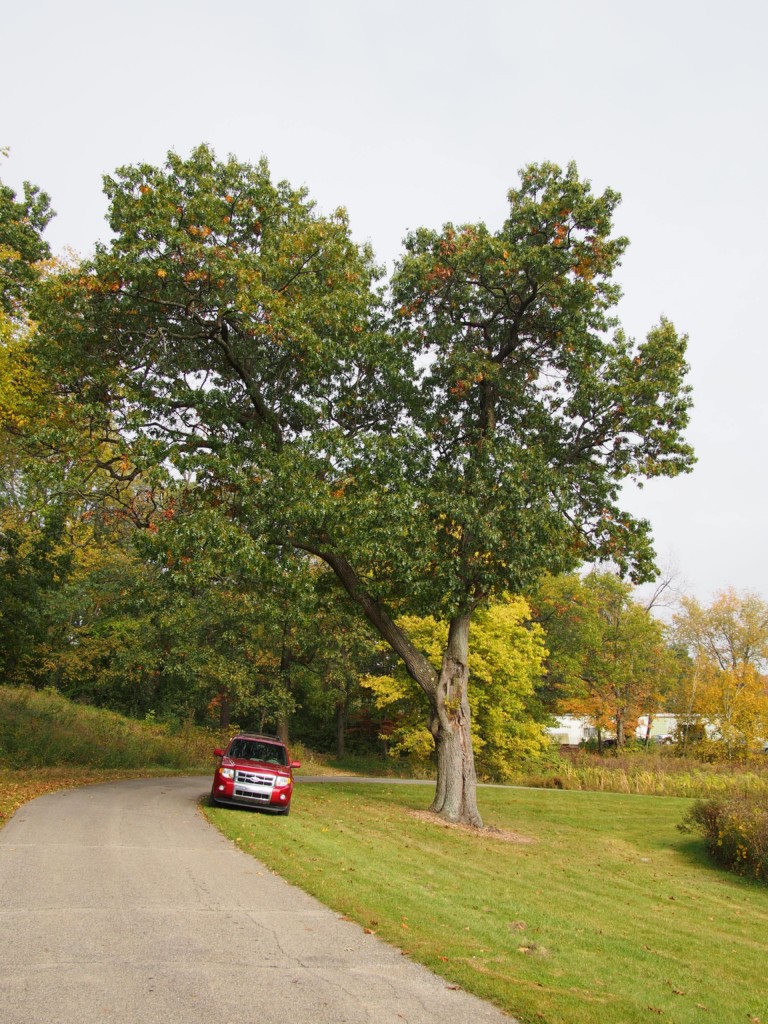
Pin Oak (Quercus palustris) is a medium to large deciduous oak valued for its narrow to rounded crown and glossy lobed leaves. It is commonly planted for shade and in street rows but prefers moist acidic soils and can show iron chlorosis on alkaline sites.
Identification
Pin Oak typically reaches 40 to 70 ft tall with a crown often 25 to 50 ft wide depending on form and site. Leaves are glossy and deeply lobed. Trees produce inconspicuous male catkins in spring and set acorns by autumn. The species has a distinctive upright, often pyramidal habit when young then broadens with age.
Where to grow and common uses
Native to eastern and central North America, pin oak is widely used as a street and shade tree. Its tolerance of seasonally wet sites makes it useful in low areas and urban planting strips. Avoid planting where acorn drop creates a hazard for grazing livestock or dense regeneration under trees is undesirable.
Soil and light requirements
Pin oak prefers moist acidic soils and tolerates poorly drained and seasonally wet conditions. It grows best in full sun and will tolerate light shade but loses form and vigor in heavy shade. On alkaline soils the tree often develops iron chlorosis which reduces leaf color and vigor.
Planting and spacing
Allow room for the mature crown when siting pin oak. Space trees based on expected spread of 25 to 50 ft to avoid crowding utility lines and neighboring trees. Narrow urban cultivars may require less lateral space but check cultivar information when selecting a planting distance.
Watering and routine care
Provide consistent moisture while the tree establishes, especially in dry, warm seasons where drought stress can cause leaf scorch. Mulch the root zone to conserve moisture and reduce competition from grass. Prune for structure when young to develop a strong central leader and avoid heavy pruning in late summer.
Problems and toxicity
Pin oak is prone to iron chlorosis on high pH soils which causes yellowing between leaf veins and reduced vigor. Acorns and young foliage contain tannins and can poison livestock if eaten in large quantities. Pets and people may experience gastrointestinal upset from acorns so exercise caution where animals graze or children play.
Propagation
Propagate pin oak from acorns sown fresh or after appropriate cold stratification. Nursery production for named cultivars typically uses grafting or budding to preserve selected traits. Seedlings from acorns will vary in form and are used when cultivar characteristics are not required.
Frequently asked questions
- How fast does Pin Oak grow?
- Growth rate varies by site and moisture. Trees commonly reach 40 to 70 ft at maturity. In colder zones growth is slower and establishment can take longer, while good moisture speeds early growth.
- Are Pin Oak acorns toxic?
- Yes. Acorns contain tannins that can cause poisoning in cattle and horses when eaten in quantity. Pets and people may suffer gastrointestinal upset from acorn ingestion.
- What soil pH do Pin Oaks prefer?
- They prefer acidic soils and tolerate poorly drained sites. On alkaline soils pin oak often develops iron chlorosis which reduces leaf color and vigor.
- Can Pin Oak be used as a street tree?
- Yes. It is commonly used in street rows and landscape plantings because it tolerates urban moisture conditions, but allow space for a 25 to 50 ft crown and consider nuisance from acorn drop.
- How should I propagate Pin Oak?
- Use fresh acorns or acorns after cold stratification for seedlings. For named cultivars use grafting or budding to retain specific traits.
Related Plants


Mentioned In (18)

Trees
36 Most Common Trees in Missouri
Missouri is located in the Midwestern region of the United States. The gorgeous State is bordered by eight states, including…
Oak
5 Types of Oak Trees in Massachusetts
Are you looking to diversify your property in Massachusetts with hardy, attractive trees? Well, you cannot do better than various…
Oak
4 Common Types of Oak Trees in New York State
New York State has many land and aquatic habitats that are home to diverse plant and animal life. If you've…

Oak
9 Types of Oak Trees in Ontario
Do you plan to grow Oak Trees in your Ontario garden? Oaks are stately, tall, and attractive trees with dark…
Oak
9 Types of Oak Trees in New Jersey
If you want to grow Oak Trees in New Jersey, you’ve come to the right place! New Jersey is home…

Trees
16 Most Common Trees in New York State
Lying in the Mid-Atlantic and Northeastern region of the United States, the state of New York has a very diverse…

Oak
8 Typical Types of Oak Trees in Kentucky
One of the best parts about being a gardener in Kentucky is the amazing variety of oak trees that you…
Oak
8 Common Types Of Oak Trees In Iowa
Do you want to plant an Oak Tree in your garden? Well, you will be pleased to know that you…
Oak
9 Types Of Oak Trees In Australia
Did you know that there are over 600 Oak species in the world? Oaks are part of the Quercus genus. They…

Oak
12 Common Types Of Oak Trees In Canada
Do you plan to grow Oak Trees in your garden? Well, you will be happy to know that there are…
Oak
19 Types of Oak Trees in Tennessee
Not only does the state of Tennessee have a lot of different trees, but the state is also home to…
Oak
15 Amazing Types of Oak Trees in Arkansas
Arkansas has more than 18 million acres of forests that account for nearly 60% of the state, so if you’re…
Oak
10 Prevalent Types of Oak Trees in Oklahoma
Trees in Oklahoma include everything from elms to black walnuts and pines to dogwoods, and that doesn’t even include the…

Oak
8 Types of Oak Trees in Ohio
The state of Ohio is home to more than 100 species of trees, and the most common tree in the…

Oak
15 Types of Oak Trees in North Carolina
There are hundreds of species of trees in North Carolina, in part because there are mountains on one side of…

Oak
6 Common Types of Oak Trees in Michigan
The majestic oak tree is written about in novels and displayed across the screen in hundreds of movies, and there…
Oak
17 Great Types of Oak Trees in Georgia
That states like Georgia have a lot of trees should be no surprise to anyone. Because of its mild climate,…
Oak
76 Types of Oak Trees in North America (foliage photos)
Because of all the forests in North America, you can find just about every tree you can think of if…