
Key Facts
- Deciduous shade tree with a rounded crown.
- Species name Acer platanoides is commonly called Norway maple.
- Produces paired winged samaras in late spring to early summer.
- Leaves are palmately lobed, typically with five lobes.
- Adaptable to a wide range of soils and urban conditions.
- Can be invasive or naturalize in parts of North America.
- Has inconspicuous yellowish spring flowers produced before or with the leaves.
- Cultivars are available and may differ in form and growth habit.
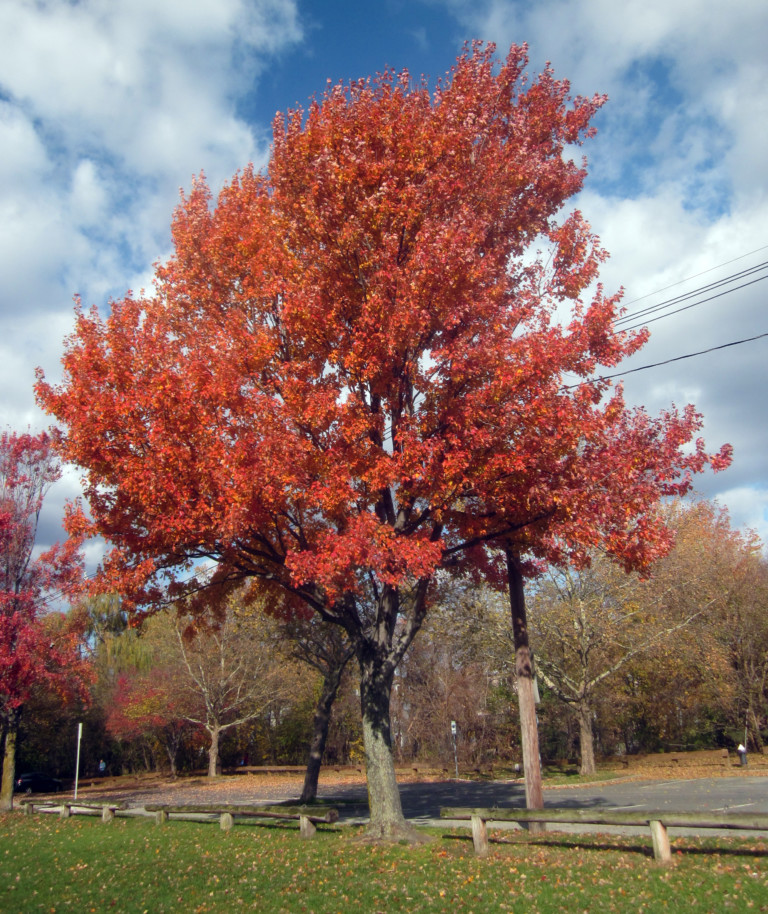
Emerald Queen Maple is a Norway maple cultivar used as a tolerant fast shade tree for streets and large landscapes. It develops a rounded crown and produces paired winged samaras in late spring to early summer while blooming with small yellowish flowers in spring.
Identification and key traits
Leaves are palmately lobed usually with five lobes which give a classic maple silhouette. Mature trees commonly reach forty to sixty feet with a crown spread around thirty to fifty feet. The tree produces paired winged samaras after spring bloom and some cultivars have modified form or size compared with the species.
Best uses and where to grow
Use Emerald Queen as a street tree or park specimen where deep shade and canopy presence are wanted. It tolerates a wide range of soils including clay and urban conditions which makes it suitable for many yards. Dense canopy can reduce planting under the tree so avoid heavy understory planting directly beneath it.
Planting season and spacing
Plant during the active planting seasons in your region for best establishment which often are spring or fall depending on local climate. Allow for the mature crown spread when siting the tree and space specimens so they can reach thirty to fifty feet across. Position clear of structures and utilities to avoid future conflicts.
Soil and watering
Prefers moist well drained soil but tolerates a wide range including loam and clay and tolerates acidic to alkaline pH. Avoid waterlogged sites because poor drainage leads to root decline and crown dieback. Water regularly during establishment and in extended dry spells to reduce stress and support steady growth.
After flowering and routine care
Prune to remove dead or crossing branches and to shape the scaffold structure when the tree is young to reduce future maintenance. Clean up fallen samaras if seedlings are unwanted. Monitor for stress in warmer zones since heat and drought can reduce vigor and increase susceptibility to decline.
Invasiveness and spread control
Emerald Queen can naturalize and in some areas be invasive so avoid planting in sensitive natural habitats. Trees can produce abundant seed and can send up root suckers in some conditions. Remove volunteer seedlings promptly and cut back suckers at the root to limit spread and protect nearby native vegetation.
Propagation and cultivar notes
Propagate by seed which produces variable offspring or acquire grafted trees to preserve named cultivar traits. Nurseries commonly graft cultivars to maintain form. Cultivar specific size and habit can differ from the general species dimensions so confirm measurements with the supplier before planting.
Frequently asked questions
- How fast does Emerald Queen Maple grow?
- It is considered fast growing for a shade tree but growth rate varies with site conditions soil and water. Good soil and regular moisture produce quicker establishment and height gain.
- What hardiness zones are suitable?
- Hardy in USDA zones 3 to 7 according to major plant references. Performance varies with microclimate and local conditions so adjust expectations accordingly.
- Are the seeds messy or problematic?
- The tree sets paired winged samaras in late spring to early summer. Lots of seed can result in volunteer seedlings which require removal if naturalizing is a concern.
- Is Emerald Queen Maple toxic to pets or livestock?
- Not widely listed as toxic to dogs or cats. Some maple species can affect horses so verify species specific risks with local extension or poison control if livestock are nearby.
- Can I plant this in a small yard?
- Not recommended for small yards because mature height and spread reach forty to sixty feet and thirty to fifty feet respectively. Choose a smaller cultivar if available for tighter spaces.
Related Plants


Mentioned In (7)
Trees
17 Most Common Trees in England
The country of England is home to a large variety of trees. Due to the temperate climate, there are many…
Trees
19 Most Common Trees in Pennsylvania
The state of Pennsylvania is located in the Mid-Atlantic, Northeastern, and Appalachian regions of the United States. With a total…

Maple
7 Common Types Of Maple Trees In the UK
The United Kingdom is Europe's second-least forested country, with only Ireland having fewer trees. This isn't to say that the…

Maple
7 Types Of Maple Trees In British Columbia
British Columbia is blessed with scenic landscapes covered with attractive evergreen and deciduous trees, loved for their spectacular fall foliage.…
Maple
8 Common Types Of Maple Trees In Australia
Australia is one of the top 10 countries worldwide, with most trees with an average of 3,266 trees for every…
Maple
4 Main Types of Maple Trees in Wisconsin
If you live in Wisconsin and you’re curious about the best trees to plant in your yard, the good news…

Maple
42 Common Types of maple trees Growing in the USA (photos)
Maple trees are quite common in the United States, so regardless of which state you visit, it’s very likely you’ll…