
Key Facts
- Native to sandy habitats of the southeastern United States.
- Small to medium evergreen pine with needles in bundles of two.
- Many populations have cones that remain closed until heated by fire or high temperatures.
- Tolerates very dry, nutrient poor sandy soils once established.
- Prefers full sun and open sites.
- Used in native restoration, windbreaks and dune stabilization in its range.
- Usually propagated by seed collected from mature cones.
- Not valued for showy flowers because it is a cone producing gymnosperm.
Sand pine is a small to medium evergreen pine native to sandy scrub and sandhill habitats of the southeastern United States. It is valued for drought tolerance on well drained sandy soils and is commonly used in native restoration, windbreaks and dune stabilization where open, sunny conditions prevail.
Identification
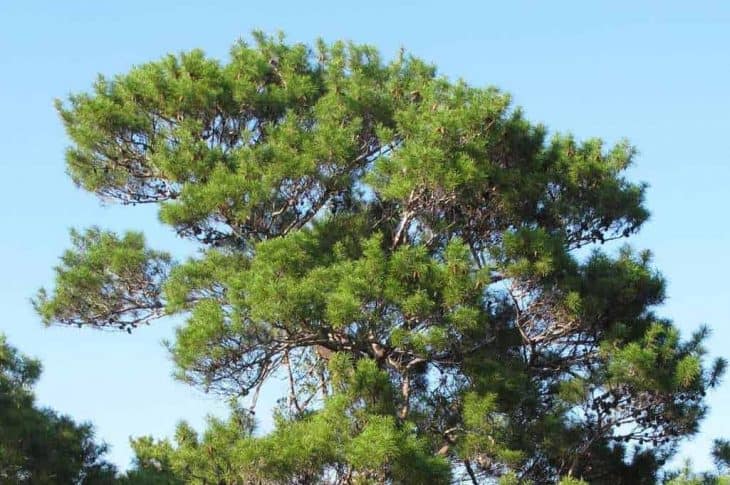
Pinus clausa Chapm. ex Engelm. is a compact evergreen with needles in bundles of two and a rounded to irregular crown. Mature height typically ranges from 20 to 50 feet with a spread commonly 10 to 30 feet. Many populations have cones that remain closed until heated by fire or high temperatures.
Best uses and where to grow
Use Sand pine for native restoration, dune stabilization and informal windbreaks on sandy coastal or inland scrub sites. It performs best in full sun and open stands and is adapted to xeric, nutrient poor sandy soils within its southeastern US range. Hardiness varies by provenance but generally aligns with USDA zones roughly 7 through 10.
Planting and spacing
Place specimens where mature crowns have room to develop and avoid tight urban confines. Space trees at least the expected mature spread apart, typically 10 to 30 feet depending on planting goals. Set plants on well drained sandy soil and settle the rootball so the top of the root mass sits at grade to prevent chronic wetting.
Soil, light and watering
Sand pine prefers sandy, well drained soils and tolerates very dry, nutrient poor sites once established. Full sun and open exposure produce the best form. Avoid heavy clay or waterlogged locations because poor drainage leads to decline. Expect reduced vigor and form in shaded or poorly drained conditions.
Maintenance and pests
Maintenance needs are modest after establishment. Minimal pruning is required beyond removing dead wood and shaping young trees if desired. Monitor for general pine pests and consult local extension for region specific issues. Provide extra care when young to help roots establish in loose sandy soils.
Propagation and seed
Propagation is usually from seed collected from mature cones. Collect ripe cones and allow them to dry for seed release; nursery production typically uses seed sowing because cuttings are difficult and uncommon. Follow local seed handling and germination protocols for the best results in your region.
Controlling spread and naturalizing
Sand pine is used intentionally for naturalizing and habitat restoration in its native range rather than as an invasive spreader. Where volunteer seedlings are unwanted remove them while small. Density and crown spread depend on site exposure and provenance, so plan plantings to match desired coverage and maintenance capacity.
Frequently asked questions
- How fast does Sand pine grow?
- Growth rate varies with site quality and provenance. It reaches its typical mature height of 20 to 50 feet over multiple years, with slower growth on exposed sandy ridges and fuller growth in sheltered, favorable sites.
- Is Sand pine suitable for small gardens?
- Sand pine can be too large for very small yards because mature height and spread commonly reach 20 to 50 feet and 10 to 30 feet respectively. Consider spacing and mature crown size before planting near structures or small lots.
- Are Sand pine cones serotinous?
- Many populations have cones that remain closed until exposed to heat from fire or high temperatures, but this trait varies among populations. Local behavior is best confirmed with regional sources.
- What soil and light does Sand pine need?
- It prefers sandy, well drained soils and full sun. It tolerates very dry, nutrient poor sandy sites but performs poorly in poorly drained or waterlogged soils.
- How do I propagate Sand pine?
- Propagate by seed collected from mature cones. Allow cones to dry for seed release and follow local germination recommendations. Cuttings are difficult and not common for this species.
Gallery
Related Plants


Mentioned In (5)
Pine
7 Types Of Pine Trees In Mississippi
Home to the Nottoway Plantation House, the Mississippi land has a rich history attached to flora and fauna thriving there.…

Pine
51 Common Types of Pine Trees in North America (photos)
Wherever you go in North America, it is difficult not to see pine trees. These are tall, elegant trees that…

Pine
6 Different Types of Pine Trees in Alabama
Alabama has the perfect weather for growing hundreds of plants and trees, and indeed, the state is home to trees…

Pine
17 Common Types of Pine Trees in Georgia
If you’re unfamiliar with the many species of pine trees in existence, they may all look alike to you but…

Pine
9 Typical Types of Pine Trees in Florida
Thanks in part to the amount of sunshine it gets, the state of Florida is home to dozens of different…