
Key Facts
- Native to New South Wales, Australia.
- Forms a small to medium tree or multi-stemmed shrub.
- Used in native and coastal plantings.
- Prefers well drained soils and full sun.
- Propagated by seed and by cuttings.
- Not widely listed as a poisonous plant in standard references.
Narrow-Leaved Apple (Angophora bakeri) is a small native Australian tree or multi-stemmed shrub used in native and coastal plantings. It suits sunny sites on well drained soils and can be grown from seed or cuttings, though plants vary with site and form.
Identification
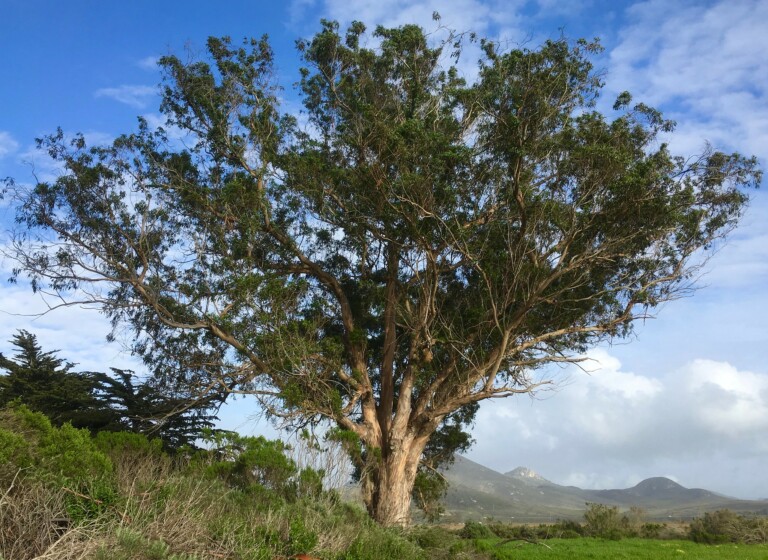
Angophora bakeri appears as a small to medium tree or a large shrub, commonly reaching about 3 to 9 metres tall with a crown spread often 3 to 6 metres. Forms range from single-trunk trees to multi-stemmed shrubs, so habit and ultimate size depend on local soil and shelter.
Where to grow and best uses
Use Narrow-Leaved Apple in coastal native gardens, informal screening and wildlife plantings where a native medium tree or large shrub is wanted. It performs well in open, sunny plantings and suits exposed sites where shallow, rocky or sandy soils limit other trees.
Planting and spacing
Allow room for a mature crown spread of roughly 3 to 6 metres when siting plants. Single specimens need space to develop a rounded canopy while multi-stemmed forms can occupy a broader footprint. Planting in groups gives a naturalised look and provides better shelter for juvenile trees.
Soil and light
Choose well drained sandy or loamy soils; the species tolerates poor, rocky and coastal substrates. Plant in full sun for best habit and flowering, or in light shade if sun is limited. Avoid sites that remain waterlogged, as poor drainage leads to root decline.
Watering and maintenance
Water regularly while young to establish roots, then reduce frequency as the tree becomes established. Excessive soil moisture harms roots, so aim for good drainage and do not keep the root zone permanently wet. Minimal ongoing feeding is usually needed in low fertility soils.
Propagation
Seed is the most commonly used method and produces reliable, genetically variable plants. Semi-hardwood cuttings are used to produce clonal material but may be slower and require more care. Sow fresh seed and expect variability in form; use cuttings when a particular form is required.
After flowering care
Flowering occurs in the warmer seasons, often spring to summer in its native range. After flowering, remove any deadwood and carry out light pruning to maintain shape and remove crossing branches. Strong formative pruning is best done carefully to preserve health and structure.
Controlling spread and naturalising
Angophora bakeri is used in plantings rather than as an aggressive spreader. Multi-stemmed shrubs can occupy a wider area than single-trunk trees, so manage footprint with selective pruning and appropriate spacing. Monitor seedlings if naturalising is not desired in sensitive sites.
Frequently asked questions
- How fast does Narrow-Leaved Apple grow?
- Growth rate varies with soil, water and climate. In favourable coastal, mild sites plants typically reach small tree size over several years but exact rates depend on local conditions.
- Is Narrow-Leaved Apple suitable for coastal gardens?
- Yes. It is used in coastal plantings and tolerates sandy and rocky coastal soils, making it a good choice for exposed seaside sites with good drainage.
- Can I grow Narrow-Leaved Apple from seed?
- Yes. Seed propagation is common and reliable. Seedlings are genetically variable, so use cuttings when you need a specific form or clone.
- Will it tolerate clay soils?
- It tolerates a range of soils but does poorly in permanently waterlogged clay. Choose well drained sites to avoid root decline.
- Is Narrow-Leaved Apple safe around pets and children?
- Toxicity listings vary by reference. Confirm safety for pets and children with local poison control or veterinary sources before making decisions based on safety concerns.
Related Plants


Mentioned In (1)
Plants
7 Plants That Look Like Eucalyptus
Eucalyptus trees have a distinctive fragrance that is easily recognizable but can be tricky to identify visually. There are several…