Key Facts
- Compact tropical perennial commonly grown as a houseplant.
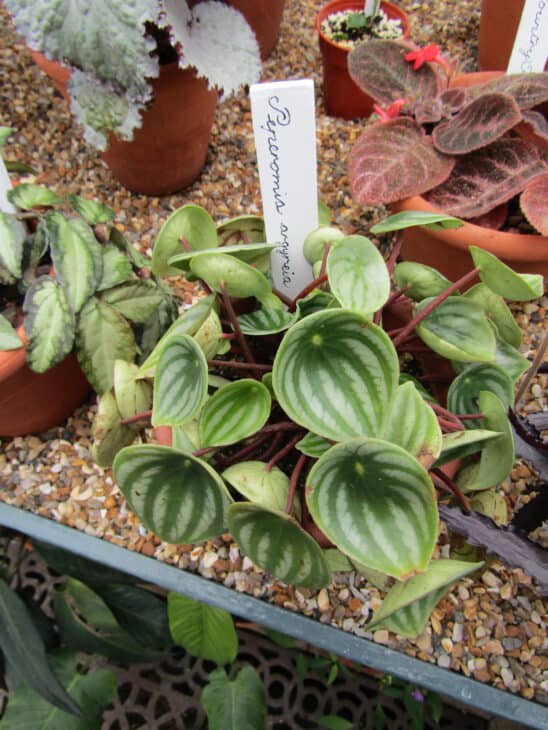
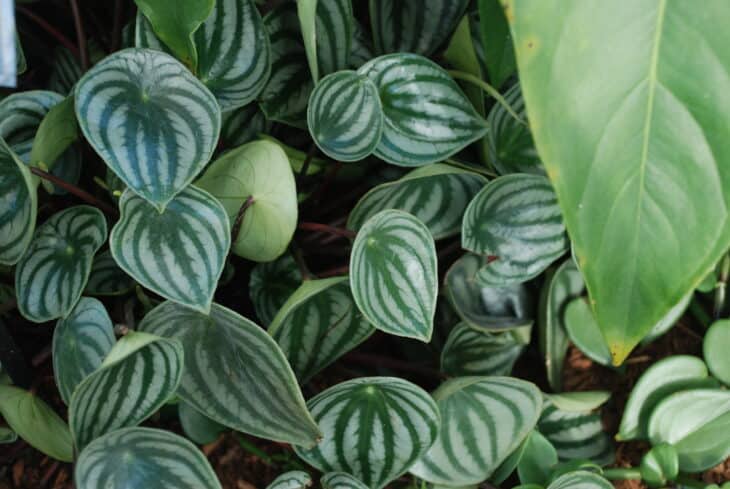
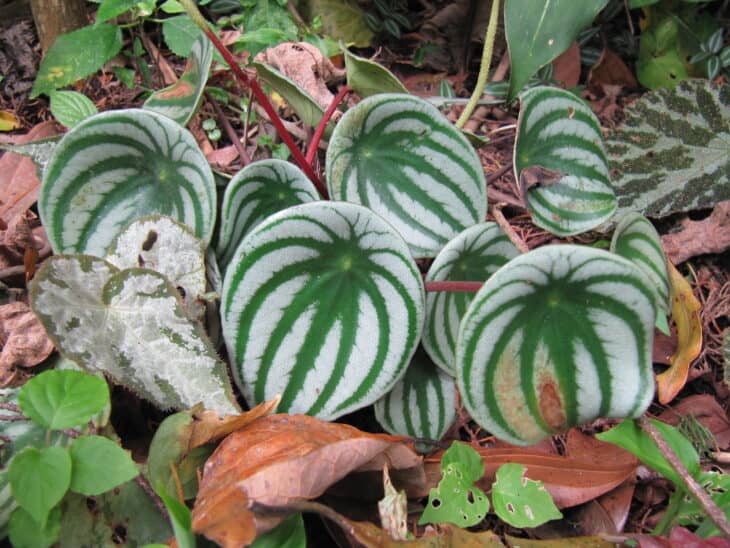
- Distinctive round leaves with silvery stripes that resemble watermelon rind.
- Produces slender spikes of many tiny, inconspicuous flowers.
- Prefers bright indirect light and a well draining potting mix.
- Tolerates short dry periods but is sensitive to waterlogged soil.
- Easily propagated by leaf or stem cuttings and by division.
- Generally considered non toxic to cats and dogs according to pet safety authorities.
Watermelon Peperomia (Peperomia argyreia) is a compact tropical houseplant grown for its round leaves with silvery stripes that look like a watermelon rind. It works well on shelves, desks and in small containers where bright, filtered light is available but it will not tolerate waterlogged soil.
Identification
Leaves are round to ovate with green and silvery striping that gives the plant its common name. Plants stay small, typically 4 to 8 inches tall with a 6 to 12 inch spread, and occasionally produce thin spikes of tiny, inconspicuous flowers when healthy.
Best uses and where to grow
Use as a tabletop or windowsill houseplant, small container specimen, or in a humid terrarium where space is limited. Outdoors it can be grown in warm protected sites roughly within USDA zones 10 to 12; in cooler climates keep it as an indoor pot plant with temperatures above about 50 to 55F (10 to 13C).
Light and placement
Place in bright indirect light for the best leaf color and compact habit. The plant tolerates moderate or lower light but will stretch and lose contrast in the striping. Avoid hot direct sun which can scorch the leaves.
Soil and potting
Use a light, well draining potting mix that retains some moisture without becoming waterlogged. A peat or coco based mix combined with perlite or orchid bark works well. Choose a pot with drainage holes and avoid heavy, clay soils that hold water.
Watering and feeding
Allow the top potting mix to dry slightly between waterings since the plant tolerates short dry periods but is sensitive to standing wet soil. Overwatering leads to root rot and yellowing leaves. Feed lightly during the active growing season with a balanced houseplant fertilizer at label rates.
Propagation and potting on
Propagate easily by leaf cuttings, stem cuttings or division. Cuttings root readily in water or a moist, light potting mix. Division works well for crowded clumps; repot into a slightly larger container and fresh mix when roots fill the pot.
Size, spacing and controlling spread
Mature plants form a compact clump about 6 to 12 inches across and stay under about 8 inches tall, making them suitable for small pots. Control spread by keeping the plant in a modest container and removing or dividing out excess shoots as needed.
After flowering and maintenance
Flower spikes are usually thin and inconspicuous indoors and can be left or removed without affecting the plant. Regularly trim away damaged or yellow leaves to keep the clump tidy and to encourage fresh growth.
Toxicity and pets
Peperomia species are generally regarded as non toxic to cats and dogs according to pet safety authorities. Ingestion can cause mild stomach upset in people or pets so keep plants out of reach of curious animals and children.
Frequently asked questions
- How fast does Watermelon Peperomia grow?
- Growth is slow to moderate and the plant remains compact. Final size depends on light and care but most plants stay under 8 inches tall and form a 6 to 12 inch clump.
- How often should I water it?
- Water when the top layer of mix has begun to dry; avoid keeping the soil constantly wet. Frequency varies with pot size, light and season.
- Can it be grown in a terrarium?
- Yes. It adapts well to humid, confined conditions provided the terrarium has moderate light and avoid waterlogged media.
- Is Watermelon Peperomia safe for pets?
- Yes. Peperomia species are generally non toxic to cats and dogs though ingestion may cause mild gastrointestinal upset.
- What is the easiest way to propagate it?
- Leaf or stem cuttings are the simplest method. Root cuttings in water or a moist, light potting mix and pot on once roots form.
Gallery
Related Plants