
Key Facts
- Small trailing tropical houseplant with fine blue green foliage.
- Commonly used in hanging baskets, terrariums, and as tabletop accents.
- Prefers bright indirect light and consistent moisture without waterlogging.
- Easily propagated from stem cuttings or by division.
- Not grown for showy flowers which are small and inconspicuous.
- Sensitive to frost and kept indoors in cooler climates.
- Can form a low spreading mat over time in suitable conditions.
Pilea Glauca or Silver Sparkle plant (Pilea glaucophylla) is a small trailing tropical houseplant prized for its fine blue green foliage and delicate habit. It suits hanging baskets, terrariums, and low tabletop displays where leaf texture matters more than flowers.
Identification
Pilea Glauca has fine blue green leaves on thin trailing stems and typically forms a low mat of foliage in containers. Foliage height in pots is usually 2 to 6 inches while stems can trail beyond the pot edge. Flowers are small and inconspicuous so the plant is selected mainly for leaf color and texture.
Best uses and where to grow
Use Pilea Glauca in hanging pots, terrariums, or as a tabletop accent where its delicate foliage softens hard edges. Keep it indoors in cooler climates because it is sensitive to frost. Outdoors in warm USDA zones 10 and 11 it performs in shaded beds or containers and can slowly form a low spreading mat under favorable conditions.
Light and location
Bright indirect light gives the best leaf color and fuller growth while moderate lower light is tolerated with slower development. Avoid hot direct sun that can scorch the thin leaves. Rotate pots occasionally so trailing stems develop evenly around the container and the plant looks balanced.
Soil and watering
Plant in a well draining potting mix that still retains some moisture such as a peat based or soilless mix amended with perlite. Water to keep the mix evenly moist without waterlogging the roots. Overly wet soil leads to root rot and prolonged dryness causes leaf drop and brittle stems so balance is key.
Propagation and pruning
Propagate easily by stem cuttings rooted in water or directly in moist potting mix and by dividing larger clumps. Take cuttings with several nodes and keep humidity high until roots form. Pinch growing tips to encourage a denser habit and trim back long runners to maintain shape and vigor.
Containers and display
Pilea Glauca excels in shallow pots and hanging baskets that showcase trailing stems and allow airflow. Use containers with drainage holes and avoid large heavy soil volumes that stay wet. It also adapts to terrariums where humidity remains steady and size is controlled by the container.
Controlling spread and maintenance
Limit pot size and prune regularly to prevent excessive spreading in containers. Outdoors in warm zones monitor edges if planted in the ground because it can form a low mat given favorable conditions. Repot every one to two years to refresh soil and trim older growth to renew the plant.
Frequently asked questions
Below are concise answers to common care points for Pilea Glauca. Cultivar variation and local growing conditions affect performance so adjust light and moisture to suit your home. If pet safety matters consult the ASPCA or local poison control for species specific guidance.
- How fast does Pilea Glauca grow?
- Growth speed varies with light and moisture. Indoors it is generally moderate to slow but can gradually form a low mat over time when conditions are warm and humid.
- Is Pilea Glauca safe for pets?
- Authoritative species level toxicity data is limited. Avoid ingestion and consult the ASPCA or local poison control for definitive pet safety information.
- How do I propagate Pilea Glauca?
- Root stem cuttings in water or in moist potting mix and divide larger clumps. Keep cuttings warm and humid until roots establish then pot on into a well draining mix.
- How often should I water Pilea Glauca?
- Keep the potting mix evenly moist but not soggy. Water when the top layer begins to feel slightly dry and ensure good drainage to prevent root rot.
- Can Pilea Glauca be grown outdoors?
- Yes in warm climates within USDA zones 10 to 11 where frost is absent. In cooler regions grow it as an indoor plant or move containers indoors when temperatures fall.
Related Plants


Mentioned In (1)
Plants
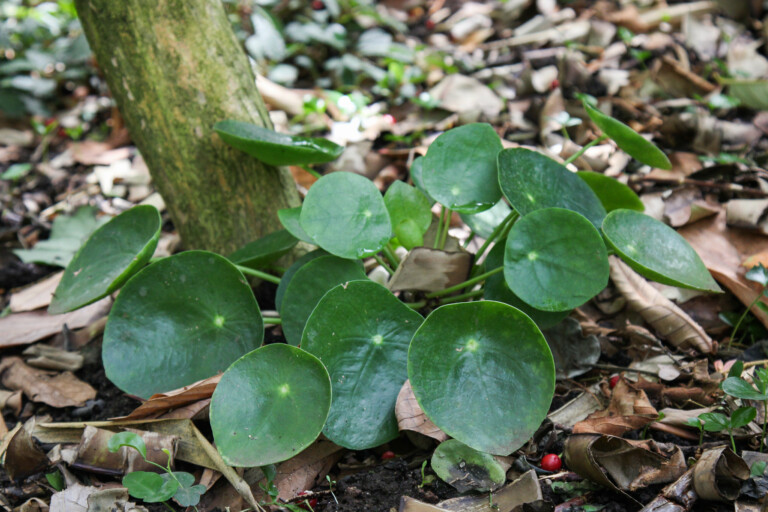
10 Plants That Look Like Pilea Peperomioides (Chinese Money Plant)
Pilea peperomioides got its common name, the Chinese money plant, from its leaves which are round and shaped like coins.…