
Key Facts
- Perennial member of the mint family Lamiaceae.
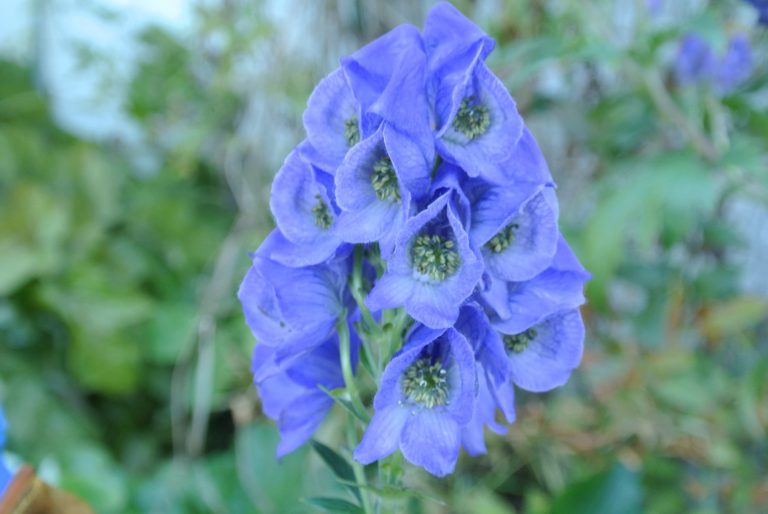
- Produces upright pyramidal spikes of blue to violet tubular flowers.
- Native to parts of Europe and found in alpine and subalpine meadows.
- Forms a basal rosette of leaves and a compact clump habit.
- Prefers well drained, rocky or loamy soils.
- Attracts bees and other pollinators when in flower.
- Does not form long stolons like some other Ajuga species and spreads slowly.
Pyramidal Bugle (Ajuga pyramidalis) is a compact perennial in the mint family that produces upright pyramidal spikes of blue to violet tubular flowers above a leafy basal rosette. It suits rock gardens and well drained sites where it brings late spring to early summer color and attracts bees.
Identification
Look for a low, leafy rosette with short compact clumps and unbranched flowering stems topped by dense, pyramid-shaped spikes of blue to violet tubular flowers. Flowering stems typically reach about 6 to 12 inches 15 to 30 cm tall and the clump usually spans roughly 4 to 12 inches 10 to 30 cm across.
Best uses and where to grow
Use Pyramidal Bugle in rock gardens, gravel beds, or the front of a sunny border where good drainage is available. It performs in full sun to part shade and is estimated hardy in USDA zones 4 through 7, making it suited to montane and subalpine style plantings and cooler temperate sites.
Planting and timing
Plant divisions in spring or autumn for fastest establishment and true-to-type plants. Seed can be surface sown as fresh seed but seedlings may vary from the parent. Choose a well drained spot and plant clumps so the crown sits at soil level and roots can spread into gritty or loamy soil.
Soil, light and watering
Prefers well drained, rocky or loamy soils with neutral to slightly acidic pH. Provide full sun to part shade, giving afternoon shade in hot climates to reduce stress. Avoid heavy, wet soils because poor drainage can cause crown rot and reduced vigor.
After flowering and maintenance
Remove spent flower spikes to tidy plants and direct energy to the rosette. Divide congested clumps in spring or autumn to renew vigor and maintain compact habit. No long stolons are expected so routine edging is usually sufficient to keep plantings neat.
Controlling spread and propagation
Pyramidal Bugle forms compact clumps and spreads slowly rather than running by long stolons, so it rarely becomes invasive in garden borders. Propagate reliably by division in spring or autumn. Surface sow fresh seed for experimental seedlings, keeping in mind offspring may not be identical to the parent.
Frequently asked questions
- How fast does Pyramidal Bugle grow?
- It spreads slowly, forming a compact clump roughly 4 to 12 inches 10 to 30 cm across; flower spikes reach about 6 to 12 inches 15 to 30 cm tall when in bloom.
- Is Pyramidal Bugle invasive?
- No. this species is clump forming and does not produce the long stolons typical of some other Ajuga species, so it is unlikely to be invasive in well managed borders.
- When does it bloom?
- Bloom occurs in late spring to early summer, commonly May to July in temperate northern hemisphere sites, with timing varying by elevation and latitude.
- What soil does it prefer?
- Well drained rocky or loamy soils with neutral to slightly acidic pH. Avoid heavy, waterlogged soils which can lead to crown rot.
- How do I propagate it?
- Propagate by division in spring or autumn for true-to-type plants. Fresh seed can be surface sown but seedlings may differ from the parent.
Related Plants

Mentioned In (1)
Plants
35 Beautiful Blue Perennials For Your Garden
Blue is one of the rarest flower colors in nature—and it’s also a longtime favorite with gardeners. That sense of…