
Key Facts
- Deciduous shrub that flowers very early in spring before leaf flush.
- Flowers are bright yellow and borne on bare stems.
- Native to parts of southeastern Europe.
- Widely used as an ornamental hedge or specimen shrub.
- Adapts to a range of soils but needs good drainage.
- Performs best in full sun for maximum flowering.
- Easily propagated by cuttings, layering, or by shoots from the root system.
- Frequently pruned after flowering to maintain shape and promote next year blooms.
Forsythia (Forsythia europaea) is a deciduous shrub valued for a bright display of yellow flowers that open on bare stems very early in spring, often before leaves appear. It is commonly grown as a specimen or informal hedge and adapts to a range of soils provided drainage is good.
Identification and size
Forsythia produces clusters of bright yellow, bell-shaped flowers on last season wood before leaf‑out, making it an unmistakable early spring signal. Native to parts of southeastern Europe, garden plants vary widely in habit. Many forms reach about 4 to 10 feet tall and spread roughly the same, with size depending on species and cultivar.
Best uses and siting
Use Forsythia as a spring‑flowering specimen, informal hedge, or massed screen where a bold early color impact is desired. Plant in full sun for the most abundant bloom; it will tolerate light to part shade but with reduced flowering. Avoid sites with poor drainage since wet roots lead to decline.
Planting and spacing
Place plants so they have room to reach mature spread because arching branches and suckers create width over time. Space single shrubs at distances similar to their mature spread, commonly 4 to 10 feet apart. Select a spot with well drained soil; avoid waterlogged low spots that can cause root problems.
Watering and soil
Forsythia adapts to many soil types from loam to clay loam as long as drainage is adequate. Keep soil evenly moist while plants establish, then they tolerate a range of conditions. Prolonged waterlogging damages roots and reduces vigor, so improve drainage or avoid planting where water pools.
Pruning and after‑flower care
Prune immediately after flowering to maintain shape and to encourage strong bloom wood for the next season, since flowers form on the previous year’s stems. Remove a portion of the oldest stems at ground level every few years to renew the shrub and promote vigorous, well‑flowering growth.
Propagation and managing spread
Forsythia is easy to propagate by softwood or semi‑ripe cuttings, hardwood cuttings, layering, or by dividing suckers. Many garden forms also spread by shoots from the root system, so control unwanted spread by removing suckers at their root origin or by periodically lifting and dividing clumps.
Frequently asked questions
- How fast does Forsythia grow?
- Growth rate varies by cultivar and site. Many garden forsythias attain their typical mature size of about 4 to 10 feet over several growing seasons under favorable conditions.
- When does Forsythia bloom?
- Blooming occurs very early in spring before leaves emerge. In the Northern Hemisphere typical months are March to April, but exact timing depends on local climate and microclimate.
- Are Forsythia plants toxic to pets?
- Forsythia species are generally listed as non‑toxic to cats and dogs by the ASPCA, though ingesting large amounts could cause stomach upset and handling may irritate sensitive skin.
- How do I get more flowers?
- Plant in full sun and avoid heavy shade, and prune immediately after flowering so you do not remove the buds that produce next season’s display.
- Can Forsythia be used as a hedge?
- Yes. It makes an effective informal hedge when shrubs are spaced according to their mature spread and managed with regular after‑flower pruning.
Related Plants

Mentioned In (3)
Trees
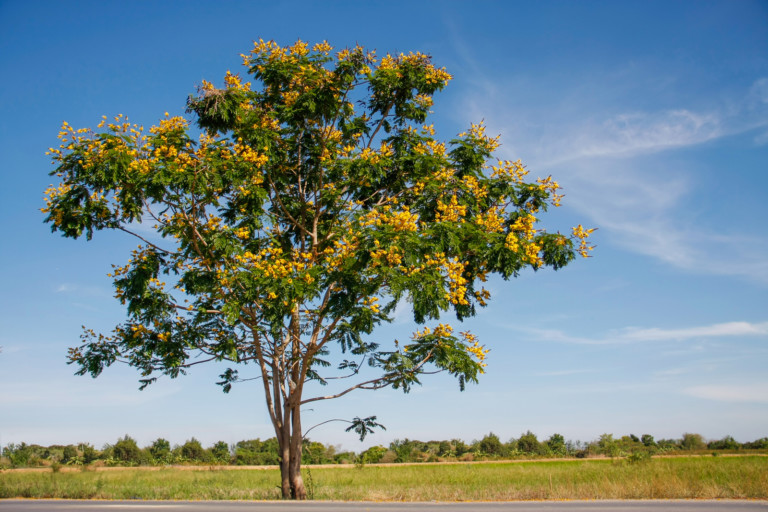
24 Yellow Flowering Trees in Spring
Do you want to beautify your garden with distinctive, bright yellow flowering trees that bloom in spring? Well, you will…
Trees
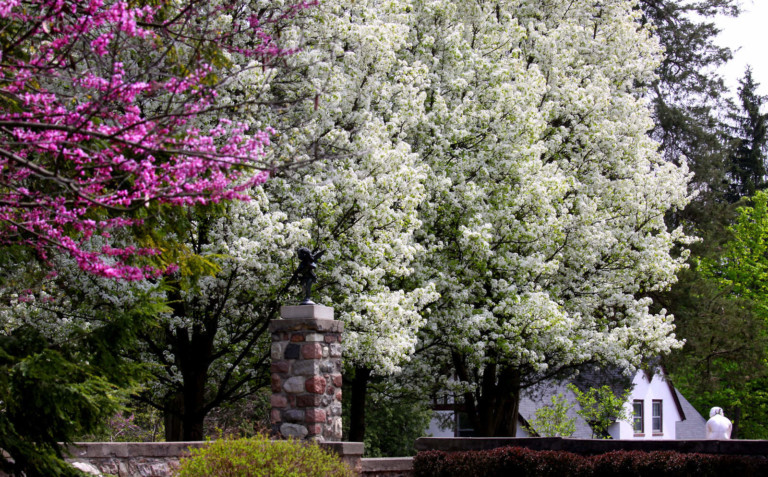
26 Great Flowering Trees For Michigan Gardens
If you’re looking to add eternal, year-round beauty to your lawn and boost the curbside appeal of your Michigan home,…

Trees
34 Gorgeous Flowering Trees For Arkansas
If you’ve just moved to Arkansas and are looking to plant some beautiful flowering trees in your garden, you’re in…