The strawberry you plant determines not just what you eat, but when and how much — a June-bearer floods your kitchen with fruit for two weeks then stops, while a day-neutral hands you berries every morning from June until frost.
Contents
Garden strawberries (Fragaria × ananassa) are a hybrid species developed in 18th-century France from a cross between the North American Fragaria virginiana and the South American Fragaria chiloensis. They are perennial plants, though most gardeners replant every two to four years as yield declines with age. A fourth type, the alpine strawberry (Fragaria vesca), is a distinct European species grown for very different reasons and suited to different conditions.
All strawberry types share the same basic needs. They want full sun — ideally eight hours a day — well-draining, slightly acidic soil with a pH of 5.5 to 6.5, and consistent moisture. Waterlogged soil kills them. Most cultivated types are hardy across USDA Zones 3 to 9, though the specific zone range varies by cultivar and type.
The critical choice is fruiting habit. The three main types of garden strawberry differ primarily in when and how long they produce fruit — and that shapes everything from bed design to how you plan your harvest. This guide covers all four types, from the highest-yielding workhorses to the shade-tolerant specialist that most gardeners don’t know exists.
Strawberry
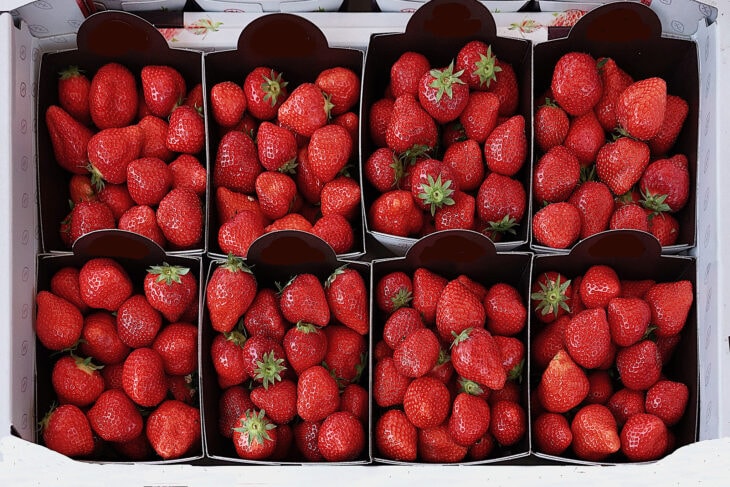
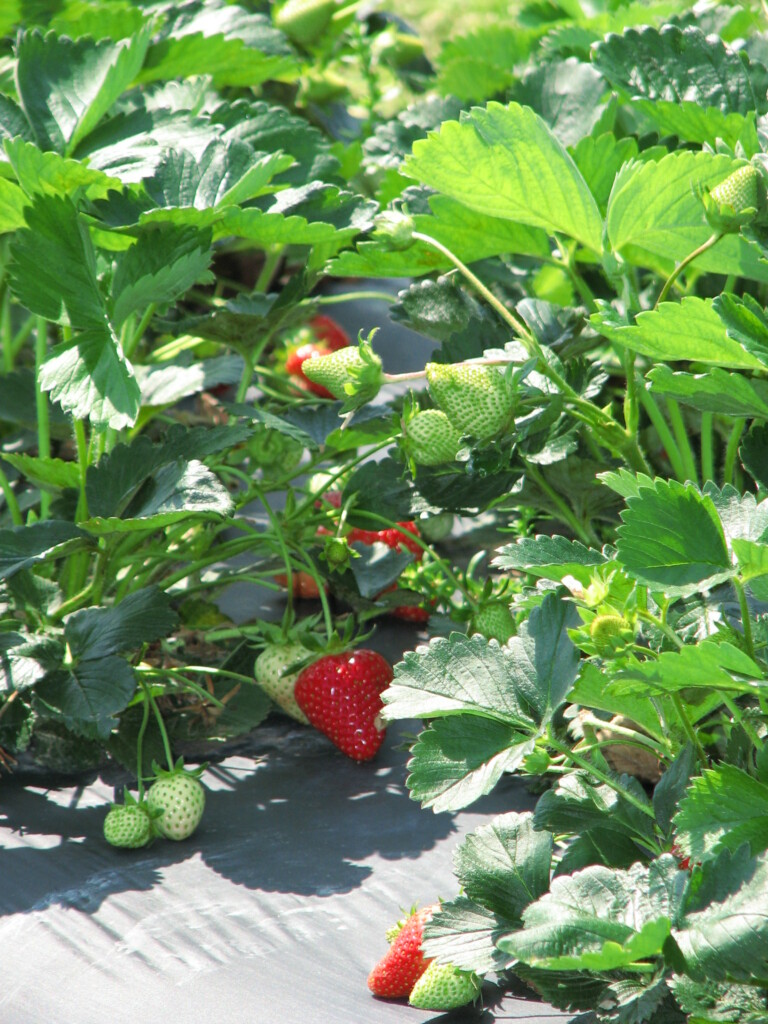
Strawberry is a low growing perennial grown for sweet red fruit. Plants spread by runners and prefer full sun and well drained slightly acidic soil.
Read our guide to Strawberry1. June-Bearing Strawberry (Fragaria × ananassa — June-bearing group)
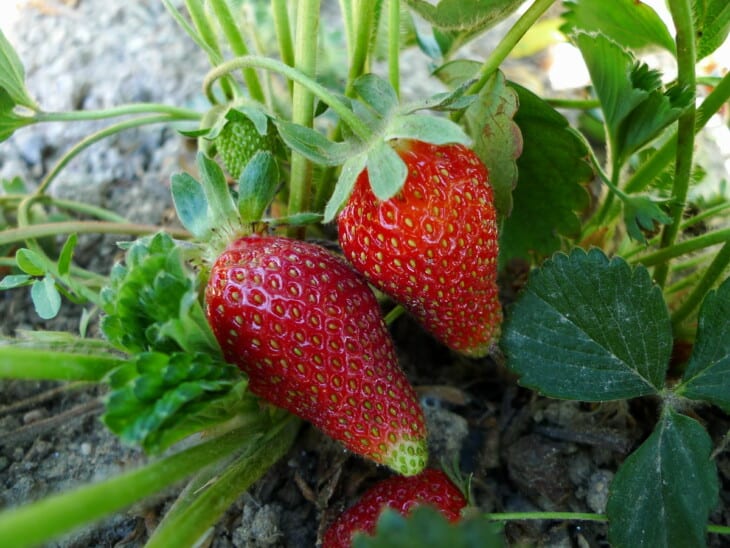
June-bearing strawberries produce one concentrated harvest per year, and they make it count. Fruit ripens over a two to three week window in late spring or early summer, depending on your region and which cultivar you grow. The yield during that window exceeds what the other types can manage across a full season. Berries are the largest of any strawberry type, and they are the first choice when the goal is filling a freezer or making jam in volume.
These plants are day-length sensitive. They form flower buds in the short days of autumn and fruit in the long days of early summer. That biological calendar means northern gardeners typically wait until the second year after planting before pulling the first full harvest — first-year flower buds are pinched off to let the plant establish. The patience is worth it. Plants spread aggressively via runners, filling a bed quickly and delivering impressive yields once settled.
Cultivar selection within the group matters because season timing varies. Early-season ‘Honeoye’ ripens first, produces heavy yields of large crimson berries with a tart-sweet flavor, and is exceptionally cold-hardy in Zones 3 to 8. Mid-season ‘Chandler’ sets the standard for fresh flavor. ‘Allstar’ offers dependable production with good disease resistance. Late-season ‘Jewel’ finishes the run with firm, well-colored berries suited to freezing and shipping, hardy in Zones 4 to 8.
Plants grow 6 to 12 inches (15 to 30 cm) tall. Runner management is the main maintenance task — beds need thinning to stay productive. June-bearers are not the right choice for container growing or for gardeners who want fresh berries throughout the season. They are the right choice for anyone who wants maximum fruit from a dedicated bed with a clear end use in mind.
2. Everbearing Strawberry (Fragaria × ananassa — Everbearing group)
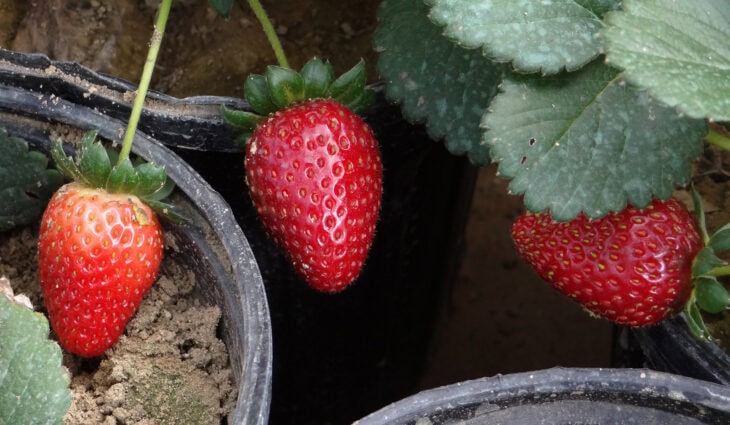
Despite the name, everbearing strawberries do not fruit continuously. They produce two main harvests per year: one in late spring or early summer, and a second in early fall. The spring crop is typically the larger of the two. Between the flushes there is little fruit. What the name actually captures is the contrast with June-bearers — everbearers give you strawberries across a much wider slice of the season, and the fall harvest arrives after June-bearers have long since finished.
These plants produce fewer runners than June-bearers, which makes them easier to manage in a small bed and a reasonable choice for gardeners who do not want to spend time redirecting or removing runner growth. They also tend to be more cold-tolerant across the group than day-neutrals. ‘Ozark Beauty’ is the most widely grown everbearing variety and one of the most cold-hardy strawberries available, surviving down to -30°F (-34°C) with adequate mulch, hardy in Zones 4 to 8 reliably and Zone 3 with protection. Its berries are large, deep red, and notably sweet.
‘Fort Laramie’ is a good alternative for northern gardens that pushes hardiness further. ‘Quinault’ performs well in the Pacific Northwest and produces some fruit in its first planting year, which everbearers generally manage more readily than June-bearers.
Plants reach 6 to 10 inches (15 to 25 cm) tall. For gardeners who want a straightforward entry into fruit growing — productive, cold-tolerant, low-maintenance, and generous across a long season without the complexity of runner management — everbearers are often the most practical starting point.
3. Day-Neutral Strawberry (Fragaria × ananassa — Day-neutral group)
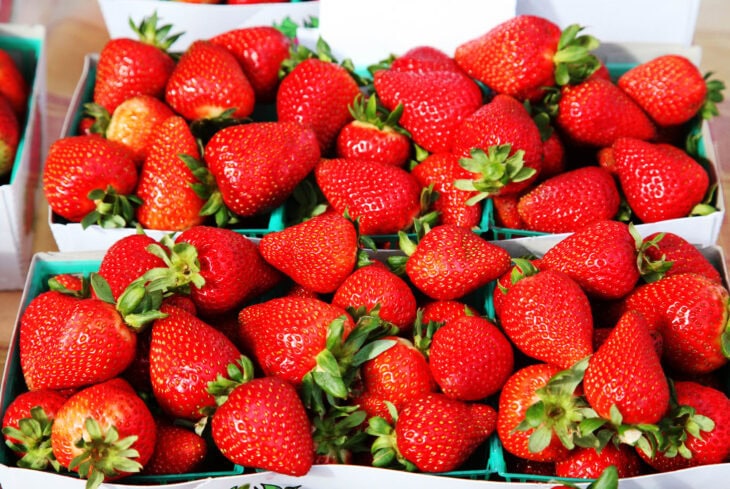
Day-neutral strawberries flower and fruit based on temperature rather than day length. As long as temperatures stay between roughly 40°F and 90°F (4°C and 32°C), the plants keep producing. That means a steady, uninterrupted supply of fresh berries from early summer through the first hard frost — no waiting for a single crop window, no gap between flushes. It also means fruit in the first planting year, making this the fastest type to get into production.
The trade-off is that individual yields per flush are lower than June-bearers, berries tend to be slightly smaller, and the plants need more consistent care because they are always in active production. Heat above 90°F (32°C) temporarily stalls flowering, so afternoon shade is beneficial in hot climates. Consistent moisture matters more here than with the other types.
‘Albion’ is the benchmark of the group. Its berries are large, very firm, and bright red, with a high sugar content — Brix readings regularly exceed 9.0. It grows in Zones 3 to 9. ‘Seascape’ performs particularly well in mild coastal climates and requires fewer winter chill hours, making it suitable for warmer regions where June-bearers underperform. ‘San Andreas’ closely resembles ‘Albion’ in production and fruit quality and adds strong resistance to Verticillium wilt.
Plants grow 8 to 12 inches (20 to 30 cm) tall and produce fewer runners than June-bearers, making them well-suited to containers, raised beds, and patio growing. If the goal is fresh strawberries on the table every morning rather than a single overwhelming harvest, this is the type to plant.
4. Alpine Strawberry (Fragaria vesca)
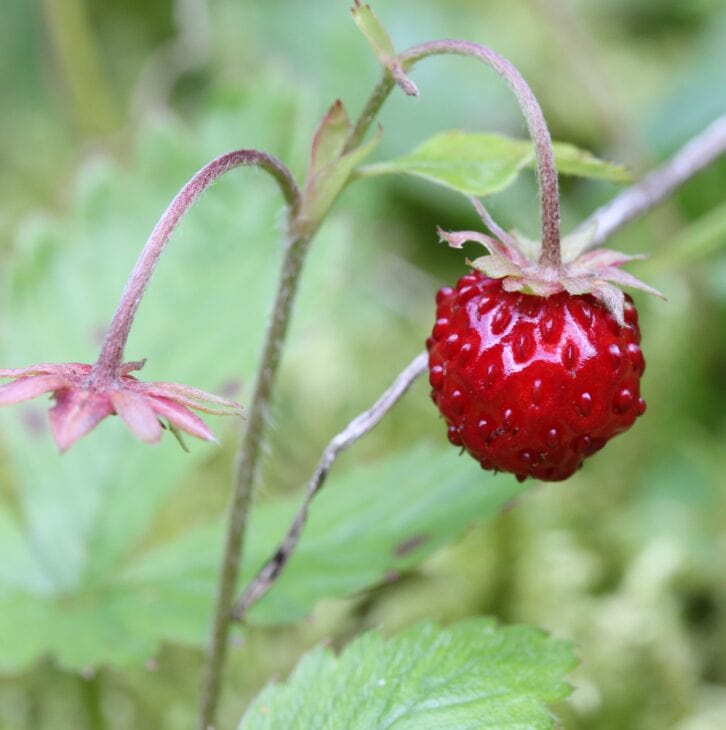
Alpine strawberries are a different species from garden strawberries, and they suit a completely different set of situations. Fragaria vesca is native to Europe and Asia. Its fruit is tiny — around 1 inch (2.5 cm) — but the flavor is intensely sweet and fragrant in a way that large garden strawberries rarely match. French fraises des bois, the wild strawberries prized by pastry chefs, are the same plant. You will not fill a freezer from an alpine strawberry patch, but a handful eaten straight from the plant is a different experience entirely.
The two features that make alpines genuinely useful in the garden are their shade tolerance and their lack of runners. Most cultivars form neat, non-spreading mounds 6 to 10 inches (15 to 25 cm) tall and wide. They require no runner management at all. They also perform in four to six hours of sun — enough to site them along shaded paths, beneath taller plants, or as ornamental edging in a kitchen garden where full-sun ground is already spoken for.
They fruit continuously from late spring until frost, like a day-neutral, but the harvests are modest. Growing them for volume is not the point. ‘Alexandria’ is the most widely available cultivar, hardy in Zones 5 to 8, and can be started easily from seed. ‘Golden Alexandria’ produces yellow fruit with a slightly milder flavor. ‘Mignonette’ is a good seed-grown option for colder gardens, hardy in Zones 3 to 9.
Alpine strawberries are the right choice for shaded spots, edging projects, and ornamental kitchen gardens where tidiness matters as much as yield. They will not replace a June-bearer bed. But in a situation where no other strawberry type would work, they fill the gap well.