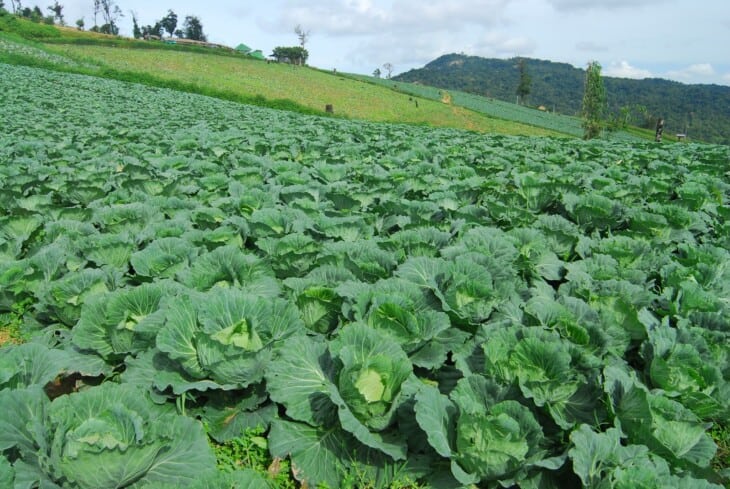
Cabbage is a hardy vegetable that beginning vegetable gardeners often choose to plant. Cabbage is rich in antioxidants, contains vitamins C and K, and provides beneficial fiber that supports digestive health. It has anti-inflammatory properties and contributes to heart health when included as part of a balanced diet.
Contents
Cabbages (Brassica oleracea) have dense heads of green, white, purple, or red leaves. They are an annual vegetable closely related to cauliflower, broccoli, and Brussels sprouts. Most cabbages weigh one to two pounds at harvest, although some varieties can grow much larger under ideal conditions. The heaviest cabbage on record was grown in 2012 and weighed 138.25 pounds.
Cabbages need to be planted in full sunlight for best head development. Various cabbage cultivars can grow in different soil types ranging from sandy loam to heavy clay. All cabbage cultivars perform best in rich, fertile soil with consistent moisture. Cabbages are heavy feeders and require soil with adequate nitrogen levels and balanced nutrients throughout the growing season.
Periods of temperature stress, either cold snaps or heat waves, can cause the cabbage plant to bolt. This refers to the plant sending up a flower stalk prematurely and failing to develop a firm head. Bolting can also be triggered by inconsistent watering or prolonged drought followed by heavy rain.
There are three main types of cabbages: loose leaf, crinkle leaf (also called Savoy), and smooth leaf, which typically form tightly packed heads. Cabbages have a shallow root system and can be affected by companion plants in the surrounding area. They are susceptible to cabbage worms, aphids, and other plant-eating insects, which can damage or destroy a crop if not managed.
1. Ornamental Cabbage / Broccoflower (Brassica oleracea)
Read our guide to Broccoflower

Ornamental cabbage (Brassica oleracea) are cabbage cultivars grown primarily for decorative purposes rather than eating. They are planted in cool-season gardens and containers for their striking visual appeal. Ornamental cabbage is also known as flowering cabbage or flowering kale. Although ornamental cabbage is not toxic, the leaves are bitter and tough, making them unpleasant to eat.
Ornamental cabbage is available in numerous cultivars, which vary in color, leaf shape, and texture. Ornamental cabbage can display shades of green, red, white, cream, pink, and purple. Some ornamental cabbages are variegated, with colors intensifying from the outer to the inner leaves as temperatures drop in fall and winter.
Gardeners value ornamental cabbage for the bold texture and form they add to autumn and winter displays. These cultivars resemble flowers more than vegetables, with frilly, ruffled rosettes or tightly curled dense heads. Both compact and tall cultivars are available. Tall ornamental cabbage produces the cabbage head at the top of a sturdy stem. They are popular with florists for adding unique vertical interest to arrangements.
Ornamental cabbages are cool-season annuals that require frost or cold weather for the full color to develop in their leaves. They thrive in moist, fertile, slightly acidic to neutral soil with a regular watering schedule to prevent drying out. Areas with full sun are ideal, though partial shade is beneficial in hot climates during late summer planting.
2. Lettuce (Lactuca sativa)

Lettuce (Lactuca sativa) are cool-season annuals that look similar to cabbage, especially heading varieties. They are leafy vegetables most often eaten raw in salads or used as wraps. Lettuces are an excellent source of vitamins A and K, folate, and iron. Originally native to regions from the Mediterranean to Siberia, lettuce is now cultivated throughout the world in diverse climates.
Lettuce is usually green or yellow-green, but many cultivars have deep red, maroon, or bronze-purple leaves. Some varieties feature speckled, freckled, or bicolor foliage. Lettuces have a taproot with smaller lateral feeder roots that spread near the soil surface.
There are four main types of lettuce. Celtuce or asparagus lettuce has a thick edible stem with narrow leaves. Butterhead and crisphead lettuces look very much like cabbage, forming rounded heads or rosettes. Romaine or cos lettuces have a tall, upright head of elongated smooth leaves, while looseleaf varieties do not form heads at all.
Lettuces must be harvested before they flower, as the leaves become bitter, tough, and smaller once the plant bolts in warm weather. Lettuce does not cope well in dry conditions, so mulching the soil is essential to retain moisture. They require consistently moist soil and do not tolerate excessive heat or prolonged drought.
Lettuces can be protected from heat stress by planting them in the shade of taller plants or under row covers. They grow best in partial shade during hot months or under shade cloth in warm climates. Lettuce belongs to the family Asteraceae, also known as the daisy family.
3. Cabbage Rose (Rosa × centifolia)

Cabbage roses (Rosa × centifolia) are also called Provence roses or Rose de Mai. These roses have multiple layers of tightly packed petals arranged in a rounded, cabbage-like form. The name Rosa centifolia means rose with a hundred petals. Cabbage roses have a strong, sweet fragrance, making them a popular choice with gardeners and florists for cutting and potpourri.
Related: 9 Plants That Look Like Roses
Cabbage roses have grey-green foliage and produce large, heavy blooms that usually need staking or support to prevent stems from bending. Cabbage roses grow best in full sun and well-amended, fertile soil. They benefit from regular feeding during the growing season and can be pruned after flowering to maintain shape and encourage new growth. Good drainage and air circulation are essential for preventing fungal diseases in cabbage roses.
Cabbage roses are hardy plants suitable for beginner rose growers in USDA zones 4 through 9. They are relatively disease-resistant and cold-tolerant compared to many hybrid tea roses. Cabbage roses are available in various cultivars, which range in color from white and blush pink to lavender, mauve, and deep crimson. Some flowers may be variegated or striped with multiple shades.
4. Echeveria (Echeveria spp.)

Echeveria is a succulent genus that belongs to the family Crassulaceae. These plants are found naturally in the semi-desert areas of Mexico, Central America, and the northwestern regions of South America. Echeveria plants have dense layers of fleshy succulent leaves arranged in symmetrical rosettes, making them resemble miniature cabbages or roses.
Echeverias are easy plants to care for and thrive with minimal attention. They enjoy warm to hot weather and are highly tolerant of dry periods. Like most succulents, echeverias have low water needs and are prone to root rot if overwatered. Echeverias handle neglect well and do not require frequent fertilization. They grow best in full sunlight to bright indirect light and well-drained, gritty soil.
Echeverias form a central rosette of waxy, spoon-shaped succulent leaves on a short stem or at ground level. The leaves can vary from pale grey-green to powdery blue-green. Some echeverias have leaves with red, pink, or orange edges, or the entire leaf may have a bronze, copper, or burgundy tint. Others have pastel pink, lavender, or purple leaves, with the central ones displaying deeper or contrasting colors.
Echeverias produce small tubular or bell-shaped flowers on the end of tall arching stems, usually in spring or summer. The flowers vary in color and can be orange, red, pink, yellow, or bicolored. Some gardeners prefer to pinch off the flower stalks to preserve the plant’s compact form and conserve energy for foliage growth.
Echeverias are easily propagated by leaf cuttings, offsets, or stem cuttings. They are usually evergreen in mild climates, but do not tolerate frost well and may suffer damage or die from prolonged freezing temperatures. Echeverias can be grown in pots, containers, or garden beds in frost-free areas. Echeveria ‘Ruffles’ is the cultivar that many people feel looks most like cabbage due to its tightly ruffled leaf edges. It is sometimes called ornamental cabbage echeveria.
5. Common Houseleek (Sempervivum tectorum)

The common houseleek (Sempervivum tectorum) is native to the mountainous regions of southern and central Europe, although it is now found throughout the world due to its popularity with gardeners and ease of cultivation.
Sempervivum tectorum is called a houseleek because it was traditionally planted on the roofs of homes in Europe to protect them from lightning, fire, and witchcraft according to folklore.
The name Sempervivum means ‘always living’ or ‘lives forever’ and refers to the plant’s ability to reproduce continuously through offsets. It is commonly called hen and chicks. The hen is the mature central rosette, and the chicks are the smaller offsets formed around the base of the mother plant.
Sempervivum tectorum forms a dense layered rosette two to four inches wide, reminiscent of small cabbages. The fleshy pointed leaves are typically green with red or purple tips and edges, though some cultivars are entirely red, burgundy, or bronze. The leaves are fringed with fine hairs along the margins. The succulent produces clusters of star-shaped pink to reddish-purple flowers on tall stems in summer. After flowering, the individual rosette that bloomed dies, but surrounding offsets continue growing.
Sempervivum tectorum is an easy plant to grow and requires minimal care once established. It needs well-drained to dry soil and tolerates poor, rocky, or sandy conditions. Rock gardens, crevices, and gravel mulch are ideal settings for houseleeks. These plants perform best in full sun but tolerate partial shade in hot climates, though colors may be less intense.
Houseleeks are salt-tolerant and popular in coastal gardens where spray and wind are common. They are also cold-hardy to USDA zone 3 and resistant to most diseases and pests. Deer and rabbits typically avoid houseleeks, making them a reliable ground cover or border plant for gardens visited by wildlife.