
Key Facts
- Fragrant flowering perennial commonly grown for cut flowers
- Flowers have fringed petals and occur in many colors
- Many modern cultivars are bred for longer stems and repeat bloom
- Prefers well drained, moderately fertile soil
- Likes full sun or very light afternoon shade
- Typically propagated by stem cuttings or seed
- Plants tolerate cool weather better than high heat
- Poor drainage or heavy wet soil causes root rot and reduced flowering
Carnations (Dianthus caryophyllus) are fragrant perennial flowers grown for garden beds and long lasting cut blooms. They have fringed petals in many colors and many modern cultivars are bred for longer stems and repeat flowering.
Identification
Carnations have fragrant blooms with fringed or serrated petals that appear in a wide color range. Garden forms typically reach about 12 to 24 inches tall with a clump forming habit and a spread near 12 to 18 inches. Florist and long stem cultivars are selected for taller, straighter stems.
Best uses in the garden
Use carnations in perennial beds, low informal hedges, and dedicated cutting rows for fresh bouquets. Their scent and durable stems suit mixed borders and cutting gardens, while many cultivars give repeat flushes with good culture. They do less well where soil stays wet or where summer heat is extreme.
Hardiness and where to grow
Many carnations are grown as short lived perennials in USDA zones 6 to 9 with winter protection where needed. They do best in climates with cool periods and can suffer in prolonged high heat. In colder areas treat them as seasonal plants or give winter mulch and shelter.
Planting and spacing
Space plants roughly 12 to 18 inches apart to match typical mature spread and allow air movement around clumps. Plant in spring after frost risk or as soon as soil is workable for your region. Avoid heavy or compacted soil and do not sit crowns in water to reduce risk of root loss.
Light and soil
Provide full sun to a little afternoon shade in hot climates for best flowering. Choose well drained, moderately fertile soil. Many sources note a preference for neutral to slightly alkaline conditions and poor drainage quickly reduces flower production and plant vigor.
Watering and drainage
Keep soil evenly moist but never waterlogged to avoid root rot and reduced flowering. Carnations tolerate cool conditions better than high heat so water more sparingly in cooler weather and increase irrigation cautiously in hot spells. Heavy wet soil causes root decline and weak stems.
After flowering and propagation
Remove spent flowers to maintain appearance and encourage repeat flushes in many cultivars. Propagate by stem cuttings for true to type plants or by seed and division. Cuttings are commonly used by growers for reliable, uniform stock while seed may not breed true for modern hybrids.
Frequently asked questions
- How fast does Carnations grow?
- Growth is moderate. Many garden forms reach about 12 to 24 inches in a season depending on cultivar and conditions. Florist types may be selected for faster vertical stem development.
- Are carnations perennial?
- They are often short lived perennials in mild areas and may need winter protection. In colder regions they are commonly treated as annuals or require mulch and shelter.
- How do I propagate carnations?
- Propagate by softwood or semi ripe stem cuttings for true to type plants. Seed and division are also used, while commercial stocks may come from tissue culture for uniformity.
- Do carnations need full sun?
- Yes. Full sun gives the best flowering. In hot climates provide a little afternoon shade to reduce heat stress and maintain bloom quality.
- When do carnations bloom?
- Main flowering is from late spring into summer with some cultivars producing extended or repeat blooms under good cultural conditions.
Gallery


Related Plants
Mentioned In (1)
Plants
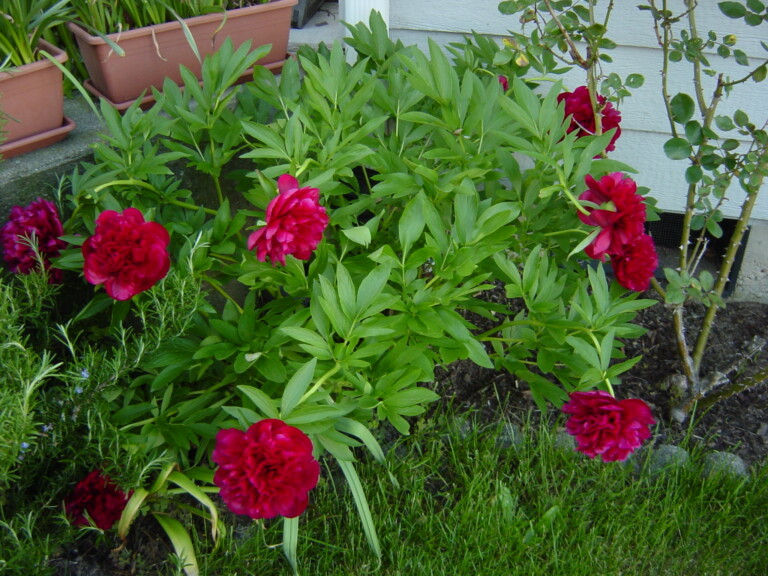
7 Plants That Look Like Peonies
Peonies are a garden treasure, famous for their luxurious, multi-petaled blooms that unfurl in late spring. But their bloom season…