Key Facts
- Small deciduous maple native to northeastern Asia.
- Typically grown as a multi stem shrub or small tree.
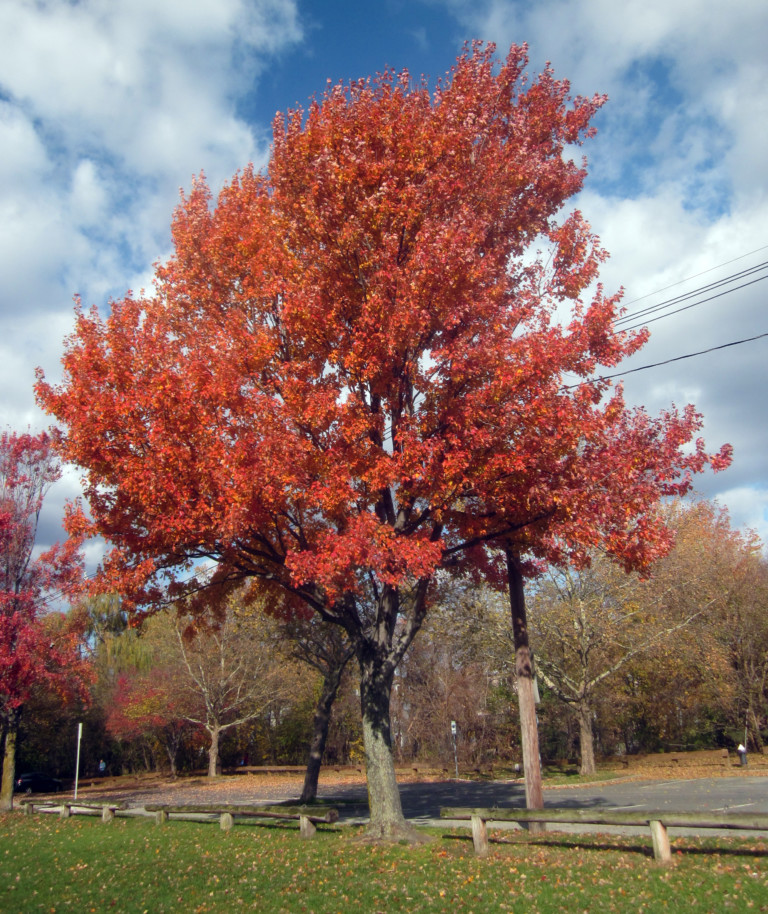
- Noted for bright orange to red fall color.
- Produces small yellowish spring flowers before leafing.
- Tolerates a wide range of soils including clay and alkaline.
- Performs best in full sun for strongest fall color.
- Can spread by root suckers and naturalize outside cultivation.
Amur Maple (Acer ginnala) is a small deciduous maple prized for compact size and vivid orange to red fall color. Usually grown as a multi stem shrub or small tree, it produces small yellowish flowers in spring before the leaves unfold.
Identification
Amur Maple is a small deciduous maple commonly forming a multi stem shrub or single trunk small tree that typically reaches about 10 to 20 feet. It is most notable for small yellowish spring flowers that appear before or with the leaves and for bright orange to red autumn foliage that makes it an ornamental choice for fall interest.
Where to grow and best uses
The species performs best in full sun for the strongest fall color but tolerates part shade. It adapts to a wide range of soils including clay and alkaline sites provided drainage is adequate. Use it as a specimen, small-yard tree, screen, or mixed shrub border, keeping in mind it can sucker and naturalize in some settings.
Planting and spacing
Place plants where their mature spread of roughly 10 to 20 feet can be accommodated and allow equal spacing between specimens to avoid crowding. Set the root ball so the top of the roots is near soil level and firm soil around roots to eliminate air pockets. Avoid sites with poor drainage to prevent early decline.
Watering and soil
Amur Maple prefers moist, well drained soils but tolerates clay and alkaline conditions. Consistently water newly planted specimens until established and avoid waterlogged sites because poor drainage leads to root problems and reduced vigor. Once established the tree tolerates a range of soil types while performing best in sites that do not stay saturated.
After flowering care and pruning
Prune to maintain shape and remove dead or crossing branches during dormant season or before new growth. The species responds well to thinning and will regrow from the base or from remaining stems, so selective pruning keeps a compact habit. Remove any weak shoots and manage height by shortening branches back to a strong lateral.
Controlling spread and naturalizing
Amur Maple can spread by root suckers and may naturalize outside cultivation, sometimes forming colonies that exceed a single plant’s typical spread. Control unwanted spread by removing suckers at the base or digging out roots. Monitor edges of plantings and thin new shoots to keep the tree as a single specimen if desired.
Propagation
Propagate by seed, which requires cold stratification, or by cuttings. Softwood cuttings in summer and hardwood cuttings or grafting are also used in production. The species also reproduces by root suckers which can be removed for control or lifted for vegetative propagation depending on garden goals.
Frequently asked questions
- How fast does Amur Maple grow?
- Growth is moderate; plants commonly reach the typical 10 to 20 foot size used for small trees or large shrubs under favorable conditions rather than rapidly becoming large trees.
- Is Amur Maple invasive?
- It can naturalize and spread by root suckers in some regions. In plantings where suckering is undesirable remove shoots promptly and monitor boundaries to prevent colony formation.
- What soil does it prefer?
- It prefers moist, well drained soils but tolerates clay and alkaline soils. Avoid sites that remain waterlogged to reduce risk of root decline.
- When does it bloom?
- Flowers appear in spring, typically in April to May in the Northern Hemisphere, with exact timing varying by latitude and local climate.
- Is Amur Maple suitable for small yards?
- Yes. Its compact mature size and multi stem habit make it suitable for small yards and borders, provided you manage suckers and allow space for its 10 to 20 foot spread.
Related Plants