
Key Facts
- Deciduous fruit tree in the genus Prunus.
- Produces an edible orange to yellow stone fruit.
- Flowers in early spring before or as leaves emerge.
- Best fruit set in full sun with well drained soil.
- Many commercial trees are grafted onto rootstocks.
- Fruit is vulnerable to late spring frosts and fungal brown rot.
- Fruit flesh is edible but the stone contains kernels with cyanogenic compounds.
- Ornamental blossoms attract pollinators.
Apricot (Prunus armeniaca) is a small deciduous fruit tree grown for sweet orange to yellow stone fruit and early spring blossoms. It prefers full sun and well drained soil and is commonly grafted onto rootstocks to control size and adapt to local conditions.
Identification
Prunus armeniaca is a small to medium tree with showy early spring blossoms that open before or as leaves appear. Fruit are orange to yellow with a single hard stone. Blossoms attract pollinators and make apricot trees a dual purpose choice for both fruit production and spring ornament.
Best uses and where to grow
Plant apricot in a home orchard, small garden or trained against a wall where space is limited. Suitable for USDA zones 5 to 8 with site and cultivar selection. Trees reach roughly 10 to 20 feet tall and wide for standard trees, so choose a site that allows that mature size or use dwarfing rootstock and training to reduce spread.
Planting and spacing
Space trees according to expected mature spread which is typically 10 to 20 feet depending on rootstock and training method. Select a sunny, well drained location and avoid heavy wet soils which increase risk of root disease. Planting distance and layout will vary by cultivar and whether trees are fan trained or allowed to form a rounded canopy.
Light, soil and watering
Apricot needs full sun with at least six hours of direct sunlight for best fruiting. They prefer fertile, well drained loam with pH near 6.5 to 7.5 and will suffer in waterlogged sites. Provide consistent water while trees establish but avoid prolonged wet soil which leads to crown rot and root problems.
After flowering care and common problems
Blooming in early spring makes fruit vulnerable to late frosts which can reduce yields. Fruit and blossoms can be affected by fungal brown rot, especially in wet weather. Improve air flow with pruning, remove mummified fruit and inspect trees during warm wet periods to reduce disease pressure. Pruning and sanitation help long term health and crop quality.
Propagation and rootstock choices
Named apricot cultivars are normally propagated by budding or grafting onto selected rootstocks to control tree size and adapt to soil conditions. Seed will rarely reproduce a named cultivar reliably and is mainly used for rootstock production. Verify rootstock compatibility for cold tolerance and soil adaptation before planting.
Toxicity and harvest notes
Fruit flesh is edible and widely eaten. The hard pit contains a kernel with amygdalin which can release cyanide when crushed or chewed, and leaves and stems contain similar compounds that can be toxic to livestock. Do not feed pits or crushed kernels to pets or children and consult local poison control for exposure concerns.
Frequently asked questions
- How fast does Apricot grow?
- Growth rate varies by rootstock, cultivar and site conditions. Standard trees commonly reach a mature height and spread of about 10 to 20 feet, with dwarf rootstocks producing smaller trees.
- What soil pH do apricots prefer?
- They prefer neutral to slightly acidic soil around pH 6.5 to 7.5 and require good drainage to avoid root and crown diseases.
- When do apricots bloom?
- Apricots bloom in early spring, typically March to April in the Northern Hemisphere. Exact timing varies by climate and cultivar and early bloom increases frost risk.
- Do apricot trees need a pollinator?
- Pollination needs vary by cultivar. Blossoms attract pollinators and cross pollination can improve fruit set for some varieties, so check cultivar details for pollination requirements.
- Are apricot kernels poisonous?
- Kernels contain amygdalin which can release cyanide when chewed or crushed. Avoid giving pits or crushed kernels to children or pets and seek medical advice or contact poison control if ingestion of kernels is suspected.
Gallery


Related Plants


Mentioned In (3)

Trees
6 Trees Similar To Cherry Blossom
Few trees can rival the exquisite displays of cherry blossoms’ spectacular flowers, in all of their splendiferousness, during the spring…

Trees
30 Most common Trees in Georgia
The North American state of Georgia lies in the southeastern region of the United States of America. As a whole,…
Plants
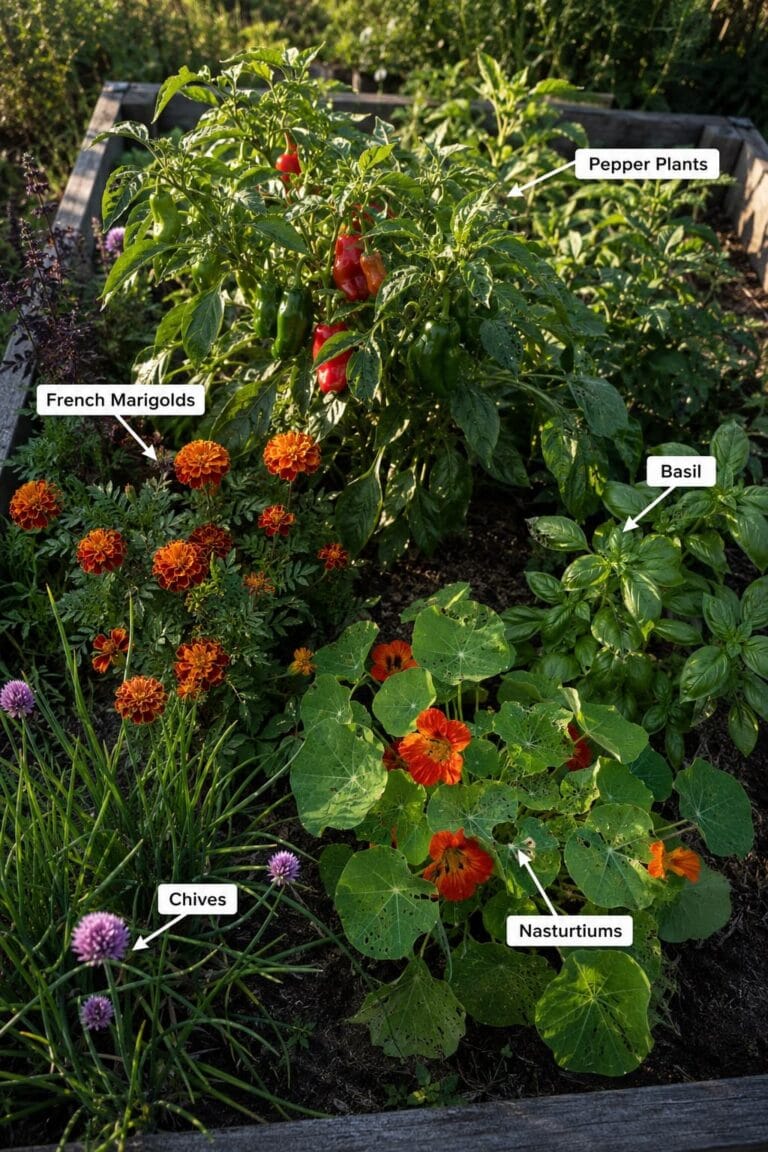
Companion Plants for Peppers: What Works and Why
Peppers are a magnet for aphids and thrips from the moment they go in the ground, and a plant this…