Georgia runs from the Blue Ridge and the Ridge and Valley in the north, across the Piedmont, down to the Coastal Plain and the barrier islands. Roughly two-thirds of the state is forested, one of the largest areas of timberland of any US state. Pines dominate the Coastal Plain, oak-hickory forest covers the Piedmont and mountains, and live oak, the state tree, lines the coast.
Contents
- Common Trees in Georgia
- Southern Live Oak (Quercus virginiana)
- Red Maple (Acer rubrum)
- Hickory (Carya spp.)
- Bald Cypress (Taxodium distichum)
- Sweetgum (Liquidambar styraciflua)
- Sweet Birch (Betula lenta)
- Witch Hazel (Hamamelis virginiana)
- Black Tupelo (Nyssa sylvatica)
- Sweetbay Magnolia (Magnolia virginiana)
- Flowering Dogwood (Cornus florida)
- Downy Serviceberry (Amelanchier arborea)
- Devil’s Walkingstick (Aralia spinosa)
- American Hornbeam (Carpinus caroliniana)
- Pawpaw (Asimina triloba)
- Eastern Redbud (Cercis canadensis)
- Fringe Tree (Chionanthus virginicus)
- American Persimmon (Diospyros virginiana)
- American Beech (Fagus grandifolia)
- American Holly (Ilex opaca)
- Black Walnut (Juglans nigra)
- American Sycamore (Platanus occidentalis)
- Yellowwood (Cladrastis kentukea)
- Native Pine Trees in Georgia
- Popular Non-Native Trees in Georgia Yards
This guide covers the trees you are most likely to see in Georgia, its native pines, and a few non-native trees that are widely planted in Georgia yards.
| Tree | Botanical name | Group | Native |
|---|---|---|---|
| Southern Live Oak | Quercus virginiana | Common | Yes |
| Red Maple | Acer rubrum | Common | Yes |
| Hickory | Carya spp. | Common | Yes |
| Bald Cypress | Taxodium distichum | Common | Yes |
| Sweetgum | Liquidambar styraciflua | Common | Yes |
| Sweet Birch | Betula lenta | Common | Yes |
| Witch Hazel | Hamamelis virginiana | Common | Yes |
| Black Tupelo | Nyssa sylvatica | Common | Yes |
| Sweetbay Magnolia | Magnolia virginiana | Common | Yes |
| Flowering Dogwood | Cornus florida | Common | Yes |
| Downy Serviceberry | Amelanchier arborea | Common | Yes |
| Devil’s Walkingstick | Aralia spinosa | Common | Yes |
| American Hornbeam | Carpinus caroliniana | Common | Yes |
| Pawpaw | Asimina triloba | Common | Yes |
| Eastern Redbud | Cercis canadensis | Common | Yes |
| Fringe Tree | Chionanthus virginicus | Common | Yes |
| American Persimmon | Diospyros virginiana | Common | Yes |
| American Beech | Fagus grandifolia | Common | Yes |
| American Holly | Ilex opaca | Common | Yes |
| Black Walnut | Juglans nigra | Common | Yes |
| American Sycamore | Platanus occidentalis | Common | Yes |
| Yellowwood | Cladrastis kentukea | Common | Yes (rare) |
| Loblolly Pine | Pinus taeda | Pine | Yes |
| Longleaf Pine | Pinus palustris | Pine | Yes |
| Slash Pine | Pinus elliottii | Pine | Yes |
| Shortleaf Pine | Pinus echinata | Pine | Yes |
| Virginia Pine | Pinus virginiana | Pine | Yes |
| Eastern White Pine | Pinus strobus | Pine | Yes |
| Pitch Pine | Pinus rigida | Pine | Yes (rare) |
| Table Mountain Pine | Pinus pungens | Pine | Yes (rare) |
| Spruce Pine | Pinus glabra | Pine | Yes |
| Pond Pine | Pinus serotina | Pine | Yes |
| Peach | Prunus persica | Planted | No |
| Ginkgo | Ginkgo biloba | Planted | No |
| Chinese Pistache | Pistacia chinensis | Planted | No |
Common Trees in Georgia
Southern Live Oak (Quercus virginiana)

Southern live oak is Georgia’s state tree. It is a massive, spreading evergreen oak of the Coastal Plain and coast, famous around Savannah and on the Golden Isles, where it is often draped in Spanish moss. It rarely exceeds 60 feet tall but can spread more than twice as wide. It has thick, dark, furrowed bark and keeps its leathery leaves year-round.
Red Maple (Acer rubrum)
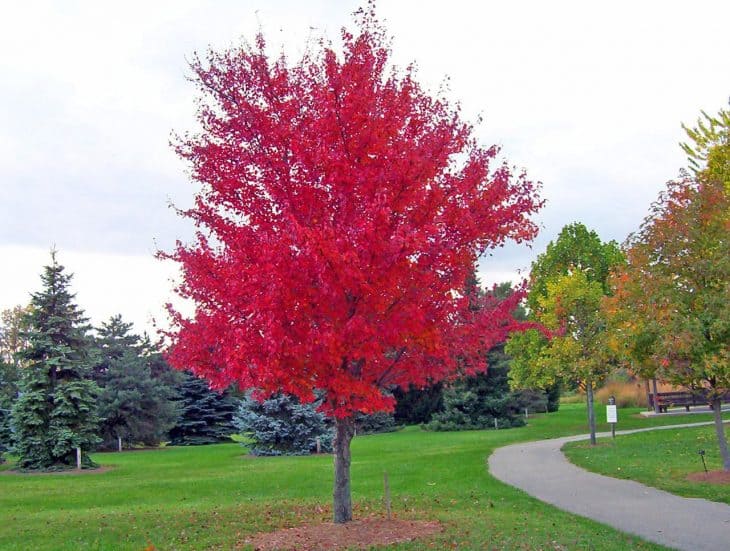
Red maple is one of the most widespread trees in Georgia, from mountain coves to Coastal Plain swamps. Its red flowers are one of the first signs of spring, often in February. It is widely planted for its fall color, although in south Georgia the leaves often turn yellow rather than red.
Hickory (Carya spp.)

Georgia has about ten native hickories. Mockernut and pignut are the most common in upland oak-hickory forests. They have compound leaves, very hard, shock-resistant wood (the traditional choice for tool handles and for smoking meat) and nuts that feed squirrels, turkeys and deer.
Bald Cypress (Taxodium distichum)

Bald cypress is the tree of Georgia’s river swamps, from the Altamaha to the edges of the Okefenokee. It is a deciduous conifer: its soft needles turn rusty orange and drop in fall. It grows slowly to 50 to 120 feet, has fibrous grey-red-brown bark, forms “knees” in standing water and can live for many centuries.
Sweetgum (Liquidambar styraciflua)

Sweetgum is one of the most common hardwoods in Georgia, quick to take over old fields and cutover land. It is easy to spot by its five-pointed star leaves, which color yellow to deep purple in fall, and its spiky seed balls. It grows 60 to 80 feet in yards and taller in the forest.
Sweet Birch (Betula lenta)

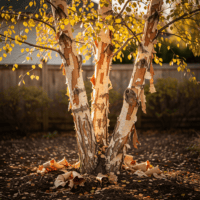
Sweet birch (black birch) grows in the North Georgia mountains, at the southern end of its range. Its dark, smooth young bark and twigs smell strongly of wintergreen when scratched, and they were once the source of wintergreen oil. It reaches 50 to 80 feet and can live more than 200 years.
Witch Hazel (Hamamelis virginiana)

Witch hazel is a shrub or small tree, usually 15 to 20 feet tall, of woodland edges and stream banks. It is notable for flowering in late fall: spidery yellow flowers open as the leaves drop. Native Americans used the bark and leaves for medicine, and witch hazel extract is still used as an astringent.
Black Tupelo (Nyssa sylvatica)

Black tupelo (black gum) grows throughout Georgia, usually 30 to 60 feet tall, with a straight trunk and branches that stick out at right angles. Its glossy leaves turn brilliant scarlet in early fall, and its small blue-black fruits feed birds. Its flowers are also a good nectar source for bees.
Sweetbay Magnolia (Magnolia virginiana)

Sweetbay is a smaller magnolia of Coastal Plain swamps and wet flatwoods, usually 20 to 40 feet tall. It is semi-evergreen in Georgia, and its leaves are bright silvery-white underneath, so they flash in the wind. Creamy, lemon-scented flowers open from late spring into summer.
Flowering Dogwood (Cornus florida)

Flowering dogwood is one of Georgia’s best-loved native trees and the symbol of Atlanta’s spring Dogwood Festival. It is a small tree, usually 15 to 30 feet tall and often wider than tall. Its four white bracts open in early spring around a cluster of tiny flowers, and red berries and red-purple leaves follow in fall. It grows best in part shade and moist, acidic soil.
Downy Serviceberry (Amelanchier arborea)

Downy serviceberry is a small native tree, usually 15 to 30 feet tall, with smooth grey bark. It is one of the first trees to bloom in spring, with drooping clusters of white flowers. The small purple-red berries ripen in early summer and are eaten by birds and people.
Devil’s Walkingstick (Aralia spinosa)

Devil’s walkingstick is a thorny shrub or small tree, 10 to 25 feet tall, of woodland edges. Its stems are covered in sharp spines, and its huge compound leaves, up to 4 feet long, give it a tropical look. Large sprays of small creamy flowers in late summer become purple-black berries that birds love.
American Hornbeam (Carpinus caroliniana)

American hornbeam (musclewood or ironwood) is a small tree, usually 20 to 35 feet tall, of shaded stream banks. Its smooth grey trunk is fluted like a flexed muscle, and its wood is extremely hard. It tolerates shade and wet soil.
Pawpaw (Asimina triloba)

Pawpaw is an understory tree, usually 15 to 30 feet tall, of rich, moist bottomlands. It produces the largest edible fruit native to the United States, with a creamy, mango-banana flavor. Its leaves are the only food of zebra swallowtail caterpillars.
Eastern Redbud (Cercis canadensis)

Eastern redbud is a small native tree, 20 to 30 feet tall and about as wide. Its bare branches are covered in rosy-pink flowers in late winter or early spring. The heart-shaped leaves turn yellow in fall, and flat brown pods hang on through winter.
Fringe Tree (Chionanthus virginicus)

Fringe tree (grancy greybeard) is a small native tree, usually 12 to 20 feet tall, found from the mountains to the coast. In spring it is covered in fragrant, fringe-like white flowers, and female trees then bear dark blue fruits that birds eat. It tolerates wet soil and urban conditions and makes a good small yard tree.
American Persimmon (Diospyros virginiana)

American persimmon grows along field edges and fencerows throughout Georgia, usually 30 to 60 feet tall. Its thick, dark bark is broken into small square blocks. The orange fruits are very astringent until fully ripe and soft in fall, when they become sweet. They are a favorite of deer, opossums and foxes.
American Beech (Fagus grandifolia)

American beech grows on rich, moist slopes and stream terraces in the Piedmont and mountains, and is often 60 to 80 feet tall. It has smooth, silvery-grey bark and toothed, oval leaves. It tolerates shade, and young trees hold their papery tan leaves through winter.
American Holly (Ilex opaca)

American holly is an evergreen tree, usually 15 to 40 feet tall, with spiny, glossy leaves and smooth light grey bark. Female trees carry bright red berries through winter. It grows slowly in shade and is widely planted as a specimen or screen.
Black Walnut (Juglans nigra)

Black walnut grows on deep, fertile soils along streams in north and central Georgia. It is usually 70 to 100 feet tall with a straight trunk and dark, deeply furrowed bark. Its nuts fall in their green husks in October. Its roots release juglone, a compound that stunts tomatoes and many other garden plants nearby.
American Sycamore (Platanus occidentalis)

American sycamore grows along rivers and streams across Georgia and can pass 100 feet tall. Its mottled bark flakes off to expose white and grey-green patches, so it is easy to spot along a creek line, especially in winter.
Yellowwood (Cladrastis kentukea)

Yellowwood is rare in the wild in Georgia, found only in a few northern counties, but it is increasingly planted as a shade tree. It grows 30 to 50 feet tall with smooth grey bark, and hanging clusters of fragrant white flowers appear in late spring (heaviest every other year). Its heartwood is bright yellow.
Native Pine Trees in Georgia
Georgia has ten native pines. Loblolly and slash pine make up most of the state’s pine plantations. Longleaf pine once covered most of the Coastal Plain and is now being restored. Pines tolerate the sandy, acidic soils of south Georgia better than hardwoods do.
Loblolly Pine (Pinus taeda)

Loblolly pine is the most common tree in Georgia and one of the most common in the whole country. It grows up to about 115 feet on moist lowland and Piedmont sites. Its needles, 6 to 9 inches long, grow in bundles of three. It is the backbone of Georgia’s timber industry.
Longleaf Pine (Pinus palustris)

Longleaf pine once covered about 90 million acres of the Southeast, and only a small fraction survives after logging. Mature trees reach 80 to 115 feet, with the longest needles of any eastern pine, up to 18 inches, in bundles of three. Seedlings spend several years in a grass-like stage while they grow deep roots. The species depends on frequent low fires, and it is resistant to fire and wind.
Slash Pine (Pinus elliottii)

Slash pine is a fast-growing pine of south Georgia’s flatwoods and wet soils, widely planted for timber and pine straw. It has needles in bundles of two and three, and glossy brown cones. Its trees were historically tapped for resin and turpentine, the “naval stores” industry. It lives about 200 years.
Shortleaf Pine (Pinus echinata)
Read our guide to Shortleaf Pine
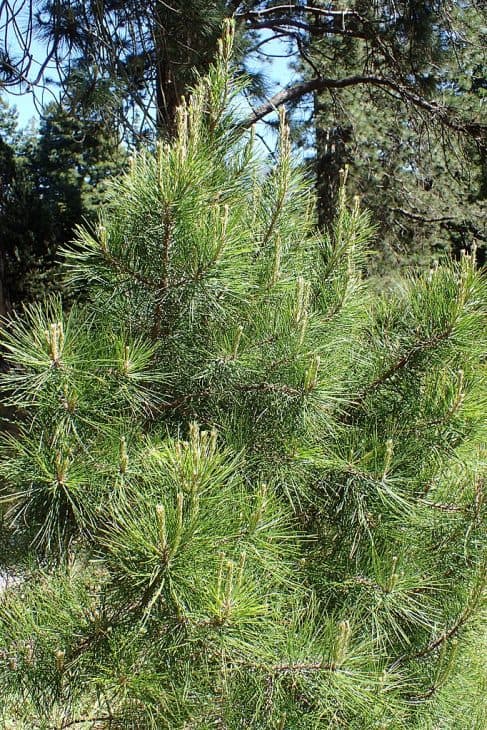
Shortleaf pine grows on dry uplands in north and central Georgia. It reaches 80 to 100 feet, with short needles in bundles of two or three and small, prickly cones about 2 inches long. Young trees can resprout from the base after fire, which is unusual among pines.
Virginia Pine (Pinus virginiana)

Virginia pine is a small, scrubby pine of dry, poor soils in north Georgia, usually 30 to 60 feet tall. Its short, twisted needles grow in pairs, and old cones hang on the branches for years. It is often the first tree on eroded land and is also grown as a Christmas tree.
Eastern White Pine (Pinus strobus)
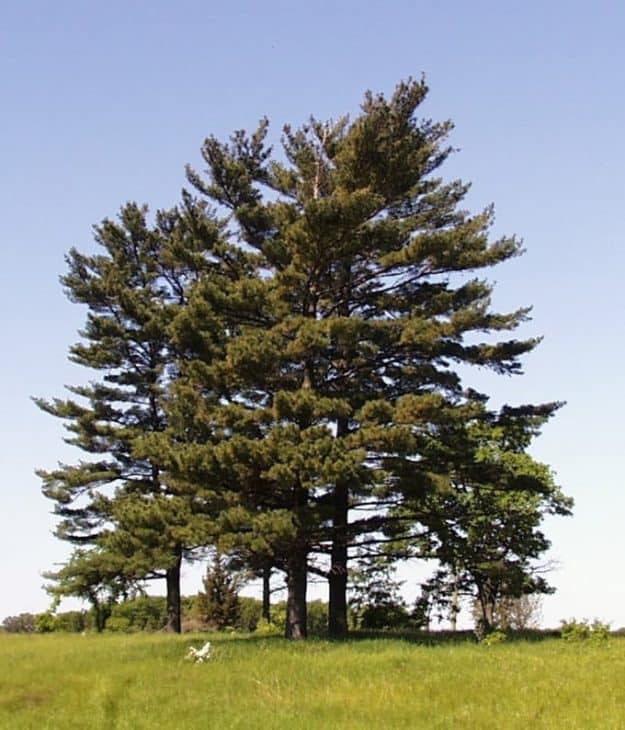
Eastern white pine grows in the North Georgia mountains, near the southern end of its range. It is Georgia’s only native pine with needles in bundles of five: soft and blue-green. It commonly reaches 80 to 100 feet and has long, slender cones.
Pitch Pine (Pinus rigida)

Pitch pine reaches Georgia only in the northeastern mountains, on dry ridges. It is a small to medium pine with a twisted, irregular crown. Its needles grow in bundles of three, and it can resprout from the trunk after fire.
Table Mountain Pine (Pinus pungens)
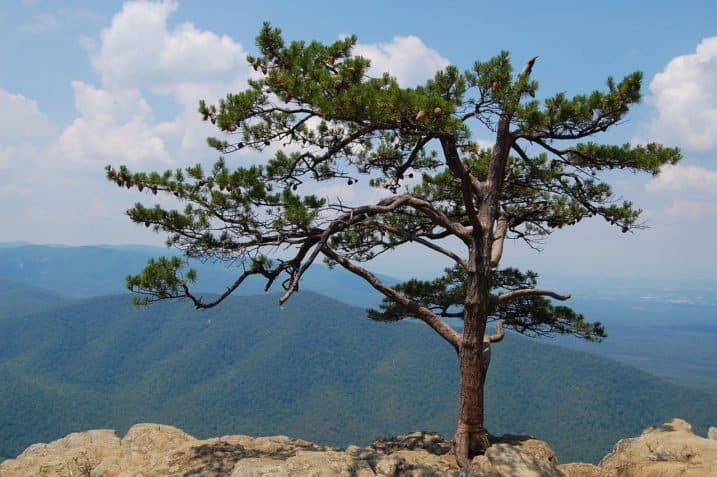
Table mountain pine is an Appalachian pine of dry, rocky ridges in the North Georgia mountains, usually under 40 feet tall. Its twisted needles grow in pairs. Its heavy cones have stout, hooked spines and often need fire to open.
Spruce Pine (Pinus glabra)

Spruce pine is an unusual southern pine of shaded, moist river bottoms and hammocks in south Georgia. It tolerates more shade than any other eastern pine. Its slender, dark green needles grow in pairs. It can reach about 100 feet, and on young trees the bark is smooth and grey, like that of a spruce.
Pond Pine (Pinus serotina)

Pond pine (marsh pine) grows in pocosins, bays and wet flatwoods of the Coastal Plain, usually under 70 feet tall. Its needles grow in bundles of three and are up to 8 inches long, and its cones may stay closed for years until fire opens them. Like pitch pine, it can resprout from its trunk after fire.
Popular Non-Native Trees in Georgia Yards
Peach (Prunus persica)

Georgia is “the Peach State”, although peach trees came from China by way of Persia and Europe. Peach trees stay small, usually 15 to 25 feet tall, and need a certain number of winter chill hours to fruit well. That is why commercial orchards are concentrated in middle Georgia, around Fort Valley. Pink blossoms open in March.
Ginkgo (Ginkgo biloba)

Ginkgo is a living fossil from China and the last survivor of a group of trees that dates back more than 200 million years. It is planted along streets for its fan-shaped leaves, which turn butter-yellow and drop almost all at once in fall. Plant male trees only: the fruit of female trees smells rancid.
Chinese Pistache (Pistacia chinensis)

Chinese pistache is a tough, drought-tolerant shade tree from China, 25 to 40 feet tall. Its fall color is among the best of any tree in the South: orange, red and scarlet. It handles poor soil and heat well. Plant male trees if you want to avoid seedlings.