
Key Facts
- Deciduous small to medium tree native to the southeastern United States.
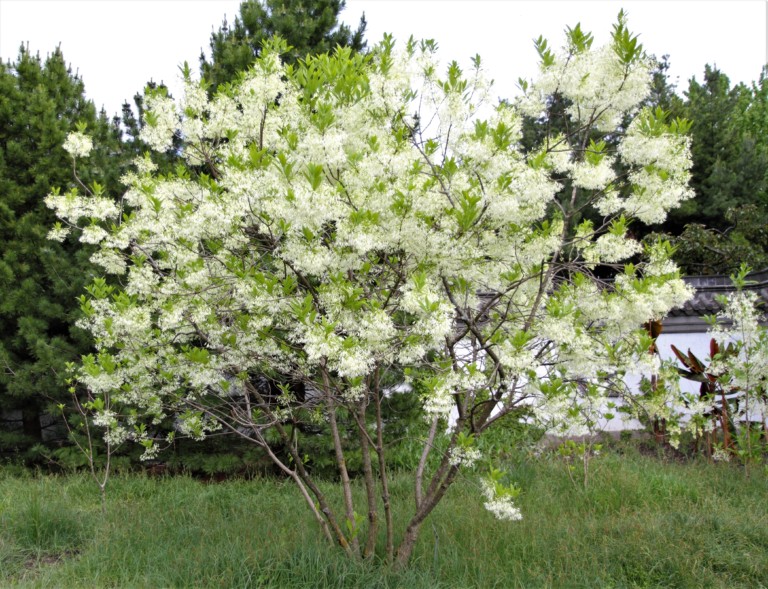
- Produces drooping white bell shaped flowers in spring.
- Valued as a specimen tree for spring floral display.
- Prefers moist, well drained soils and tolerates periodic wetness.
- Performs best in part shade to full sun depending on climate.
- Typically hardy to USDA zones 5–8.
- Commonly propagated by seed or semi ripe cuttings.
Carolina Silverbell is a small to medium deciduous tree prized for its dangling white bell flowers in spring and used as a specimen in lawns and informal landscapes, though it needs room and moist soil to perform well.
Identification and season
Look for drooping clusters of white, bell shaped flowers in spring, typically April to May in the Northern Hemisphere. The tree reaches roughly 20 to 35 feet tall with a similar 20 to 30 foot spread and shows a rounded habit, making it a clear focal point when in bloom.
Best uses and where to plant
Use Carolina Silverbell as a specimen tree in a lawn, park or large foundation planting where its spring floral display can be seen. It fits moist, mixed woodland borders and tolerates occasional wetness, so plant in low spots or near rain gardens where other trees struggle but allow good drainage.
Planting time and spacing
Spacing should account for a mature spread of about 20 to 30 feet, so allow ample room from buildings and other trees. Timing for planting varies by climate and nursery stock but placing a young tree where it can establish in moist, well drained soil gives the best long term results.
Soil and watering
Carolina Silverbell prefers moist, well drained soil with an acidic to neutral pH and tolerates clay and periodic wetness. Prolonged drought reduces vigor and flowering while continuous waterlogging can cause root problems, so provide steady moisture during establishment and avoid both extremes.
Light and location
The tree performs from full sun to part shade and favors part shade in hotter climates to protect flowers and foliage. Too much deep shade will reduce flowering, while afternoon shade in warm regions helps maintain bloom and reduce heat stress.
After flowering and pruning
After the spring bloom, prune only to remove dead or crossing branches and to shape the canopy. Light corrective pruning maintains a balanced form; heavy cutting can reduce next season’s flowers so keep major structural pruning to dormant seasons and avoid severe summer pruning.
Propagation
Common propagation methods include seed and semi ripe cuttings. Seed raised plants may take several years to flower, while cuttings and nursery produced plants flower sooner and hold cultivar traits more reliably for landscape use.
Size control and naturalizing
Expect mature size similar to its spread and manage space with selective pruning when young to establish a single leader or desired crown width. The species is used as a planted ornamental rather than a rapid spreader, and its spread is largely influenced by pruning and site vigor.
Frequently asked questions
- How fast does Carolina Silverbell grow?
- Growth rate varies with site and moisture but is generally moderate. Plants reach an approximate mature height of 20 to 35 feet given good conditions.
- When does Carolina Silverbell bloom?
- It blooms in spring, typically April to May in the Northern Hemisphere, with timing shifting earlier in warm climates and later in cool ones.
- What soil does Carolina Silverbell prefer?
- It prefers moist, well drained soils with acidic to neutral pH and tolerates clay and occasional wetness but not prolonged drought or continuous waterlogging.
- How much sun does it need?
- Plants perform from full sun to part shade and favor part shade in hotter climates; too much shade will reduce flowering.
- How do you propagate Carolina Silverbell?
- Propagate by seed or semi ripe cuttings. Seed grown trees may take several years to bloom while cuttings give earlier and more uniform flowering specimens.
Related Plants


Mentioned In (5)
Trees
Spring Flowering Trees by Color: Pink, White, Purple & Yellow
Spring-flowering trees give a yard its biggest show of the year. This guide sorts the best of them by flower…
Trees
33 Flowering Trees for Virginia Gardens
Virginia's best flowering trees are mostly its own natives: flowering dogwood, which is both the state tree and the state…
Trees
20 Flowering Trees for Ohio, by Color
Some of the best flowering trees for Ohio are native: eastern redbud, flowering dogwood, serviceberry, pagoda dogwood and fringe tree.…

Trees
Trees of North Carolina: Common, Oak & Flowering Trees
North Carolina has three distinct regions, the Mountains, the Piedmont and the Coastal Plain, and each has its own tree…
Trees
Trees of Tennessee: 42 Common Native Trees (and 4 to Avoid)
The most common trees in Tennessee are red maple, tulip poplar (the state tree), white oak, chestnut oak, sugar maple,…