
Key Facts
- Evergreen shrub or small tree with glossy dark green leaves.
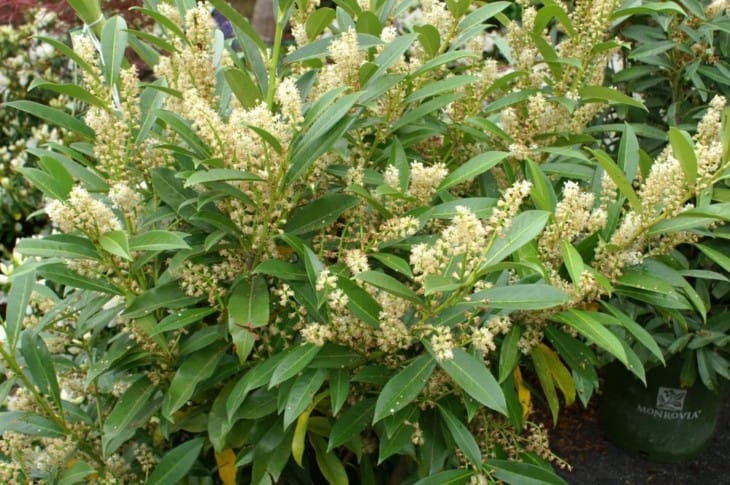
- Produces clusters of small white flowers in spring followed by small black cherries.
- Widely used for tall hedges and privacy screens.
- Tolerates shade better than many hedging shrubs but flowers best with some sun.
- Prefers moist well drained soil and tolerates clay and alkaline soils.
- Leaves seeds and other parts contain cyanogenic compounds and are poisonous if ingested.
- Propagate by semi ripe cuttings, layering or root cuttings to retain cultivar traits.
- Some forms can naturalize and spread beyond plantings in favorable climates.
Cherry Laurel (Prunus laurocerasus) is an evergreen shrub or small tree with dense glossy leaves used for year round screening and structure in the garden, while its clusters of small white spring flowers add seasonal interest. The plant makes an effective tall hedge but leaves and seeds contain cyanogenic compounds and are poisonous if ingested.
Identification
Glossy dark green leaves remain through the year and form a thick evergreen screen. In spring the plant produces clusters of small white flowers then small black cherries. Typical mature height commonly ranges from 6 to 15 feet with a spread often between 6 and 12 feet though cultivar and pruning strongly influence final size.
Best uses and where to grow
Use Cherry Laurel for tall evergreen hedges, privacy screens and foundation planting where year round cover is desired. It tolerates shade better than many hedging shrubs and grows most densely with some sun. Plants are hardy in USDA zones 6 to 9 but cultivars vary in size and winter tolerance so match variety to the site.
Planting and spacing
Place plants in moist well drained soil and allow room for the intended hedge height and width. For a continuous screen space plants commonly 6 to 12 feet apart depending on cultivar and desired density. Verify the mature size of the chosen cultivar before planting and avoid siting where poor drainage will stress roots.
Watering and soil
Cherry Laurel prefers consistently moist but well drained soil and tolerates clay and alkaline conditions. Avoid waterlogged ground because poor drainage causes root loss and decline. Apply a layer of mulch to conserve moisture and improve heavy soils while keeping mulch away from stems to reduce risk of crown rot.
Pruning and after-flowering care
Prune regularly to maintain a formal hedge or to reduce overall size and remove dead wood. Light shaping during the growing season keeps a neat face while heavier pruning after flowering allows the plant to set new growth. Pruning also improves air movement and helps control legginess in shaded sites.
Controlling spread and safety
Some forms can naturalize and spread beyond plantings in favorable climates so check local invasive species lists before planting extensively. Control spread by removing seedlings and cutting back suckers at the root and by preventing persistent fruit. Keep children and pets away from leaves and seeds and contact local poison control or a veterinarian for ingestion concerns.
Propagation
Propagate by semi ripe cuttings, layering or root cuttings to retain cultivar traits. Seed will produce plants but will not reliably reproduce named varieties so cuttings or layering are preferred when you need to preserve the characteristics of a purchased cultivar.
Frequently asked questions
- How fast does Cherry Laurel grow?
- Growth rate varies by cultivar, site and climate. Many cultivars grow at a moderate to fast pace and can reach the common mature range of 6 to 15 feet without regular pruning.
- Is Cherry Laurel poisonous?
- Yes. Leaves, seeds and other parts contain cyanogenic compounds that can release cyanide when plant material is damaged or chewed. Keep the plant away from children and pets and seek professional advice for ingestion incidents.
- Can I use Cherry Laurel as a hedge?
- Yes. It is widely used for tall evergreen hedges and privacy screens. Prune to maintain shape and confirm the cultivar mature size to match the intended hedge height.
- Does Cherry Laurel need full sun?
- It tolerates deep shade but forms its densest growth with at least some sun. In deep shade plants can become open and require more pruning to preserve a dense screen.
- How do I prevent it from spreading?
- Remove seedlings promptly, cut back suckers at the root and discourage fruit persistence to reduce bird dispersal in areas where naturalizing is a concern.
Gallery
Related Plants


Mentioned In (2)
Trees
12 Evergreen Trees in Tennessee
The state of Tennessee is home to many different kinds of trees. There are over 500 species, but some are…

Hedge
The Best Evergreen Hedge Shrubs For Privacy
Evergreen hedge shrubs provide year-round privacy, wind protection, and visual interest. Choosing the right plant depends on your climate, available…