

Evergreen hedge shrubs provide year-round privacy, wind protection, and visual interest. Choosing the right plant depends on your climate, available space, growth speed preference, and maintenance commitment. Below are nine proven evergreens for privacy screens, with practical guidance on growth habits, site requirements, and potential challenges.
Contents
- 1. Emerald Green Arborvitae (Thuja occidentalis ‘Smaragd’)
- 2. ‘Nigra’ Arborvitae (Thuja occidentalis ‘Nigra’)
- 3. Portuguese Laurel (Prunus lusitanica)
- 4. Leyland Cypress (× Cuprocyparis leylandii)
- 5. Cherry Laurel (Prunus laurocerasus)
- 6. Red Robin Photinia (Photinia × fraseri ‘Red Robin’)
- 7. New Zealand Broadleaf (Griselinia littoralis)
- 8. Korean Boxwood (Buxus sinica var. insularis)
- 9. Yew (Taxus baccata)
Evergreen hedge shrubs are simply fantastic. You can’t underestimate the beauty a green hedge adds to your compound. Not only the aesthetics, think of the privacy benefits when it acts as a privacy screen.
A beautiful hedge also acts as a sound barrier, a wind breaker against vigorous winds and helps reduce the snow in your compound during winter. The advantage of going for an evergreen shrub is that it will keep these benefits all year round.
However, it doesn’t remain green and lively entirely on its own. You will have to prune it often, water it and incorporate the necessary requirements for healthy growth.
When selecting an evergreen shrub, you need to consider some factors to find out what shrub suits your needs. How high do you want it to grow eventually, how wide, what space do you have, how much care and time will the shrubs need before getting to maturity, and how much care and time are you willing to invest in it. Don’t forget you need the right equipment to maintain hedges well.
To help you narrow down your choice, we have highlighted some of the best evergreen hedge shrubs to consider. All of these shrubs are great evergreens for privacy.
1. Emerald Green Arborvitae (Thuja occidentalis ‘Smaragd’)
Read our guide to Emerald Green Arborvitae

Emerald Green Arborvitae
Emerald Green Arborvitae is a narrow pyramidal evergreen used for hedges and screens. It grows about 10 to 15 ft and prefers moist well drained sites in full sun to part shade.
Read our guide to Emerald Green ArborvitaeThis cultivar belongs to the Cypress family and is valued for its narrow, upright habit and vibrant green foliage that holds its color through winter. Do not confuse Emerald Green with the Leyland Cypress since they look very much alike. It may not do well in very dry climates but it does pretty well in full sun conditions.
However, it is mandatory that you water it often and apply mulching to retain water during the hot summers. It is recommended that you grow it in well-drained soil with slightly acidic pH.
The Emerald Green grows slowly, typically reaching 12 to 14 feet tall with a 3 to 4 foot spread at maturity. It naturally forms a pyramidal shape without heavy pruning.
Pruning should be carried out during early spring before new growth emerges.
Space plants 2 to 3 feet apart for a dense privacy screen. However, one drawback of this crowded spacing is that it may cause Seiridium blight or Keithia twig blight due to insufficient air flow.
A 4-foot spacing will help ensure the shrubs grow in a healthy manner. Note, Emerald Green is vulnerable to deer browsing. It is not advisable to grow it if there are deer in your surrounding area.
2. ‘Nigra’ Arborvitae (Thuja occidentalis ‘Nigra’)
Read our guide to ‘Nigra’ Arborvitae

‘Nigra’ Arborvitae
'Nigra' Arborvitae is a dark foliaged eastern arborvitae cultivar used for narrow screens and hedges. It prefers moist, well drained sites and is usually propagated by cuttings.
Read our guide to 'Nigra' ArborvitaeFull sun and partial shade favor this arborvitae cultivar. The dark green foliage forms a pyramidal shape and slowly matures to 20 to 30 feet tall with a 4 to 10 foot spread.
It tolerates clay, loam, sandy, moist, alkaline, and acidic soils, provided they are well-drained. Avoid dry soil. For a low maintenance hedge, grow plants 3 feet apart. ‘Nigra’ adapts well to pruning, requires moderate care, and tolerates air pollution better than many conifers.
3. Portuguese Laurel (Prunus lusitanica)
Read our guide to Portuguese laurel

Portuguese laurel
Portuguese laurel is an evergreen shrub or small tree grown for glossy foliage and spring flower clusters. It is often used as a hedge or screen and tolerates coastal conditions when planted in well drained soil.
Read our guide to Portuguese laurelOne of my personal favorites, Prunus lusitanica has an average growth rate of 18 inches per year. It features attractive red stems, glossy evergreen leaves, and white flowers in late spring. This plant is an ideal choice if you prefer a neat, formal hedge that can be trimmed to any shape and size.
However, it may regenerate from old wood if it is left unattended to overgrow. This shrub flourishes in any well-draining soil, including chalky types. Under full sun or partial shade, it will reach 18 feet in height if left untrimmed. Note that Portuguese laurel can become invasive in some temperate regions; check local guidelines before planting.
4. Leyland Cypress (× Cuprocyparis leylandii)

This is one of the fastest growing hedge shrubs, adding 3 feet or more per year. This rapid growth makes it a popular choice for quick screens. Leyland cypress can reach over 40 feet tall if left unpruned, though it is commonly maintained at fence height.
You can achieve a box-shaped hedge by pruning it annually. Its dense foliage forms a good sound and air pollution barrier. It tolerates full sun, partial shade, and heavy clay soils. The soil should not be waterlogged.
However, Leyland cypress is highly susceptible to canker diseases (Seiridium and Botryosphaeria), which can cause widespread dieback and hedge failure, especially in poorly drained sites or under drought stress.
Bagworms and spider mites are also common pests. For these reasons, Leyland cypress is considered a high-risk choice in 2026 and should only be planted if you are prepared for potential disease management or replacement.
5. Cherry Laurel (Prunus laurocerasus)
Read our guide to Cherry Laurel
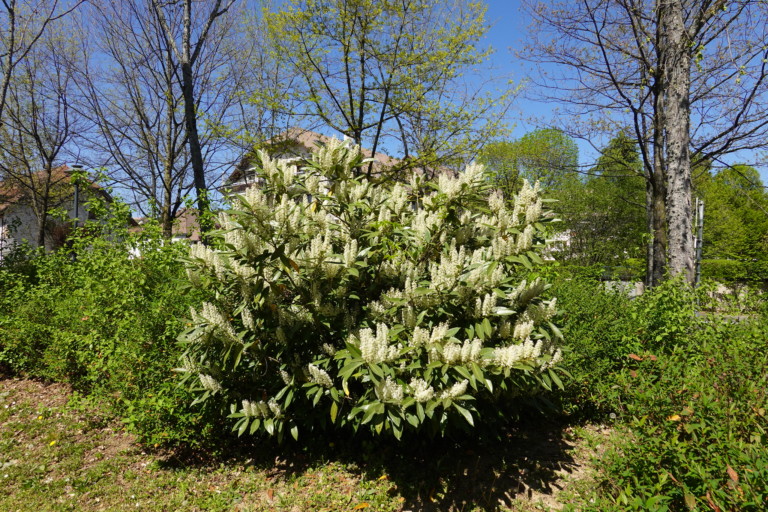
Cherry Laurel
Cherry Laurel is an evergreen shrub or small tree prized for dense glossy foliage and spring clusters of white flowers; leaves and seeds contain cyanogenic compounds and are poisonous if ingested.
Read our guide to Cherry LaurelThis is an extremely fast growing shrub, adding up to 2 to 3 feet per year. It is tough and hardy and grows in most soils. If you don’t want a conifer hedge, this is an excellent broadleaf alternative. It can grow up to 18 feet or taller if left untrimmed and forms a dense screen when planted close together.
Cherry laurel leaves are bright green, thick, glossy, and stay vibrant all year round. The shrub will prosper in almost all types of soils except shallow chalky or waterlogged soils. It tolerates full sun to partial shade. In some regions, cherry laurel can spread aggressively and is considered invasive; check local recommendations before planting.
It is important to mention that the berries and leaves of cherry laurel are highly toxic to humans and animals, so it’s one to avoid if you have pets or children playing near the hedge.
6. Red Robin Photinia (Photinia × fraseri ‘Red Robin’)
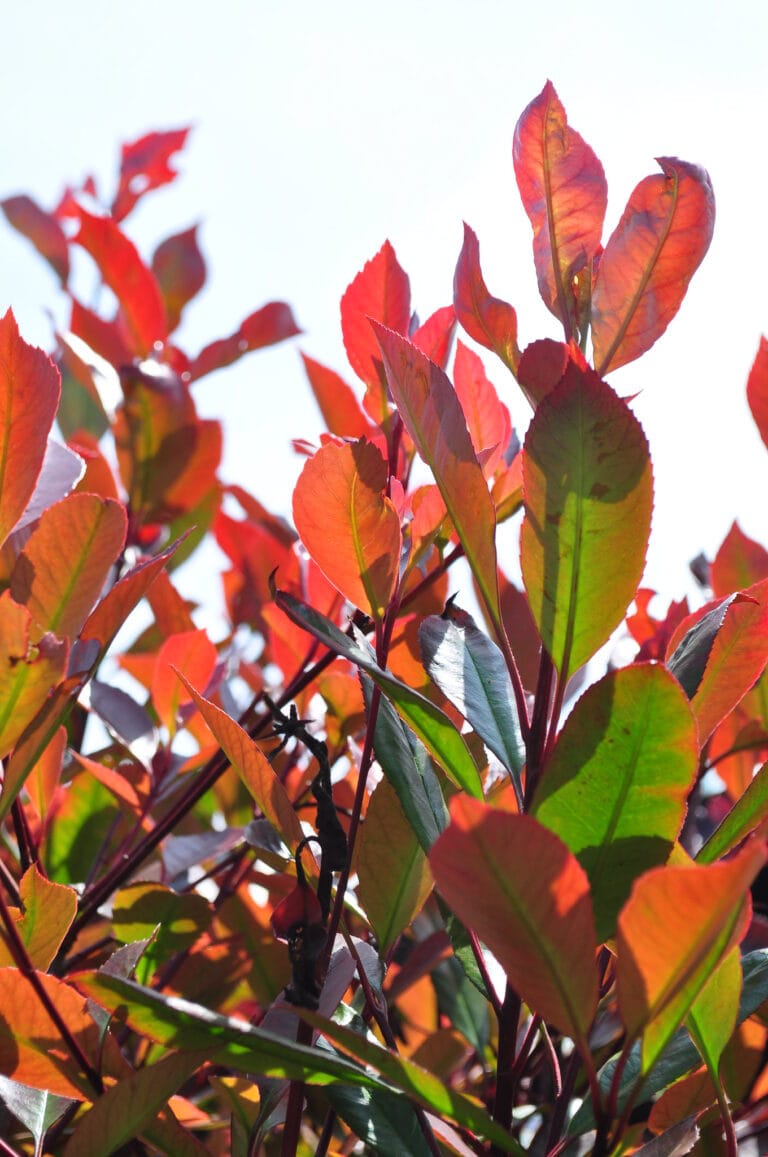
Red Robin Photinia
Red Robin Photinia is an evergreen shrub grown for its bright red new growth and usefulness as a formal or informal hedge. It flowers in spring with white clusters and benefits from regular pruning.
Read our guide to Red Robin PhotiniaThis fast-growing shrub gives your landscape vibrant red new growth in spring, maturing to glossy green. For best results, prune it twice a year to maintain density. Trimming in late spring or early summer encourages a second flush of red shoots during summer.
‘Red Robin’ flourishes in any free-draining soil and tolerates full sun to partial shade. If left untrimmed, it can grow 12 to 15 feet tall. It is susceptible to leaf spot diseases, particularly in humid conditions or where air circulation is poor, so proper spacing and sanitation are important for long-term hedge health.
7. New Zealand Broadleaf (Griselinia littoralis)
Read our guide to New Zealand Broadleaf
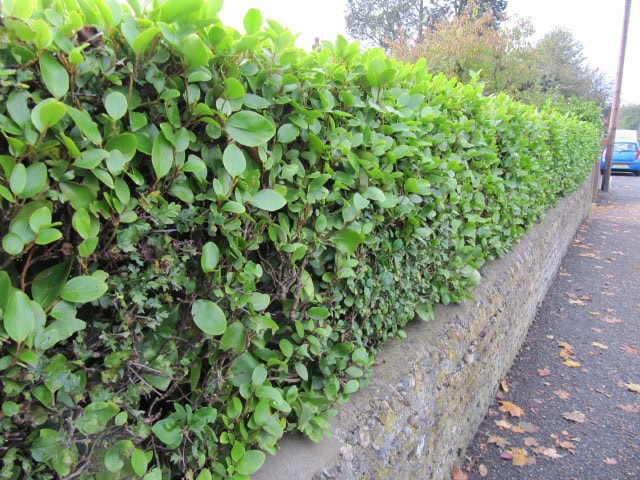
New Zealand Broadleaf
New Zealand Broadleaf (Griselinia littoralis) is an evergreen shrub or small tree used for hedging and coastal planting. It tolerates wind and some salt spray and prefers well drained soil in full sun to part shade.
Read our guide to New Zealand BroadleafUnder ideal conditions, this shrub will grow at an average rate of 18 inches per year. The plant is easy to maintain, features lively apple-green leaves, and performs exceptionally well in coastal areas due to its salt tolerance.
Free-draining soils, full sun, or partial shade suit Griselinia best. If left untrimmed, it can grow up to 18 feet tall. It is sensitive to hard frosts and is best suited to mild, temperate climates (USDA zones 8–10).
8. Korean Boxwood (Buxus sinica var. insularis)
Read our guide to Korean Boxwood
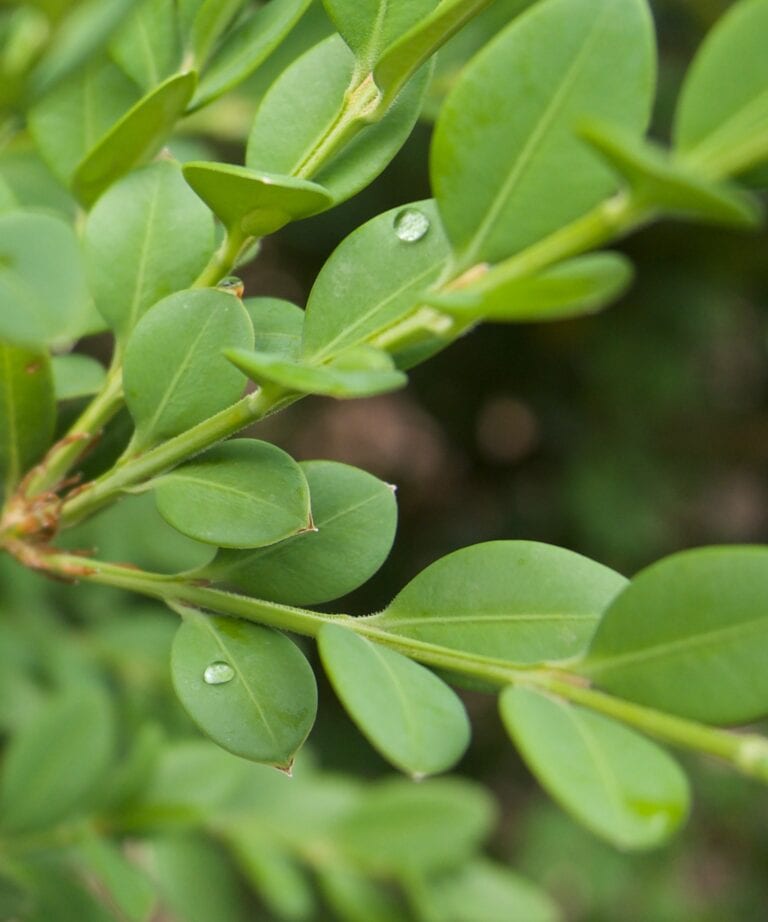
Korean Boxwood
A compact evergreen shrub used for hedges and topiary that tolerates pruning but dislikes poorly drained soil.
Read our guide to Korean BoxwoodThis small versatile shrub serves diverse purposes in the landscape. It has compact, dense foliage that can be sheared into precise shapes. Korean boxwood typically grows 2 to 4 feet tall with a 4 to 6 foot spread at maturity.
Growth is slow to moderate, and six hours of unfiltered sunlight will benefit the shrub. It tolerates clay, sandy, moist, loamy, well-drained, and slightly acidic soils. Korean boxwood is ideal for low borders, edging driveways, and foundation plantings. It grows in a naturally rounded form.
Be aware that boxwood blight (Calonectria pseudonaviculata) is a serious disease affecting many boxwood species and cultivars; plant in well-spaced, well-ventilated sites and avoid overhead watering to reduce disease risk.
9. Yew (Taxus baccata)

English Yew
English Yew (Taxus baccata) is an evergreen conifer used for hedges, topiary and specimen planting. It is slow growing, shade tolerant and highly toxic except for the aril flesh.
Read our guide to English YewThis is the common name for Taxus baccata and hybrid yews such as Taxus × media. Yew is tough and hardy, thrives in full sun or partial shade (one of the few evergreens that tolerates deep shade), and keeps its dark green needles year-round. It projects a formal, tidy appearance and responds exceptionally well to shearing. Growth is slow, typically 6 to 8 inches per year.
With its ability to be trimmed into any shape, yew is excellent for low to medium hedges or topiary. It requires well-drained soils to flourish. Waterlogged soils, especially during winter, will kill the plant. If left untrimmed, some yew species can reach 30 feet in height. All parts of the yew plant except the fleshy red aril are highly toxic; take care when planting near children or livestock.
I hope this article has been of some use to you in your search for the best evergreen hedge shrubs for your privacy hedge. If you made your choice, you might want to read more about planting, watering, and trimming your new hedge.
I think you should mention that the cherry laurel is highly toxic and people with pets and small children should probably avoid that plant as they may eat the berries.
Thanks for that, you are right. Added it to the article.