
Key Facts
- Large deciduous magnolia native to eastern North America.
- Flowers are greenish to yellow and appear in late spring to early summer.
- Fruit is a conelike aggregate that releases red seeds in fall.
- Used as a specimen or shade tree in larger landscapes.
- Prefers rich, consistently moist, well drained soil.
- Does well in full sun to partial shade.
- Propagation is commonly by seed or grafting. Cuttings are possible with effort.
- Not widely listed as toxic to people or pets but verify with local poison-control sources.
Cucumber Tree is a large deciduous magnolia valued for bold foliage and yellowish green flowers that appear in late spring to early summer. It performs best as a specimen or shade tree on larger sites where rich moist soil is available and full sun to part shade conditions exist.
Identification
Leaves are large and simple giving the tree a dense, bold look. Flowers are greenish to yellow and appear in late spring to early summer then develop into a conelike aggregate fruit that releases red seeds in fall. Mature trees form a broad rounded crown and stand out in large landscape settings.
Best uses and landscape placement
Use Cucumber Tree as a specimen or shade tree in larger landscapes where its mature size can be accommodated. It is not suited to small yards because of a typical height of 40 to 60 feet and a canopy spread around 25 to 40 feet. Open growing sites produce the broadest crowns.
Planting time and spacing
Plant in spring after frost risk has passed or in fall while roots can still establish before winter. Space trees according to mature spread so they do not overcrowd buildings or utility lines. Allow for roughly the tree’s expected canopy to avoid repeated pruning and to let a full crown develop.
Soil and watering
Choose a rich, consistently moist, well drained soil to promote reliable growth and flowering. The species tolerates heavier clay if it is not waterlogged because poor drainage causes root decline. Regular watering during dry spells prevents stress that reduces bloom and slows growth.
Light and bloom
Grow Cucumber Tree in full sun to partial shade. Best flowering occurs in full sun while afternoon shade helps performance in hot climates. Flowers appear in late spring to early summer and fruit matures to release red seeds in fall which add seasonal interest.
Pruning and after flowering care
Minimal pruning is needed for form and health. Remove dead or crossing branches in late winter or early spring before new growth begins. Avoid heavy pruning into old wood if you want to preserve natural form and seasonal flowering on current year wood.
Propagation
Propagation is commonly by seed and by grafting for named selections. Cuttings can root but often require careful technique and rooting hormone so grafting is typical for cultivars. Seed raised trees may not come true to type so grafted stock is preferred for specific forms.
Controlling spread and safety
Cucumber Tree is not known as invasive and usually remains a single-trunk shade or specimen tree rather than a spreading thicket. It is not widely listed as toxic to people or pets but confirm with local poison-control authorities after ingestion. Individual allergic reactions to pollen or sap are possible.
Frequently asked questions
- How fast does Cucumber Tree grow?
- Growth rate varies with site fertility and moisture. Trees grow more quickly in rich moist soils and more slowly in poor dry soils. Proper soil and water management produce faster establishment and earlier flowering.
- When does Cucumber Tree bloom?
- Blooms in late spring to early summer with greenish yellow flowers. Exact timing changes with local climate and latitude.
- How large does a Cucumber Tree get?
- Typical height is about 40 to 60 feet with a canopy spread around 25 to 40 feet. Exceptional specimens have reached greater heights in ideal sites.
- Is Cucumber Tree safe for pets and children?
- Magnolia acuminata is not widely listed as toxic for people or pets. If ingestion occurs consult local poison-control or medical professionals for advice.
- What are the common propagation methods?
- Seed and grafting are common methods. Cuttings can succeed but often need hormone and controlled conditions. Named cultivars are usually propagated by grafting.
Related Plants

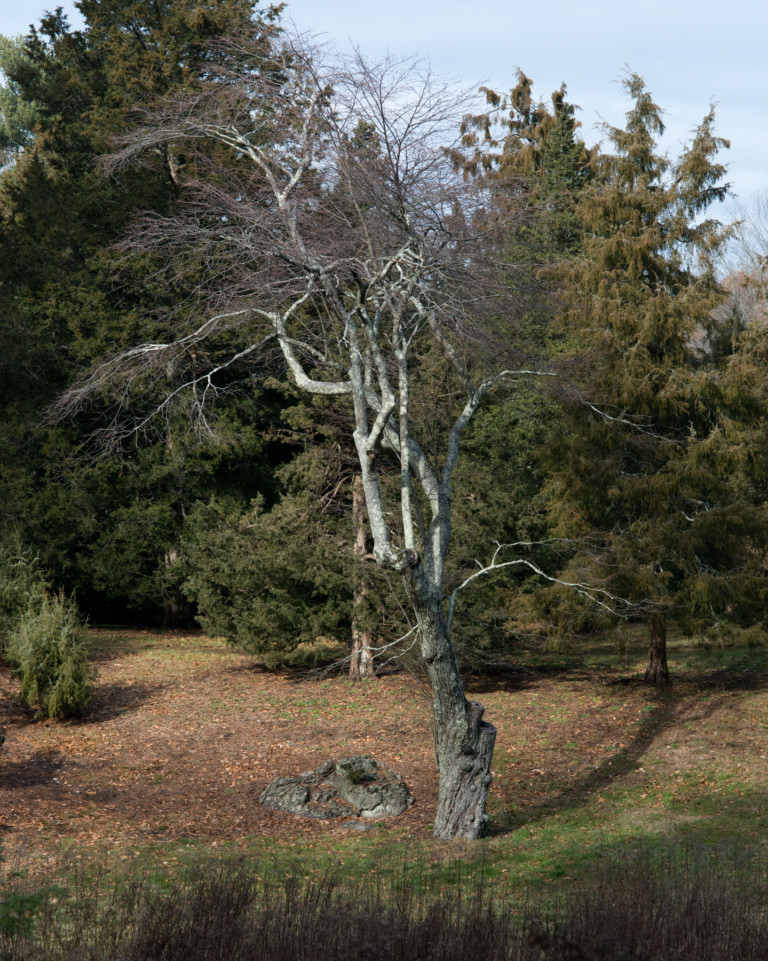

Mentioned In (5)
Trees
27 most common trees in Louisiana
In Louisiana, trees are plentiful. Louisiana is known for its lush green vegetation, which can be seen in Louisiana's state…
Trees
27 Most Common Trees in Ohio
Ohio is one of the most beautiful states in the United States, thanks to the millions of native trees that…
Trees
25 Most Common Trees in West Virginia
West Virginia's ecology and wildlife benefit from vegetation. Pollutants are filtered away by vegetation, which also helps to prevent erosion.…

Trees
27 Flowering Trees For Massachusetts Yards
Are you looking forward to planting flowering trees in your Massachusetts home garden? Well, you will be pleased to know…

Trees
10 Magnificent Flowering Trees for Maine
Maine is arguably one of the most naturally beautiful US states. It is home to a wide variety of flowering…