
Key Facts
- Deciduous thorny shrub or small tree native to western North America.
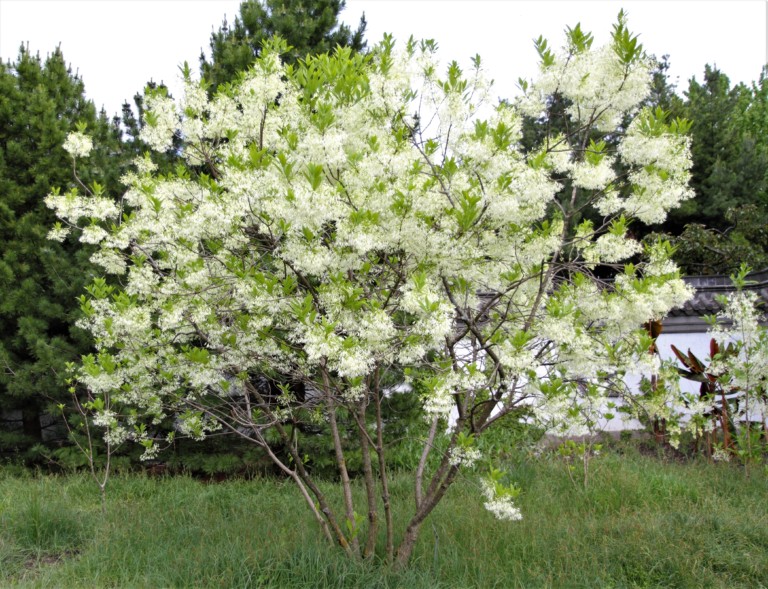
- Produces clusters of white flowers in spring.
- Sets small red to orange pome fruits that attract birds and wildlife.
- Commonly forms multi stem thickets by suckering.
- Prefers moist sites such as streambanks but tolerates a range of soils.
- Performs best in full sun to part shade.
- Used in hedgerows and wildlife plantings.
- Not generally regarded as highly poisonous but verify for pet safety.
Douglas Hawthorn (Crataegus douglasii) is a deciduous thorny shrub or small tree native to western North America. It bears clusters of white flowers in spring and small red to orange fruits that attract birds and wildlife, making it useful in natural hedgerows and wildlife plantings while also prone to forming dense thickets.
Identification
Douglas Hawthorn grows as a thorny shrub or small tree commonly reaching roughly 10 to 25 feet tall and often forming multiple stems. It produces clusters of white spring flowers followed by small red to orange pome fruits. Plants frequently spread by root suckers and can form dense colonies along suitable sites.
Where to plant and landscape uses
Plant Douglas Hawthorn in spots where wildlife value and privacy are desired. Its thorny branches make a good barrier and it works well in hedgerows, riparian buffers and wildlife plantings. Note that its tendency to sucker means it can naturalize and expand laterally if not managed for a formal garden setting.
Planting and timing
Install container or balled plants when soil is workable and the young root system can establish before seasonal stress. Select a site with space for a multi stem habit and allow room for lateral spread. Young plants benefit from consistent moisture while establishing and from placement where they will receive adequate light for flowering.
Soil light and watering
Douglas Hawthorn prefers moist well drained soils and tolerates heavy or seasonally wet ground such as streambanks while avoiding permanent standing water. It performs best in full sun to part shade and sets more flowers and fruit in sunnier sites. In dry locations growth and flowering may be reduced, while poor drainage can cause decline.
After flowering and routine care
Prune to remove crossing or dead wood and to shape a hedge or screen, making cuts outside the main root collar. Manage suckers from the base to limit unwanted spread and remove seedling volunteers if containment is desired. Mulch and maintain even moisture during dry spells to support health and fruit production.
Propagation and controlling spread
Douglas Hawthorn reproduces by seed and by root suckers and can be propagated from seed, hardwood cuttings and by dividing suckering clones. Seed may need cold stratification and grafting is used in nursery production. To control spread remove suckers at their origin or install physical root barriers where lateral expansion is a problem.
Frequently asked questions
- How fast does Douglas Hawthorn grow?
- Growth rate varies with site moisture and light. In good conditions plants establish and gain height over several years and can develop into multi stem thickets. Expect moderate growth rather than very rapid spread, with lateral expansion influenced strongly by suckering.
- When does Douglas Hawthorn bloom?
- Flowers appear in spring. Exact months vary by latitude and elevation, with bloom timing earlier in warmer lowlands and later at higher elevations.
- Are the fruits edible?
- The small red to orange pome fruits are used by wildlife and have been reported as edible in some sources. Verify local uses before consuming and consider taste and preparation guidelines from regional references.
- Are the fruits or plant toxic to pets?
- Fruits attract birds and wildlife but safety for dogs and cats should be confirmed with local poison control or veterinary resources before assuming they are safe for pets.
- Can Douglas Hawthorn be used as a hedge?
- Yes. Its thorny, multi stem habit and winter structure make it suitable for informal hedges and wildlife screens. Regular pruning and sucker management help retain a tidy form.
Related Plants


Mentioned In (2)
Trees
28 Most Common Trees in Utah
The state of Utah is hailed to have a lot of beautiful trees which creates a stunning landscape all over…

Trees
21 Great Flowering Trees For Utah Gardens
Do you wish to plant flowering trees in your home garden in Utah? Well, you’re in luck! The Beehive State…