
Key Facts
- Deciduous shrub or small tree.
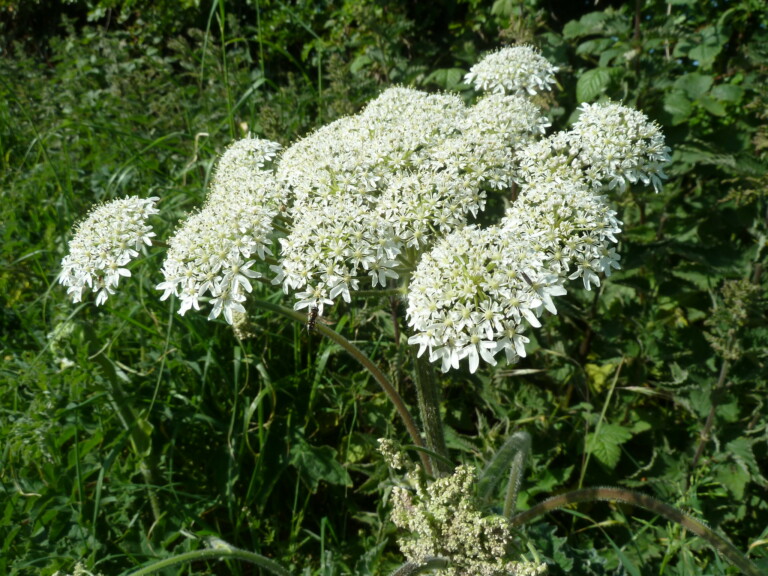
- Produces flat clusters of white to cream flowers in spring.
- Develops dark purple to black berries used cooked in jams and syrups.
- Attracts pollinators when in flower and birds when in fruit.
- Spreads by root suckers and can form thickets.
- Prefers reliably moist soil and tolerates heavier or seasonally wet ground.
- Many plant parts are toxic if eaten raw and require caution.
Elderberry (Sambucus nigra) is a deciduous shrub or small tree grown for its flat clusters of spring flowers and dark purple to black berries. It makes a useful wildlife shrub for moist sites but spreads by root suckers and many raw plant parts are toxic if eaten.
Identification
Deciduous shrub or small tree with flat clusters of white to cream flowers in late spring to early summer and dark purple to black berries later in the season. Typical garden plants reach about 5 to 12 feet tall with a spread that can reach 6 to 12 feet where plants are allowed to sucker and form multi‑stemmed clumps.
Where to grow and best uses
Grows best in reliably moist garden sites and tolerates heavier or seasonally wet ground. Use elderberry as a wildlife shrub to attract pollinators when in flower and birds when in fruit, or as a multi‑stem hedge where its suckering habit is acceptable. Avoid planting too close to small beds you want to keep tidy.
Planting season and spacing
Plant in a cooler part of the year such as spring or during dormancy so roots establish before summer heat. Allow room for its spread by spacing plants roughly 6 to 12 feet apart depending on the cultivar and how much suckering you will permit. Exact spacing depends on desired final form.
Soil and light
Prefers rich, moist, well drained soil and tolerates heavier or seasonally wet soils. Slightly acidic to neutral pH around 5.5 to 7.0 suits it. It grows in full sun to partial shade with best flowering and fruit set in full sun.
Watering and likely effects
Consistent moisture encourages vigorous growth and reliable fruiting. In very dry or poor soils growth and fruiting decline. While elderberry tolerates wet conditions, prolonged standing water can lead to root problems on some sites, so balance moisture with adequate drainage where possible.
After‑flowering care and maintenance
Harvest ripe berries for cooking and syrups, remembering that berries are used cooked. Control spread by removing unwanted root suckers and cutting out dead or crowded stems to maintain shape. Routine removal of excess shoots prevents thicket formation and keeps a planting accessible.
Propagation and spread control
Propagate reliably by root suckers and division for true to type plants. Hardwood and softwood cuttings, layering and seed are also used. Because elderberry spreads by root suckers and can form thickets, contain roots with barriers or remove suckers regularly to limit naturalizing.
Toxicity and safety
Uncooked berries, leaves, stems and roots contain compounds that can cause nausea and cyanide like symptoms. Ripe berries are traditionally cooked before use in jams, syrups and drinks. Keep children and pets away from raw plant parts and consult local poison control or extension resources for emergencies.
Frequently asked questions
- How fast does Elderberry grow?
- Elderberry is often a vigorous, suckering shrub that reaches a typical garden size of 5 to 12 feet. The growth rate varies with soil fertility, moisture and cultivar and can be rapid where conditions are favorable.
- Are elderberries safe to eat raw?
- Uncooked berries and other raw plant parts can cause gastrointestinal distress and cyanide like symptoms. Ripe berries are used only after proper cooking.
- How do I control its spread?
- Containment options include root barriers, regular removal of root suckers and selective thinning. Allowing suckers to remain will lead to wider colonies and thicket formation.
- When does elderberry flower?
- Flowers appear in late spring to early summer depending on local climate. Flowering produces flat clusters of white to cream blooms that attract pollinators.
- What propagation methods work best?
- Root suckers and division give the most reliable, true to type plants. Cuttings, layering and seed are also possible but seed may not produce plants true to a named cultivar.
Related Plants


Mentioned In (3)

Plants
9 Plants That Look Like Holly
Holly trees are common all over the world. There are more than 750 types of holly trees, each with its…
Plants
8 Plants That Look Like Hogweed
Two types of hogweed grow in North America: common hogweed and giant hogweed. Both species belong to the genus Heracleum…

Trees
27 Best Flowering trees For California by Color
Are you looking forward to planting breathtaking flowering trees in your Cali garden? You will be ecstatic to know that…