
Key Facts
- Large tropical perennial grown for dramatic, paddle shaped leaves.
- Tends to be frost tender and is grown outdoors in frost free climates or as a container plant.
- Prefers rich, consistently moist but well drained soil.
- Best in bright filtered light to partial shade and dislikes hot afternoon sun.
- Propagated easily by dividing rhizomes or offsets.
- Flowers are inconspicuous and it is mainly grown for its foliage.
- Contains calcium oxalate crystals that can irritate skin and are toxic if chewed.
Elephant’s Ear is a tropical perennial grown for dramatic paddle shaped leaves and a bold tropical look. It performs best where frost is absent and in containers where winter protection is possible, offering a striking specimen for shaded beds or bright indoor spaces.
Identification and size
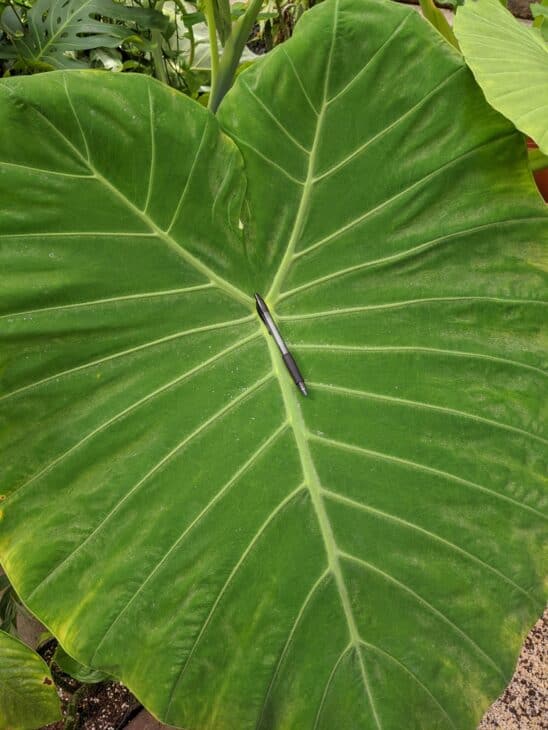
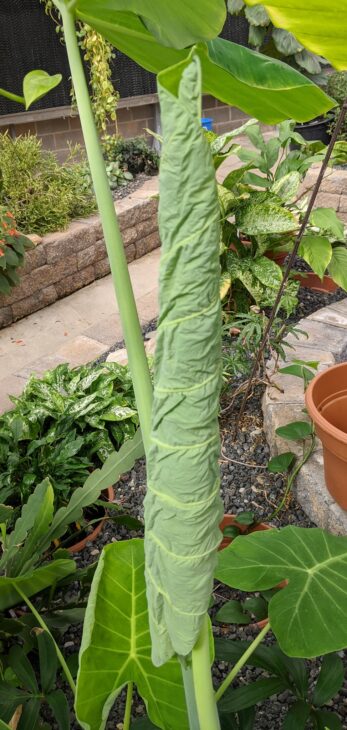
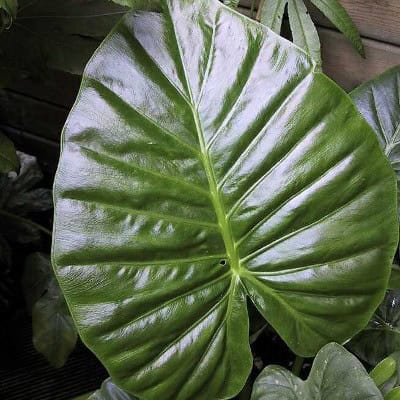
Large paddle shaped leaves make this plant instantly recognizable. Mature plants commonly reach four to six feet tall and form clumps three to six feet wide as rhizomes produce offsets. Flowers are rare and inconspicuous so the foliage is the main ornamental feature.
Where to grow and best uses
Grow outdoors in USDA zones nine b to eleven or in containers elsewhere. Use it as a focal specimen, for tropical border effect or to add bold foliage to shaded patios. It is frost tender so treat it as an annual in colder climates or move containers indoors for winter.
Soil and watering
Plant in rich organically fertile soil that holds moisture yet drains well and amend heavy soils with compost. Keep soil consistently moist but avoid waterlogged conditions because wet crowns and roots are prone to rot. Dry spells cause leaf wilting and scorch.
Light and placement
Best in bright filtered light or partial shade and protected from hot afternoon sun to prevent leaf scorch. It adapts to bright indirect light indoors. Position where leaves receive morning sun or dappled light for strongest growth and least damage.
Planting depth and spacing
Space plants to allow a mature clump of three to six feet across. When planting divisions place rhizomes at the same soil depth they were growing at and firm soil around the crown. In colder regions set out in spring after the danger of frost has passed.
Maintenance and problems
Remove yellow or damaged leaves to keep the clump tidy and reduce pest habitat. Avoid prolonged drought and standing water because either condition causes visible decline. Wear gloves when handling damaged tissue to reduce skin irritation risk from sap.
Propagation
Division of rhizomes or offsets is the easiest and most reliable method and can be done in spring. Ensure each division has a growing point and replant at the same depth. Seed propagation is possible but slower and less commonly used in garden settings.
Containers and winter care
Containers allow year round cultivation outside frost free zones. Pots keep plants smaller and make it simple to bring specimens indoors or under cover for winter protection. Reduce watering in cooler indoor conditions and avoid overwatering while plants are less active.
Toxicity and safe handling
All parts contain calcium oxalate crystals that cause intense oral irritation and swelling if chewed and can irritate skin on contact. The plant is toxic to cats and dogs. Keep away from children and pets and wear gloves when cutting or dividing.
Frequently asked questions
- How fast does Elephant’s Ear grow?
- Growth rate varies with light fertility and moisture. In warm moist fertile conditions plants can reach mature height within a single growing season and spread steadily as rhizomes produce offsets.
- Is Elephant’s Ear invasive?
- It is not widely listed as invasive but it spreads by rhizomes and can form large clumps if not managed. Control spread by dividing and removing offsets when needed.
- Can I grow Elephant’s Ear indoors?
- Yes. Provide bright indirect light and consistent moisture with good drainage. Indoor plants often stay smaller and make strong houseplant specimens if kept warm.
- When is the best time to divide?
- Divide in spring when new growth begins. Make sure each piece has a growing point and replant at the same soil depth to avoid crown stress.
- How do I protect plants from frost?
- Move container plants indoors or into a protected area before cold weather. For in ground specimens use heavy mulch or temporary covers but expect foliage loss in freezing conditions.
Gallery
Related Plants


Mentioned In (3)

Plants
6 Plants That Look Like Monstera
Monsteras live up to their name, with oversized, dramatic leaves that instantly read “tropical.” They’re a standout houseplant for homes…

Plants
25 Poisonous Plants in Massachusetts
There are a few types of dangerous plants in Massachusetts. Some individuals, especially youngsters and animals, may be drawn to…

Plants
25 Poisonous Plants in North Carolina
North Carolina is home to hundreds of different species of poisonous plants. While some of these plants are more common…