
Key Facts
- Native to the western slopes of the Sierra Nevada in California.
- One of the largest tree species by volume and can exceed 250 ft (75 m) in native groves.
- Has small, woody cones and winged seeds rather than showy flowers.
- Thick fibrous bark provides notable resistance to surface fire.
- Prefers deep, consistently moist but well drained soils.
- Long lived with many specimens surviving for over a thousand years.
- Not widely reported as poisonous to people or pets.
Giant Sequoia is a monumental evergreen conifer native to the western Sierra Nevada that is prized for extreme size and exceptional longevity yet requires ample space and deep soils. Its thick fibrous bark gives notable resistance to surface fire while the tree forms a broad conical crown as it matures.
Identification
Giant Sequoia is an evergreen with a broad conical crown and thick fibrous bark. The species produces small woody cones and winged seeds rather than showy flowers. In native groves mature specimens commonly reach 100 to 280 feet and cultivated trees often develop a 30 to 60 foot crown spread.
Best uses and placement
Use Giant Sequoia as a specimen tree in parks large properties and arboreta where its size and longevity are assets. It performs best in full sun and deep soil. Do not plant it in small urban yards and keep it at least 30 to 60 feet from buildings utilities and other trees to avoid future conflicts.
Soil and watering
Giant Sequoia prefers deep fertile soils that remain consistently moist yet well drained and it tolerates slightly acidic to neutral pH. Poor drainage leads to root decline and dry soils cause slow growth and drought stress. Provide regular deep watering while the tree is establishing and maintain a mulch layer to conserve moisture.
Planting and spacing
Choose a sunny site with room for a wide conical crown and deep soils. Space single trees so mature crowns will not touch roofs fences or overhead lines and allow 30 to 60 feet of clearance where possible. In USDA zones 6 to 8 cultivated plantings have higher chances of winter survival while warmer lowland sites can cause heat and drought stress.
Care and maintenance
Maintain consistent moisture during establishment and apply organic mulch to moderate soil moisture and temperature. Prune sparingly to remove dead or hazardous limbs and to conserve the tree form. Thick fibrous bark provides notable resistance to surface fire but young trees remain vulnerable and benefit from protection during prolonged dry periods.
Propagation
Seed is the primary method for propagating Giant Sequoia and is the usual route for restoration and cultivation. Seed treatments such as cold stratification are used according to local protocols. Vegetative propagation by cuttings or grafting is difficult and generally practiced by specialist nurseries and botanic gardens.
Frequently asked questions
- How fast does Giant Sequoia grow?
- Growth rate varies with site and age. Young trees can grow relatively quickly in deep moist soils but growth in cultivation is often slower than in native groves.
- How large does Giant Sequoia get?
- In native groves many mature trees reach 100 to 280 feet in height and cultivated specimens commonly develop a 30 to 60 foot crown spread.
- What hardiness zones suit Giant Sequoia?
- Giant Sequoia is typically grown in USDA zones 6 to 8. Colder sites can increase winter damage risk while warmer lowland sites may cause drought stress.
- Is Giant Sequoia toxic to people or pets?
- There are no widespread reports of toxicity to people or common pets. Consult regional poison control or animal safety resources for definitive local guidance.
- Can I grow Giant Sequoia in a container?
- No. Giant Sequoia becomes very large and is not suitable for containers or small patios. It needs open ground and room for deep roots.
- What is the best way to propagate Giant Sequoia?
- Use seed for reliable results and follow local stratification protocols. Cuttings and grafting are possible but technically demanding and used mainly by specialists.
Gallery


Related Plants


Mentioned In (6)
Trees
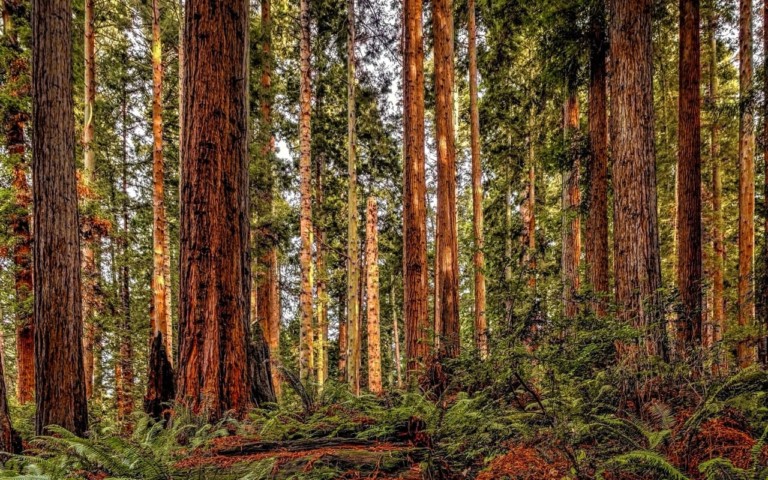
The 25 Biggest Trees in America
The United States is home to some of the most magnificent trees on Earth. From towering coast redwoods in California…

Trees
28 Evergreen trees in California
Evergreen trees in California are truly unique. They can be found at the coast, in the desert, and everywhere in…

Trees
17 Evergreen Trees in Alabama
Evergreen trees are beautiful, but what you may not know is that there are many different types of evergreens native…
Trees
28 Most Common Trees in Utah
The state of Utah is hailed to have a lot of beautiful trees which creates a stunning landscape all over…
Trees
20 Most Common Trees in North America
The North American continent is home to an enormously diverse array of landscapes, topographies, geographies, and climates, covering a total…

Trees
22 Most Common Trees in California
The sunny state of California is home to a multitude of beautiful and lush trees, flowers, and grasses. The trees…